'35 litres only’: Cape Town motorists face fuel restrictions amid uncertainty


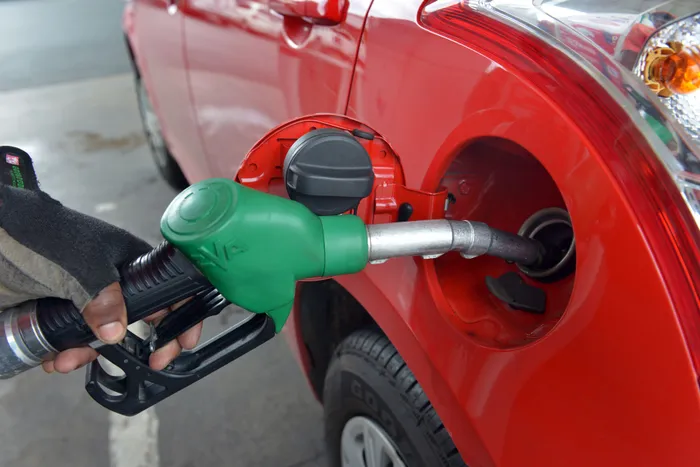
Motorists report limits at Cape Town pumps despite assurances of no national fuel shortage.
Image: Picture: Karen Sandison/Independent Newspapers
A Durbanville woman’s attempt to fill her tank is fuelling concern across Cape Town, after she says she was told she could only buy 35 litres of petrol, despite government assurances that there is no national fuel shortage.
Her experience comes as Western Cape Premier Alan Winde has warned of possible fuel hoarding and called for urgent national intervention.
“This is unethical. I implore suppliers to continue providing fuel for their clients. Withholding supply places the economy and livelihoods at great risk,” Winde said.
Faranaaz Brown said she was left confused when a petrol attendant informed her of the limit, allegedly imposed by the station owner.
“I felt very sorry for the petrol attendant who was very apologetic, so I didn’t even bother to get upset with him for just doing his job,” she said in a video that has since gained traction online.
Brown said she initially thought she had missed a major development, prompting her to phone her husband, who suggested the restriction could be linked to anticipated fuel price increases and possible stock withholding.
“I just thought this is absolutely wild,” she said, adding that she then visited other petrol stations in the Northern Suburbs to test whether the restriction was more widespread.
What began as a single encounter quickly escalated online.
Brown said her initial post has since drawn more than 450 comments, with users from across Cape Town and other parts of the country claiming they had experienced similar limits at petrol stations.
“I know this is a hot-button topic right now… People are stressed and emotions are high. However, I do feel that there are certain key players here that are making it untenable,” she said.
The concerns come as global oil markets react to tensions in the Middle East, fuelling fears of price increases rather than immediate supply shortages.
Winde had earlier, sought to reassure residents that there was sufficient fuel available in the province, even as concerns began to grow.
“We understand the growing concern around fuel availability… Let me reassure you: there is currently enough fuel in the Western Cape,” he said at the time.
He added that the provincial government was investigating reported disruptions, engaging with the fuel industry and monitoring the impact on key sectors such as agriculture and transport, with the matter escalated to disaster management structures.
On Sunday, the Premier has reiterated that provinces do not have authority over fuel supply regulation, placing responsibility on national government.
At the same time, Mineral and Petroleum Resources Minister Gwede Mantashe has sought to reassure the public, stating that South Africa’s fuel supply remains stable despite heightened geopolitical tensions.
“Despite the heightened geopolitical risk… the Republic’s current petroleum supply security arrangement remains robust,” Mantashe said in Parliament, adding that imports were secured through mid-April.
The assurances stand in contrast to reports of limits at some filling stations.
There has been no official announcement of fuel rationing in South Africa.
The conflicting messages have left residents uncertain, with some reporting they have had to drive between multiple stations in search of fuel or encountered limits on how much they can buy.
Some motorists in the Cape Town CBD said the situation was fuelling concern about potential shortages in the days ahead.
“Even if there isn’t a shortage now, it feels like one is coming. People are already limiting how much they fill, and that just creates more panic. I’m worried we’re going to see empty pumps next week,” one motorist said.
“The problem is uncertainty. You hear there’s enough fuel, but then you see limits or queues. It makes you think something bigger is coming, especially with the price increase,” another added.
While there is no official confirmation of widespread rationing, authorities have warned that certain practices could be unlawful.
The Competition Commission South Africa has cautioned that price gouging is illegal, including increasing prices ahead of official fuel hikes or charging excessively above cost increases.
Separately, Mantashe has indicated that withholding fuel supply to manipulate prices would be illegal and subject to enforcement.
Industry body the Fuel Industry Association of South Africa has told the Western Cape government that there is currently sufficient fuel available nationally, suggesting that any shortages at pump level are not due to a national supply shortage.
Diesel supply appears to be under the most pressure, driven by high demand, particularly in the agriculture sector. The Western Cape’s agriculture industry, heavily reliant on diesel, remains particularly exposed to any disruption.
For many residents, however, the issue is no longer about global oil routes or refinery capacity, but whether they can fill up at their local petrol station.
Brown has urged motorists to report any suspected irregularities, arguing that ignoring the issue could allow it to spread.
“The practice itself is wrong, unethical and illegal. If we just ignore it, it makes us part of the problem and it affects all of us,” she said.
Residents can report fuel shortages to the Department of Mineral and Petroleum Resources, while complaints about pricing conduct can be submitted to the Competition Commission.
As fuel price increases loom and anxiety grows, some motorists believe the real shortage may not be supply, but trust in the system meant to regulate it.