The hidden trauma of bullying: Real stories from South African families


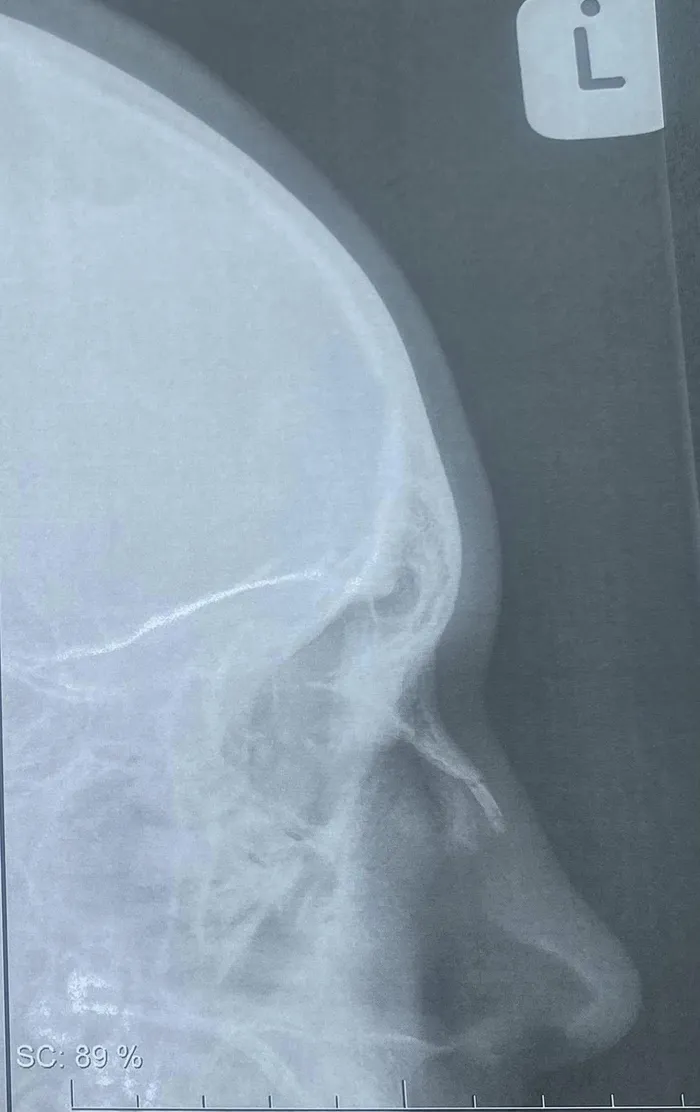
This compound fracture, sustained by a Grade 8 pupil during a bullying incident, underscores the severe physical and emotional consequences of bullying in schools, revealing the urgent need for greater accountability and support for victims.
Image: Supplied
Schools are meant to be a sanctuary, a place of growth and learning, but for countless South African children, it has become a zone of fear.
Bullying, once dismissed as an unavoidable part of growing up, has now become a crisis that erodes the mental health, academic performance, and fundamental sense of safety for an estimated 40% of school-going children, according to psychiatrist Dr Alicia Porter.
The experiences of two families expose the often-invisible harm caused by this widespread issue. Their accounts detail broken bones, public shaming, systemic neglect, and the agonising effort of parents to protect their children.
For one father, who wishes to remain anonymous to protect his son, the impact of bullying is measured through hospital visits, emotional turmoil, and overwhelming frustration.
His son, who is a Grade 8 pupil, suffered a fractured nose after being physically assaulted by a boy three grades his senior, a significant age and size difference that starkly highlights the power imbalance at play.
“That child was sitting writing his exams, and my child was sitting in an X-ray theatre. It’s not fair,” the father recalls, the anger palpable in his voice.
The physical injury, a compound fracture on his nose, was only part of the trauma.
More concerning are the neurological risks, as the boy has a pre-existing epilepsy condition.
“Any head injury on an epileptic child could be very severe, and that’s not even talking about the mental stress,” he explains.
He asks a terrifying, hypothetical question that exposes the school’s inaction: “If my child had suffered a debilitating epileptic fit combined with a severe nose bleed, and there was a loss of life, what would you have told me as a parent at that moment?”
The family’s journey to seek justice revealed systemic failures at every turn. Trying to open a legal case meant navigating a bureaucratic nightmare, including battling to get the necessary J88 form.
“We went to the police station, we asked for advice... and people were just ignoring us at first,” he says.
After seven hours of searching, they finally found a doctor, but the experience left the father feeling helpless. “Where’s the help for the victims, where’s the help for us as parents?”
Beyond the physical and legal battles, the bullying has affected the boy’s academic and psychological progress.
Already at a disadvantage with his epilepsy, his son also has ADHD and dyslexia, and this incident has undone years of hard work.
“We’ve worked so hard to get him from 40% right up to the 60s,” he notes. “And now this incident happened, and now we are back to square one.”
The son is now “scared to go to the toilets alone at school” following verbal threats by his bully’s friends of being stabbed.
The father’s frustration is directed at a system he believes is broken, citing the obligation of schools under various acts to keep children safe from assault and bullying.
He believes that schools hide behind legislation, such as the Protection of Personal Information Act (POPIA).
“Hiding behind the POPI Act and hiding behind these laws, it feels as if we are protecting the offender more than the actual victim. And it's not fair.”
He contrasts his son’s upbringing, teaching him to walk away, with the widespread advice to “fight back”.
“I come from a background where I know how to sort out problems via violence… it doesn’t mean my child is weak. It shows that I actually brought him up right… to a point where he can actually walk away from a situation like that and not retaliate,” he states, acknowledging the immense restraint it takes.
“We need to get the awareness out so that people need to start realising it’s not right raising bullies… that boy learned it from inside his house,” said the father.
Another mother, whose son started Grade 8 this year, describes an incident where a joke escalated into humiliating physical assault and cyberbullying.
Her son was cornered in a bathroom by three Grade 12 boys who demanded he “dance” for a video. When he refused, “they grabbed him and pushed him backwards, and they picked him up and put his head in the toilet bowl”.
The boy initially kept the severity of the trauma hidden. It was only four days later, while writing exams, that a classmate showed him the video.
“He couldn't finish his paper because one of his classmates showed him the video. Then he started getting anxious, angry, and crying, mixed with emotions,” the mother recounts.
“The video went viral, so he couldn't take it. He thought it was going to remain between them. After the video went viral, he was absolutely not himself after that.”
In a turn that highlights a victim’s capacity for grace, the boy ultimately decided to forgive his attackers, rejecting the principal’s suggestion to expel them.
“He didn’t want the boys to be expelled because he was thinking of the future of these boys,” his mother says.
While she respects her son’s choice, the mother stresses the emotional toll. “As a mother, I don't feel good about it because my son is so overwhelmed with everything that happened to him.”
Dr Porter, who is a member of the South African Society of Psychiatrists, confirms that these narratives are tragically common.
She explains that in the short term, bullied children suffer from “anxiety, low mood, irritability, school avoidance, declining academic performance, and significant drops in self-esteem”.
Bullying is not simply a childhood experience, she says, describing it as a psychological injury.
“We see increased rates of depression, anxiety disorders, post-traumatic stress symptoms, difficulties with trust, and challenges in forming healthy relationships in adulthood. In severe cases, bullying is associated with self-harm and suicidal ideation.”
The ripple effect on caregivers is equally devastating.
“Parents often experience significant distress, guilt, helplessness, and anger, particularly when they feel schools are not responding adequately,” she explains.
The impact on the family can include financial strain from seeking additional support and a sustained emotional burden as the child’s “sense of safety not just at school, but in the world”, is eroded.
Dr Porter also insists that to solve the crisis, the focus must shift from simply punishing “bad behaviour”.
Many children who bully “may themselves have experienced trauma, neglect, or lack of emotional support”, and their behaviour can signal “unmet emotional, social, or environmental needs”.
She warns that punitive approaches alone are insufficient for perpetrators, who also need support. “These children require support, rehabilitation, and opportunities to develop emotional insight and pro-social skills.”
The crisis, Dr Porter concludes, is a “mental health, safety, and human rights concern” that is “hiding in plain sight”.
The father of the boy with the fractured nose echoes the call for systemic change, urging for stricter accountability for school staff who “brush it off like it's nothing”.
“Firstly, the schools need to get their act together... they need to treat the victims with more respect and actually give them more attention than to the bully,” he said, adding that “they just sweep it under the rug and hope for the best”.
His final, desperate plea is one shared by every parent struggling to keep their child safe: “Our children aren't supposed to grow up in fear.”
The National Department of Basic Education (DBE) could not be reached for comment, but has previously stated that bullying is a serious crisis in South African schools.
The department called on diverse education stakeholders to unite in the fight against school bullying.
A key initiative, the National School Safety Framework, was created to enhance the quality of learning and teaching by ensuring secure school environments.
This framework mandates a collaborative approach, requiring parents, school governing bodies (SGBs), educators, learners, and government officials to work together as a team to prevent disruptions to classroom activities.
The department has also developed E-Safety Guidelines as a key measure to combat cyberbullying. These guidelines aim to educate pupils on the various forms of bullying that can occur on and through different Information and Communication Technology (ICT) platforms, with a specific focus on online bullying.
The goal is to encourage pupils to remain vigilant when utilising e-learning programmes or other ICT resources.
This is the first of a two-part series on the crisis of bullying in South African schools.
Have thoughts on this topic or other subjects you’d like us to explore? Want to share your experiences? Reach out to me at [email protected]