Cape Town International Jazz Festival boosts Western Cape economy by R522 million


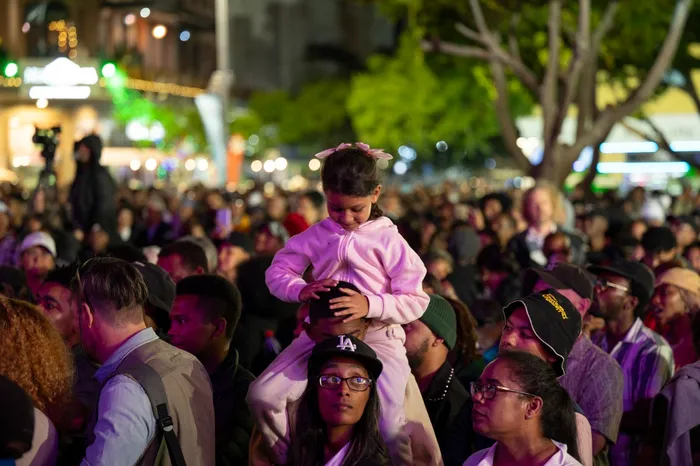
Cape Town’s CBD pulses with energy during the Cape Town International Jazz Festival, contributing over R500 million to the Western Cape economy.
Image: Armand Hough
The Cape Town International Jazz Festival is expected to deliver a significant boost to the Western Cape economy, with its impact estimated in the hundreds of millions of rand.
According to Bobby Jordan of the Cape Town Chamber of Commerce, estimates from Accelerate Cape Town place the festival’s contribution to the Western Cape’s gross domestic product at approximately R522 million, with a broader national impact of around R900 million, as reported.
“The Cape Town International Jazz Festival is far more than a world-class music event, it is a powerful economic driver for our city,” said Mayoral Committee Member for Economic Growth, James Vos.
The estimate positions the event among the most economically impactful cultural gatherings in the province, highlighting the growing role of major events in driving tourism activity, business growth and job creation.
Jordan said the value of events extends far beyond ticket sales and visitor spending.
“The multiplier effect of events such as the Cape Town International Jazz Festival reverberates across the economy,” he said.
He added that the Meetings, Incentives, Conferences and Events sector, known as MICE, remains a key pillar of the province’s tourism and hospitality industry.
“The MICE sector is a key component of tourism and hospitality in the province,” Jordan said.
“Not only do travellers book hotels and rent vehicles similar to other leisure travellers, events provide opportunities for staging, catering and security companies, as well as an opportunity for the creative industry to showcase their talent to a global audience.”
“The MICE sector attracts thousands of local and international visitors, which translates directly into increased hotel occupancy, restaurant activity, transport usage and support for small businesses across Cape Town,” Vos said.
Industry stakeholders have noted that events of this scale anchor Cape Town’s MICE sector, attracting high-value travellers and encouraging longer stays.
Industry estimates indicate the festival supports between 1 500 and 2 500 direct and indirect jobs per cycle, spanning sectors such as event production, logistics, hospitality, transport and informal trade.
These roles range from stage crews and sound engineers to hotel staff, drivers, caterers and security personnel, reflecting the breadth of economic activity generated by a single large-scale event.
“The festival’s economic ripple effects are undeniable, pumping millions into the local economy through tourism, hospitality and small businesses,” said Ryan Ravens, CEO of Accelerate Cape Town.
Statistics South Africa data shows the scale of the tourism sector’s recovery following the Covid-19 pandemic, with international arrivals plunging sharply in 2020 before rebounding in subsequent years as travel demand returned.
Recent figures indicate international arrivals have climbed to nearly nine million annually, reflecting renewed global interest in South Africa as a destination.
While direct visitor spending runs into tens of millions of rand, the overall economic contribution is significantly higher once multiplier effects are taken into account, as spending circulates through the wider economy.
The broader economic contribution is driven by a network of suppliers and service providers required to stage an event of this scale, with spending flowing into accommodation, food services, transport and technical operations.
The return of major events has also been a key signal of recovery for Cape Town’s tourism sector, helping to rebuild demand for accommodation, restaurants and travel services.
The impact has been visible in Cape Town’s city centre this week, where thousands gathered for the festival’s free concert at Greenmarket Square, drawing large crowds into the CBD and boosting activity for surrounding businesses.
The open-air event, held on Wednesday as a prelude to the main festival, ran from 4pm until 10pm and created a high-energy atmosphere as audiences filled the square and surrounding streets.
Western Cape Premier Alan Winde, who attended the concert, said the festival continues to deliver both cultural and economic value.
“Apart from the joy the Cape Town Jazz Festival brings to so many people and the platform it gives to local artists who are able to share their talent on a global stage, it is also an important economic driver for our province and the Mother City,” he said.
Businesses across the CBD reported increased foot traffic as festivalgoers moved between venues, restaurants and accommodation, highlighting the broader impact of the event beyond the main stages.
Additional measures aimed at widening access, including the removal of the Rosies stage surcharge, have allowed more attendees to participate in the festival without additional cost.
On a broader scale, the Cape Chamber has previously estimated that the city’s key events collectively generate more than R2 billion in visitor spending, underlining the importance of the sector to Cape Town’s economy.
As the festival continues over the weekend, its estimated R522 million contribution offers a clear indication of how cultural events are translating into tangible economic value for the Western Cape.