Cape Town International Jazz Festival brings cultural revival and economic growth


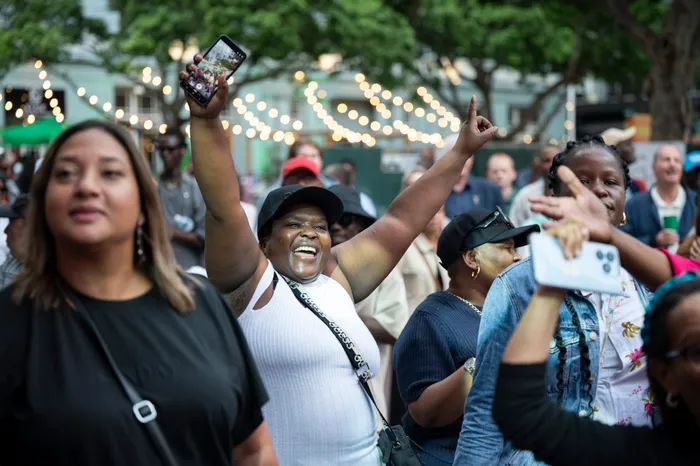
Greenmarket Square came alive on Wednesday night as thousands of jazz music lovers gathered for the CTIJF free concert.
Image: Armand Hough
Cape Town’s city centre is set for a major economic boost this weekend as thousands of music lovers descend on the Cape Town International Jazz Festival, signalling a strong return for the city’s events and tourism sectors.
The surge in visitors follows last night’s free opening concert at Greenmarket Square, where more than 10 000 people, filling the CBD with renewed energy and setting the tone for one of the city’s biggest cultural weekends.
For local businesses, the influx of festivalgoers is expected to translate into increased foot traffic and spending across hotels, restaurants, transport services and informal trade, sectors that were among the hardest hit during the Covid-19 pandemic.
The festival’s return comes after its cancellation in 2020 due to Covid-19 and several postponements in the years that followed. It returned to the live events calendar in 2024, marking a key milestone in the recovery of Cape Town’s events industry. The scale of this year’s edition reflects growing confidence in large-scale gatherings and the steady revival of the night-time economy.
Since its launch in 2000, the Cape Town International Jazz Festival has grown into one of the most significant music events on the continent and is ranked among the four largest jazz festivals globally, according to organisers. Its ability to attract both international and local audiences has positioned it as a key tourism drawcard, contributing to Cape Town’s status as a leading destination for cultural events.
This year’s edition features more than 40 local and international artists performing across four stages at the Cape Town International Convention Centre from tomorrow, and Saturday, March 28. With doors opening at 5pm and performances running from 6pm until 2am each night, the festival offers an extended programme that keeps visitors in the city centre well into the night.
Headliners include Jacob Collier, The Yussef Dayes Experience and South African jazz icon Abdullah Ibrahim, whose performance at the intimate Rosies stage on Friday night is expected to be one of the standout moments of the weekend.
“Abdullah Ibrahim will perform on the Rosies stage on Friday night, an intimate space that reflects the kind of setting his music is best experienced in. At 91, his return to Cape Town carries deep significance, both for the festival and for audiences who have followed his journey over decades,” said Rayhaan Survé, chairman of the Survé Family Office and the festival.
The Cape Town-born pianist, whose career spans more than six decades, returns to perform on home soil. His journey from District Six to international acclaim forms part of South Africa’s cultural history, and his continued presence on the festival stage underscores its role in connecting globally recognised artists with local audiences.
The economic impact of the festival is further underscored by its partnership with South African Tourism, aimed at leveraging the event’s international reach to promote the country as a travel destination. The collaboration is intended to showcase South Africa’s cultural richness while reinforcing the role of major events in driving tourism and economic activity. Through this partnership, South African Tourism will utilise the festival’s international reach to spotlight South Africa as a dynamic travel destination - known for its vibrant cities, breathtaking landscapes, and diverse heritage.
Tourism Minister Patricia de Lille has previously described the festival as “a critical economic driver for Cape Town and the broader Western Cape”, highlighting its role in supporting jobs and stimulating activity across multiple sectors.
This comes at a time when South Africa’s tourism sector is showing strong signs of recovery, with international arrivals surpassing 10 million in 2025. Events such as the Cape Town International Jazz Festival play a key role in attracting visitors, extending their stay and contributing to sustained economic activity in the city.
Beyond the main stages, the festival’s footprint extends across the CBD, contributing to a broader sense of activity and movement as visitors explore the city. Restaurants, hotels, transport services and informal traders are expected to benefit from the increased demand, highlighting the wide-reaching impact of the event.
Cape Town Mayor Geordin Hill-Lewis said the city was pleased to host the festival again, describing it as one of the continent’s leading jazz events and a key part of Cape Town’s cultural calendar.
“Now in its 23rd edition, this iconic event has become one of our most well-attended festivals, showcasing the vibrancy and diversity of Cape Town through its music offerings,” he said.
Hill-Lewis added that the festival, which includes both the main programme at the CTICC and the free concert at Greenmarket Square, continues to attract a wide audience and contributes to the city’s cultural appeal.
The festival may be driven by music, but its impact is felt far beyond the stage, in the tills of businesses, the bookings of hotels and the renewed energy of a city back in full swing.