Opposition grows among Namakwaland residents over children's reburial plans


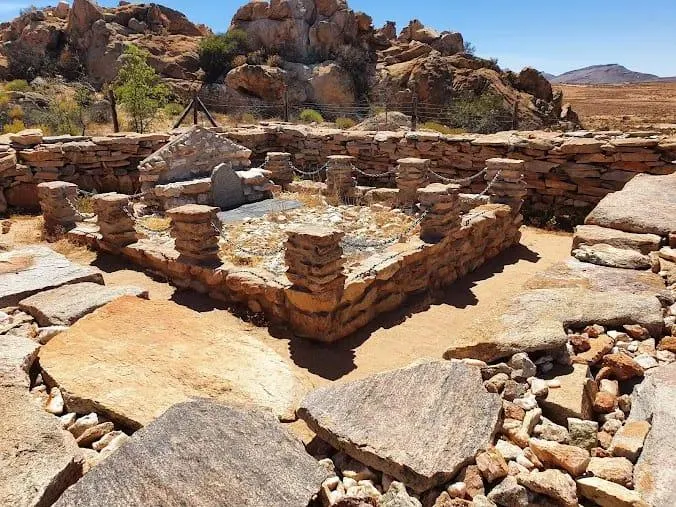
The site of Kinderlê, where the reburial of Khoi and San ancestral remains has sparked controversy among local residents demanding consultation and involvement.
Image: Supplied
“No reburial of ancestral bones without us, on behalf of us, or for us.”
This was the firm and clear message from Steinkopf residents as the much-discussed reburial of Khoi and San ancestral remains at Kinderlê, just outside Steinkopf, Namakwaland, is scheduled for March 23.
The site commemorates the 1867 massacre of 32 Nama children by San while their parents were at church.
A task team had previously been established to lead and facilitate the process.
Locals, however, believe that the arrangements for the reburial are being hijacked by government authorities in the Northern Cape.
According to Captain Paul Swartbooi of the Nama people, there was insufficient consultation with the local residents, as was raised in the meeting.
He said: “The community has expressed serious concern and dissatisfaction with the current process regarding the planned reburial.
“The community wants full participation, consultation, and oversight of all processes before any reburial proceeds.
“The reburial must therefore be postponed until government officials have thoroughly consulted with the community.”
The government officials were further requested to liaise with the community within seven days from the date of the said meeting, for consultation.
The meeting further decided that the planned reburial on Monday, March 23, should be temporarily postponed to a later date.
One of the biggest complaints, apart from insufficient consultation, is that residents will not really benefit from the burial, they said.
For example, a “contractor” was appointed as the main contractor to handle the burial, they said.
Local companies or individuals would then have to be content with less than nothing, as they would only be involved as subcontractors, according to a local businesswoman.
Swartbooi added: “Namakwaland people are equipped to host such events.
“We’ve been doing this for years, why not now?
“How would it look if the Nama people went to take charge at a Zulu or Xhosa funeral in their areas?"
According to information, there were seven companies that applied to handle the burial.
This company has no ties with the KhoiSan or Nama groups, according to the locals. This course of events left local service providers with red faces, because they were excluded, a well-known entrepreneur said, anonymously.
Swartbooi concluded: “I make my voice heard, as one of the leaders of the community.
“But also because of my bloodline from Nama leaders.
“For years, I was the chairman of the Khoi/San and Nama committees."
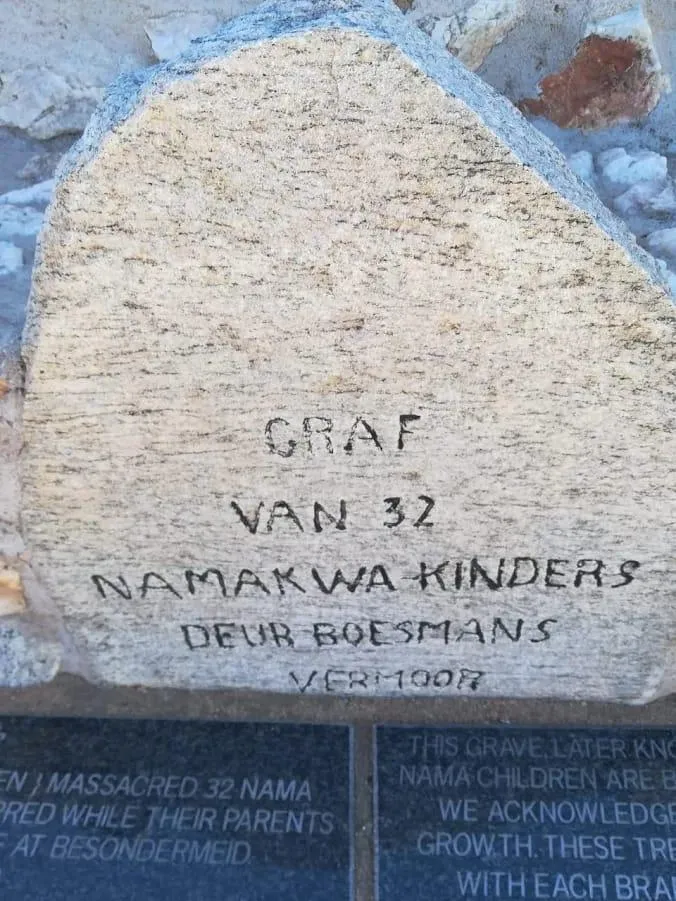
A memorial marking the tragic 1867 massacre of 32 Nama children, a poignant reminder of the historical significance of the reburial discussions in Steinkopf.
Image: Supplied
Bryan Minnies, deputy chairman of the taskteam, said that the reburial cannot be stopped now.
Minnies added: “We cannot undo 25 years of hard work now.
“All channels and protocols were followed.
“Namakwaland will benefit more from the burial than the other regions.”