Ramaphosa urges South Africans to confront ongoing human rights challenges


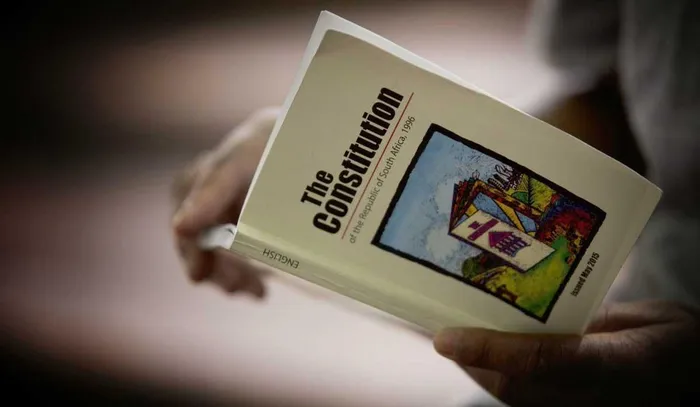
President Cyril Ramaphosa calls for renewed commitment to human rights and economic inclusion, reflecting on 30 years of South Africa's Constitution and the ongoing struggles faced by millions.
Image: North West Provincial Legislature
Thirty years since the signing of South Africa's democratic Constitution, President Cyril Ramaphosa delivered a stark message during the national Human Rights Day commemoration in Kimberley: the rights enshrined in the supreme law of the land remain an unfulfilled promise for millions struggling with poverty, joblessness, and a lack of basic services.
Speaking at the Ar Abass Stadium on the anniversary of the 1960 Sharpeville Massacre, the president acknowledged the significant progress made since 1994, citing extended access to housing, water, electricity, and education for the majority.
However, he quickly pivoted to what he called an "uncomfortable but necessary truth".
"We must be able to admit that too many South Africans still experience the indignity of unemployment, the injustice of inequality, and the daily struggles for basic services.
"For them, the Constitution is yet to be a lived reality in full... A right that exists on paper is not yet fully a right that is lived by our people," Ramaphosa told the crowd.
The president stressed that the struggle for human rights did not conclude in 1994; it simply "changed its form".
The current battle, he said, lies in the fight against poverty and for genuine economic inclusion, demanding that the next phase of democracy be defined by tangible delivery.
He insisted that restitution and redress, including land reform and transforming the economy, remain the "unfinished business of our democracy".
"The right to dignity must be seen in the decent living conditions that our people must enjoy… The right to equality must be reflected in economic opportunity. The right to freedom must include freedom from poverty."
He also emphasised the importance of a capable and ethical state, stating: "This demands a capable, ethical, and developmental state, one that does not merely promise but performs. It demands leadership that is not content with policy, but committed to implementation."
Furthermore, he called for collective responsibility, asserting: "We must all work together to make those who are in power accountable to every citizen."
South African Human Rights Commission Chairperson, Chris Nissen, echoed the president's concern about the gap between promise and reality.
He noted that the commission’s engagements across the country reveal that most citizens feel they "are yet to fully enjoy the benefits of a constitutional democracy".
Nissen highlighted crises such as food insecurity, with 14 million citizens going to bed hungry, and widespread lack of access to clean water and sanitation.
"This Constitution must be for us a lived reality," Nissen implored.
Commenting on the Government of National Unity (GNU), Minister of Sports, Arts and Culture Gayton McKenzie, said he is part of the GNU, and the country is being led by a man who has made SA turn the corner.
"The GNU is not where we want to be, but we are not where we used to be. We are going somewhere," said McKenzie.
Ahead of the main address, Ramaphosa visited the Re Tlameng Special Needs School, the designated Human Rights Day legacy project, which supports visually and hearing-impaired learners.
The initiative, which saw upgrades to facilities and donations of resources, served as a practical example of constitutional commitment.
Reflecting on the visit, Ramaphosa emphasised the importance of partnerships in achieving inclusive development.
"This initiative is a powerful demonstration of what it means to translate constitutional values into real change in the lives of people," he said.
Ramaphosa called on all South Africans to participate in national dialogues aimed at forging a social compact, urging citizens to rededicate themselves to fulfilling the constitutional promise "in action, in thought, in word and in deed".
The ultimate task, he stated, is to move "decisively from rights that are promised in our Constitution to rights realised and lived by every South African".