Army mobilised in Cape Town for operational scanning exercise


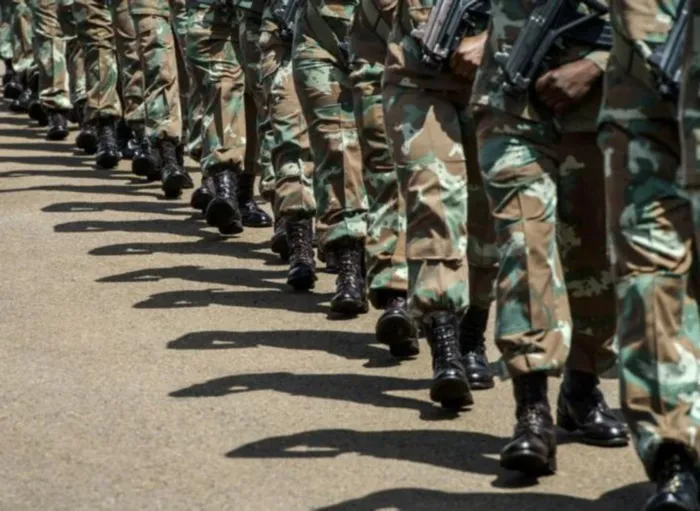
SAPS and SANDF conduct joint hotspot assessments ahead of planned military deployment to crime-affected areas in Cape Town.
Image: File
Police and military teams have begun ground and aerial assessments ahead of the planned deployment of the South African National Defence Force (SANDF) to identified crime hotspots in Cape Town.
Saps in the Western Cape confirmed that a select contingent of its members and SANDF personnel have been conducting an “operational scanning exercise” since Wednesday and yesterday.
SAPS national spokesperson Brigadier Novela Potelwa said the exercise forms part of preparations for the anticipated deployment.
“This exercise should not be mistaken for the actual commencement of deployment of the SANDF,” Potelwa said.
“The operational exercise currently underway is essential preparation for the integrated forces ahead of the actual deployment.”
The operation follows President Cyril Ramaphosa’s February 12 State of the Nation Address, where he announced that SANDF members would be deployed to support police in tackling gang violence and illicit mining in identified hotspots.
Police said the exercise involves a limited air and ground presence in identified areas and is aimed at coordinating SAPS and the military.
“Members of the public are urged to respect the operational space these forces require and refrain from speculating about their presence in the targeted areas,” Potelwa said.
Western Cape Minister of Police Oversight and Community Safety Anroux Marais, speaking in a statement on Wednesday, said SAPS had indicated that SANDF members could be deployed in the province by April 1.
“This intervention must be collaborative, intelligence-led, data-driven, and operationally focused,” Marais said.
“We need coordinated plans that will actively dismantle criminal networks, gangs, and extortion groupings that continue to terrorise our communities.”
She added that the deployment should not only increase visibility, but also result in effective investigations and prosecutions.
“We must ensure that those responsible for violence, extortion, and organised crime are removed from our communities permanently through effective investigation and prosecution,” Marais said.
Marais also called on residents to support law enforcement efforts by sharing information on criminal activity.
The assessments form part of planning for deployment to high-risk areas that have historically experienced recurring gang-related violence.
However, the planned intervention has drawn mixed reactions from civil society and political stakeholders.
David Abrahams of the Cape Crime Crisis Coalition (C4) said the organisation remained concerned that the deployment could repeat past shortcomings if not fundamentally reworked.
He said military intervention alone would not address entrenched gang violence and warned that any impact was likely to be temporary without intelligence-led operations and sustained policing and social interventions.
“While ‘boots on the ground’ and visible military presence provide a veneer of security, true success must be measured by the extent to which gangs are weakened and demobilised,” the organisation said.
GOOD Party secretary-general Brett Herron said deeper structural issues needed to be addressed for any lasting impact.
“The culture of gangsterism and violence on the Cape Flats will prevail until government, at all its levels, prioritises addressing structural and social abnormalities inherited from the past,” Herron said.
He said criminals often thrive in communities where residents feel trapped and neglected.
“Sending in the army will at best have the short-term impact of forcing criminals underground where they will sharpen their tactics,” he said.
Herron added that long-term solutions required sustained social and developmental interventions.
Cape Argus has previously reported on incidents in which bystanders were caught in crossfire, as well as ongoing community concerns about safety in affected areas.
Meanwhile, chairperson for the Cape Flats Safety Forum Abie Isaacs said that the deployment of the SANDF will give government and civil society an opportunity to go back to the drawing board.
“As the Cape Flats Safety Forum, we have noted with concern the current escalation in shootings on the Cape Flats. We call for the immediate deployment of the SANDF to stabilise the affected areas that have seen gang-related shootings.
“While the SANDF will be deployed, this will also give us an opportunity as civil society to go back to the drawing board and look at intervention programmes, and also in vain for the government to go back and relook at their strategy.”