Time to toss out the old leadership at Stellenbosch University; former chancellors call for shake-up



Stellenbosch University, a focal point for discussions on university governance and accountability.
Image: Stellenbosch University
Former Stellenbosch University chancellors Edwin Cameron and Johann Rupert have called for new leadership on the university’s council following controversy over the handling of the Wilgenhof residence investigation, saying current chair Dr Nicky Newton-King should not be considered for re-election.
Their intervention also comes as the university faces renewed scrutiny over residence culture following a separate incident at Majuba residence earlier this week, where a student returned to find his room ransacked and personal belongings removed. The matter is currently being investigated by Saps and Stellenbosch University.
In a joint media statement issued on Tuesday, Cameron and Rupert criticised Newton-King’s leadership in relation to governance issues linked to the handling of an independent panel report on Wilgenhof residence.
They said her tenure as council chair had been marked by “grave lapses of judgement and candour in governance”, which they said had damaged trust in the council and the university.
Cameron and Rupert said the donor constituency that nominated Newton-King to the council “no longer want her to represent them”, which they said reflected a breakdown of trust between her and the stakeholders she had represented.
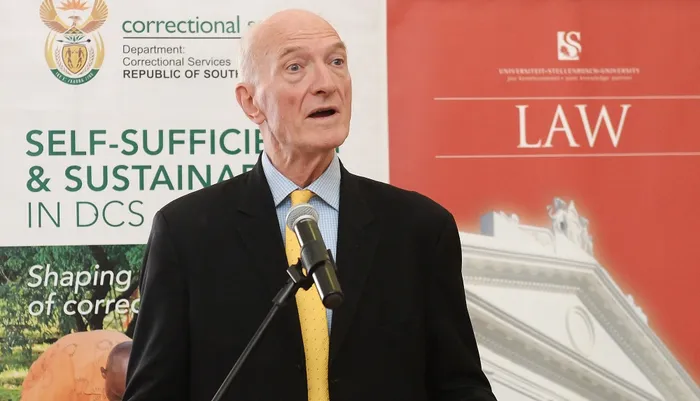
Edwin Cameron, former chancellor, highlights the need for new leadership at Stellenbosch University.
Image: Supplied
They also said Newton-King had indicated that she intended seeking re-election to the council through another nomination pathway.
“We regret this,” the former chancellors said.
Cameron and Rupert cited findings of the Kriegler Report, released in December 2024, which examined governance issues linked to the handling of an independent panel report on the controversial Wilgenhof residence.
According to the statement, the commission, chaired by retired Constitutional Court judge Johann Kriegler and including Professor Themba Mosia and advocate Karrisha Pillay SC, found that Newton-King had been “an active and/or knowing participant” in the amendment of an independent panel report on Wilgenhof.

Johann Rupert.
Image: Itumeleng English/Independent Newspapers
Cameron and Rupert said the report found that the changes removed an alternative to closing the residence that she and the then rector had considered “troublesome”.
They added that the report stated Newton-King “knew or ought to have known” that issuing the amended report was wrong and described the process as a “simulated transaction” that was “fatally flawed”.
According to the statement, the commissioners also found that Newton-King had a duty to alert the council to the changes but failed to do so, amounting to what the report described as a material non-disclosure of information that could have influenced council deliberations.
“These governance failures are extremely serious,” Cameron and Rupert said.

Nicky Newton-King, under fire for her leadership, responds to calls for accountability at Stellenbosch University.
Image: File
They said the findings highlighted the need for “renewed stewardship” at the university and warned that re-electing Newton-King could risk undermining efforts to repair damage done during her tenure as council chair.
“The Stellenbosch University community deserves new and transparent leadership with integrity,” they said.
In response to the statement, SU said: "Stellenbosch University (SU) takes note of the statement as released by former chancellors Edwin Cameron and Johan Rupert. The SU Council released a statement (https://www.su.ac.za/en/node/19711) regarding the Kriegler report matter in December 2024.
"Dr Nicky Newton-King, who is also the current chair of Council, serves on Council as one of three members elected by the Electoral College of Donors. Newton-King has decided not to make herself available for Council as a donor candidate.
"The election of the next Chair of the SU Council at its scheduled meeting on April 13, 2026 will follow the process prescribed in the University Statute. The composition of Stellenbosch University’s Council is governed by the Higher Education Act (1997) and the University’s Statute, which set out the categories of members represented on Council. Elections or appointments for these constituencies including staff, students, Convocation members, donors and external public representatives are conducted in accordance with the applicable election rules communicated when nominations and votes are called.
"All such processes are implemented in line with the University’s governance framework to ensure transparency, accountability and appropriate stakeholder representation."
In a personal response, Newton King said her discussions with donors showcased their strong support for her: "I have always regarded my responsibility as a Council member to act in the best interests of the University and all its stakeholders.
"While I am one of three Council members elected by the donors, my approach has consistently been guided by this broader duty. My discussions with donors have, in fact, indicated strong support for me.
"There are however also some donors who would prefer to be represented by someone else. In the circumstances, I decided not to make myself available for Council as a donor candidate. SU is today extremely well capacitated to execute on Prof Ramjugernath’s bold vision. It has been a privilege to serve my alma mater and to be part of Council guiding SU to this position. I have no further comment.”
Newton-King was elected the 14th chair of the Stellenbosch University Council on April 17, 2023, becoming the first woman to hold the position in the university’s 105-year history.
She has served on the council since April 2022 as a member elected by the university’s donors.
The controversy surrounding Wilgenhof stems from the discovery of secret rooms in the residence containing controversial memorabilia and initiation-related artefacts, which sparked investigations and intense debate about residence culture and governance at the university.
Following the Majuba incident, education activist Vanessa Le Roux wrote to Parliament’s portfolio committee on higher education calling for an oversight visit and raising concerns about what she alleges are broader issues of racism and exclusion in university residences.
Stellenbosch University media manager Martin Viljoen said the University remains firmly committed to the highest standard of governance and institutional integrity. " In line with this commitment, the University continuously reviews and strengthens its governance frameworks to ensure that they remain robust, transparent, and aligned with best practice in the higher education sector.
"Over the last year, the University has amongst others established a Business Ethics Office and appointed a Business Ethics Officer who, inter alia, supports the work of the Social and Business Ethics Committee of Council."
"A new Governance Officer position to expand support of institutional governance structures has also been established. The Governance Officer will play a central role in supporting the University’s governance framework and statutory and related structures.
"This position ensures compliance with governance requirements, facilitates effective decision-making processes, and provides expert advice on governance matters. The incumbent will also manage the election and appointment of members on institutional governance structures," he said.