How CoCT's Chief Heat Officer tackles extreme heat


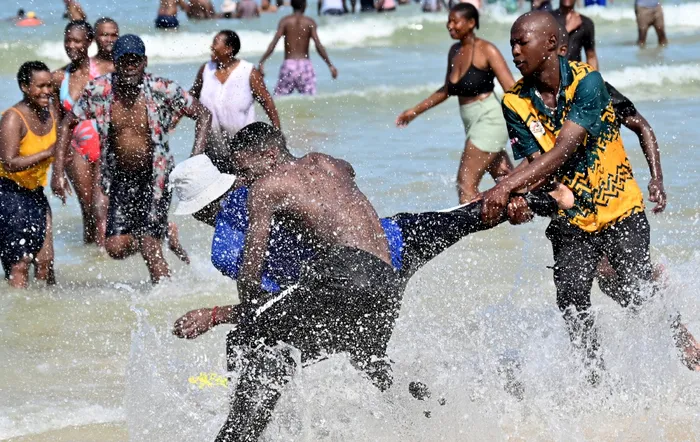
Monwabisi Beach Residents from Khayelitsha and surrounding areas flocked to Monwabisi Beach to cool off as a heatwave grips Cape Town this week. Photographer Ayanda Ndamane/ Independent Media
Image: Ayanda Ndamane/ Independent Newspapers
The City of Cape Town's Chief Heat Officer has found himself in the hot seat this week as a heatwave pushes temperatures into the high 30s, and low 40s across parts of the Western Cape.
The unusual job title, created to help the city prepare for rising temperatures, is now being tested in real-world conditions as firefighters battle vegetation fires, beaches fill with heat-seeking residents and officials urge people to use water sparingly.
The South African Weather Service (SAWS) warned the extreme heat could persist until Friday, with the heatwave affecting western parts of the province before spreading to the Little Karoo, Central Karoo and parts of the Garden Route.
Cape Town appointed Albert Ferreira as its Chief Heat Officer in 2025. Ferreira, who is also the City’s manager for resilience and climate change, previously worked as an assistant lecturer at the University of Pretoria before moving into urban planning and infrastructure planning.
During an exclusive interview with the Cape Argus, Ferreira shared what his job exactly entails, down to external advocacy to ensure there is a communication between the city and communities.
He expressed that while being on “Heat official duty,” he also had another role: “This role is additional to my current position as Manager for Resilience and Climate Change. No new position was created, it is two jobs in one.”
In detailing his core role, he said it focused on preparation and risk factors and takes his job very seriously.
“The role utilises current capacity and aligns with my current role, where we consider, prepare and respond to a wide range of both climate hazards as well as other threats that face the City,” he stated.
“I’m excited by this additional responsibility, where we can collectively highlight and address this often-unrecognised threat, focusing attention on the most vulnerable.
“This role includes internal and external advocacy to ensure that the City, partners and communities come together to reduce our risks now and in the future.
“This forms part of our transversal Heat Action Plan and related programmes to respond to heat such as the ‘Beat the Heat’ campaign and ‘Festive season preparedness campaign’ to raise awareness and enable immediate responses to hot days while implementing interventions that reduces our risks in the long term, such as our tree planting programmes.”
Ferreira expertise is used for research as well, coming from a background in lecturing: “This role includes initiating research to determine where people are most vulnerable as well as internal and external advocacy to ensure that the City, partners and communities come together to reduce our risks now and in the future.
“My team and various other colleagues in the organisation drive both the emergency response as well as longer term initiatives aimed at creating a more healthy, productive and thriving city. The task goes beyond the organisation and includes partnership with communities, business as well as international organisations and funders.”
He also took the opportunity to detail planning and development over a five-year-period.
“Success in this role over the next five years will mean that Cape Town is not only better prepared for extreme heat and other climate hazards, but that residents feel safer, healthier, and more informed in their daily lives,” he explained.
Interestingly, he detailed that they would measure progress through a combination of physical and social indicators: fewer heat-related illnesses and fatalities, improved access to cool and green spaces in vulnerable communities, and widespread public awareness of heat risks and protective behaviours.
When asked about the reason for the appointment, he said in response that he had a very important role: “The biggest aim is to ensure that City programmes and leaders and residents in our society are activated and directed toward our most vulnerable residents who are most affected by episodes of extreme heat, such as the elderly, children and outside workers. This is as extreme heat occurrences are increasing due to the changing climate.”
Providing data on his performance and role he provided logistical supported evidence: “The former president of the International Federation of Red Cross and Red Crescent Societies (IFRC), Francesco Rocca, notes that “the urban poor frequently bear the brunt of this silent emergency.
“In addition to threatening the lives and health of vulnerable populations, heatwaves have cascading impacts in other areas of society, such as reduced economic output, strained health systems and rolling power outages”.”
A report by The Lancet[1] estimates that “in 2017, 153 billion hours of work were lost [globally] due to extreme heat”, indicating that this risk can have significant negative economic impacts, he detailed.
The City said heat can be more extreme in urban areas due to less greenery and built-up areas where materials absorb heat such as concrete surfaces and buildings.
Urban heat impacts the strength of infrastructure such as roads and railways, worsens air quality and impacts on individuals’ health and wellbeing especially the elderly and those with preexisting conditions.
“With climate change, we expect hotter and drier conditions, with global temperatures projected to rise by 1–3°C by 2050,” he added.
“While this might seem in the far future, it’s important to note that Cape Town experienced its hottest temperatures on record last year (with the highest temperature recorded in the Foreshore area at 44,6° C).
“So this is a problem that we’re already facing and which is set to become substantially worse. In 2024 community-based heat mapping exercise in partnership with the World Bank revealed areas most vulnerable to extreme heat. It found that areas with densely packed buildings and no trees face temperatures up to 15°C higher than some other areas.”
The City said it faces climate challenges like hot, dry summers, strong winds, and non-tree-friendly soils, complicating greening efforts, especially in informal settlements. The City is implementing various programmes, including informal settlement upgrades and greening initiatives that require community support. Alternative cooling methods like artificial shading are sometimes more practical.