Water Sector Anti-Corruption Forum launched to combat corruption


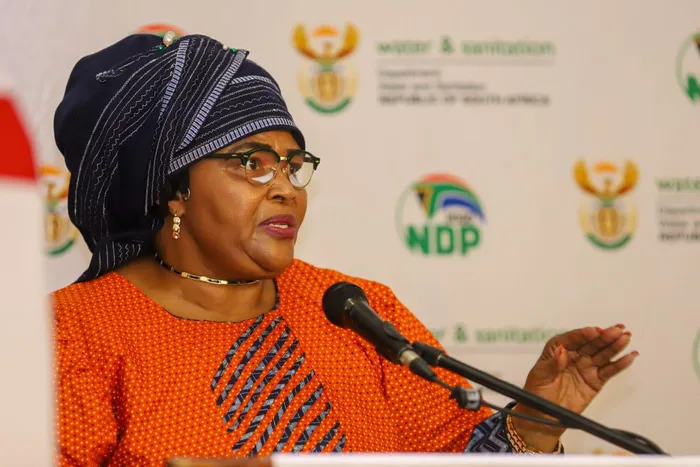
Water and Sanitation Minister Pemmy Majodina addresses the launch of the Water Sector Anti-Corruption Forum, emphasising the critical link between water security and the fight against corruption in South Africa.
Image: Supplied
In a move to combat rampant corruption and mismanagement that threatens South Africa’s vital water resources, the Special Investigating Unit (SIU) and the Department of Water and Sanitation (DWS) officially launched the Water Sector Anti-Corruption Forum (WSACF) in Pretoria on Thursday.
Following a series of alarming findings from SIU investigations, the WSACF has been established as a coordinated and intensified effort to clean up the sector.
The launch follows 16 SIU proclamations related to the DWS, with nine investigations completed and seven ongoing.
According to the SIU, the forum is anchored in Pillar Six of the National Anti-Corruption Strategy (NACS), focusing on "protecting vulnerable sectors and strengthening integrity systems".
It adopts a risk-based, ‘whole-of-society’ approach that encompasses investigation, prevention, and enforcement across the entire water value chain.
The WSACF also aligns with the National Development Plan (NDP) 2030 vision and reinforces the commitment to Sustainable Development Goal 6 (Clean Water and Sanitation).
The primary goals of the WSACF are to encourage cooperation between various stakeholders, synchronise law enforcement operations, introduce preventative measures to reduce fraud, and guarantee strict accountability, which encompasses legal proceedings, civil actions to recover funds, and administrative penalties.
The Acting Head of the SIU and Chairperson of the WSACF, Leonard Lekgetho, highlighted that water security is critically linked to the fight against corruption.
"Water affects every living being, making it imperative for us to make fighting corruption in the sector a collective effort," he said.
Lekgetho said the launch of the forum is a decisive step in protecting one of our nation’s most precious resources.
"Through this forum, we are sending a clear message: corruption will not be tolerated, and those who undermine the integrity of our water systems will face the full might of the law," he said.
Water and Sanitation Minister Pemmy Majodina, during her speech, highlighted the devastating human cost of corruption in a water-scarce country.
She said it was not a coincidence that the Water Sector Anti-Corruption Forum was launched during National Water Month and Human Rights Month.
Majodina said these commemorations are a reminder that access to sufficient water and dignified sanitation is not a privilege; it is a constitutional right, as Section 27 of our Constitution "guarantees everyone the right to have access to sufficient water".
"When corruption infiltrates the water sector, it does not simply distort procurement processes or inflate invoices. It dries up taps. It delays dams. It contaminates rivers."
Majodina framed corruption in the sector as a direct assault on human rights and dignity, especially affecting the poor and vulnerable.
"Every rand lost to corruption is a rand not spent on repairing leaks, upgrading treatment works, or expanding supply to underserved communities. Corruption compounds scarcity. It deepens inequality. It undermines human dignity."
The minister acknowledged that the decision to form the WSACF was prompted by a corruption vulnerability risk assessment conducted by the SIU, which identified the water sector as particularly vulnerable.
She elaborated on how corruption appears in the sector, including inflated contracts, collusive bidding, the misdirection of maintenance money, and organised crime groups causing chaos on construction sites.
The forum establishes a collaborative model to strengthen accountability and implement actionable prevention plans.
It is designed to extend beyond government, uniting a broad coalition of stakeholders. These stakeholders include law enforcement agencies, Chapter 9 institutions, civil society organisations, private sector representatives, public sector entities, regulators, and organised labour.
Minister Majodina reinforced the government's commitment to accountability and consequence management.
She said the collaboration between the Department of Water and Sanitation and the SIU is itself evidence of this resolve.
"We are not waiting for crisis to overwhelm us. We are acting decisively to prevent, detect, and enforce the law," said Majodina, further calling upon all citizens to embrace integrity, asking them to live by a pledge to be honest citizens, refuse bribes, and act in the best interests of the country.
The WSACF builds on the success of similar initiatives, including the Health Sector Anti-Corruption Forum and the Infrastructure & Built Environment Anti-Corruption Forum.
The SIU stated that this proven model is expected to provide the structure necessary for tackling the unique and complex challenges within the water sector.