New plan for managing baboons aims to ease tensions

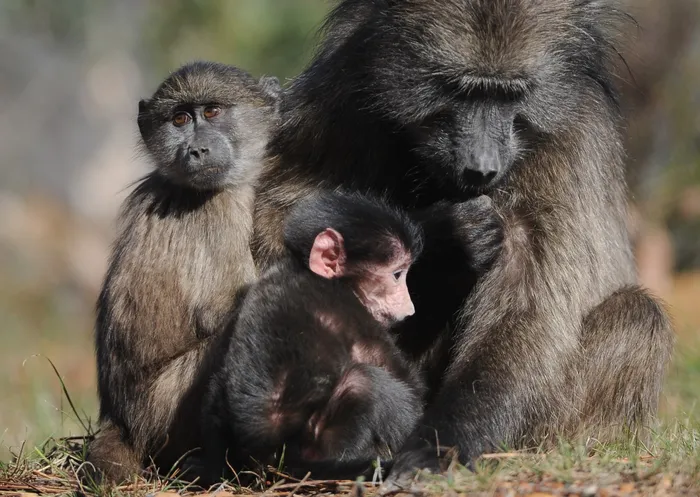
Cape authorities have adopted a five-year baboon action plan outlining relocations, fencing and population caps, while concerns over census data and governance have been raised with the Public Protector.
Image: FILE picture: Henk Kruger/African News Agency
The Cape Peninsula Baboon Management Joint Task Team (CPBMJTT) have formally adopted a detailed action plan to implement the Cape Peninsula Baboon Strategic Management Plan, outlining how baboon populations will be managed over the next five years.
The joint task team comprising the City of Cape Town, South African National Parks and CapeNature said the plan is intended to promote a “healthy, well-managed, sustainable, free-ranging baboon population” while reducing human-baboon conflict across the peninsula.
Authorities say the strategy follows years of escalating urban incursions, infrastructure damage, safety concerns and rising management costs. The plan seeks to create clearer boundaries between urban areas and baboon habitat while maintaining viable troops within conservation areas.
Among the key interventions is the relocation of certain troops to a newly established baboon sanctuary on privately owned land on Plateau Road.
According to the plan, the Seaforth troop is scheduled for relocation by February 2026. Baboons will be captured, undergo veterinary health assessments and healthy males will be vasectomised before being released into a purpose-built 1.5-hectare trial enclosure. The site will be assessed within six months to determine feasibility before any expansion is considered.
The Waterfall troop is expected to be relocated later in 2026, subject to the outcome of the Seaforth relocation and completion of further enclosures. The CT1 and CT2 troops are to be released on the mountain side of the fence south of Constantia Nek following welfare assessments. The plan provides that any baboon, apart from dispersing males, that breaches the northern fence line may be humanely euthanised in accordance with approved management protocols.
A semi-contiguous baboon-proof fence from Zwaanswyk to Constantia Nek is expected to be completed by July 2026. Authorities have stated that no baboons will be permitted north of the fence line and that rangers will patrol and maintain the barrier.
The plan further states that regular urban incursions will not be tolerated, with “hard boundaries” and aversion tools to be used to reduce habituation to human spaces.
"The Action Plan will be regularly reviewed to ensure the actions, assessments, and outcomes are in line with regulatory requirements, strategic direction, emerging trends, and new knowledge. The next formal review will take place in 2030," said the Task team.
The action plan sets a maximum sub-population of 250 for northern troops and 175 for southern troops, excluding deep Cape Point troops. Current estimates cited in the plan place northern troops at 234 and southern troops at 164.
It states that if population limits are exceeded for more than six months, reductions may be considered in line with management guidelines. Chronically ill, permanently injured and very old animals may be humanely euthanised following veterinary and welfare assessment.
Officials have said the plan recognises baboons as an integral part of the biodiversity and cultural heritage of the Cape Peninsula, including areas within Table Mountain National Park, and aims to balance ecological sustainability with the realities of a growing urban footprint.
However, independent conservation researcher Carol Knox has publicly questioned aspects of the plan and its implementation. Knox said she has lodged a complaint with the office of Public Protector Kholeka Gcaleka, requesting that decision-making processes relating to lethal removals and enclosure construction be reviewed.
Knox has cited figures indicating a total population of 463 baboons across 12 troops and 101 recorded deaths over an 18-month period. She has raised concerns about whether certain census figures, including those relating to the Slangkop troop, fully reconcile with recorded mortality data.
“The data does not add up,” Knox said, adding that in her view, transparent and verifiable reporting is essential for public trust in wildlife management.