Transplant patients urge families to discuss organ donation

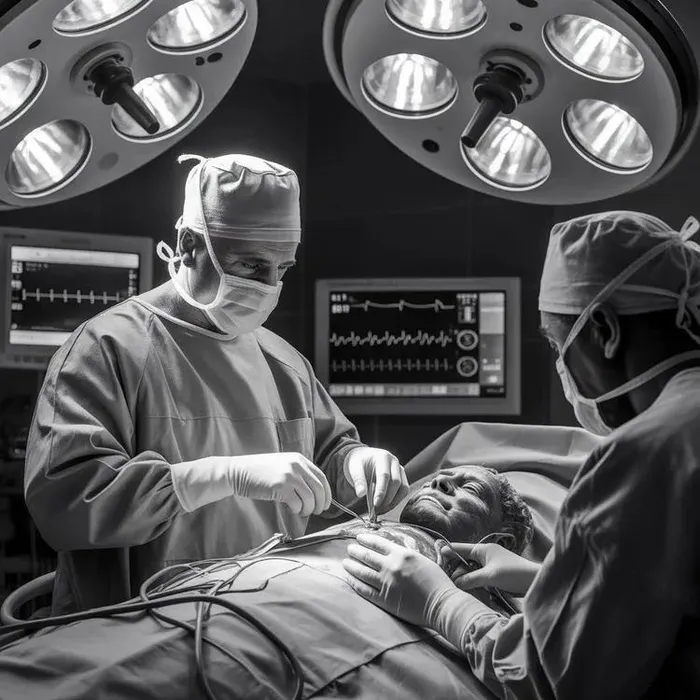
LVAD and transplant awareness walk set for 28 February at the Sea Point Lighthouse, urging families to talk about organ donation.
Image: Ideogram.AI
On Saturday, heart transplant recipients, patients supported by mechanical heart devices, doctors and families will gather in Cape Town for an awareness walk with a message that is both simple and urgent: talk about organ donation before it is too late.
Behind the event is a sobering reality. According to the latest available data from the Global Observatory on Donation and Transplantation, South Africa’s deceased organ donor rate is roughly 1.3 donors per million people — among the lowest globally.
The walk is expected to take place at the Sea Point Lighthouse between 10 and 10.30am.
For patients waiting for a new heart, that statistic is not abstract. It represents time measured in uncertainty.
The awareness walk is organised by the heart and mechanical heart transplant team at Christiaan Barnard Memorial Hospital. Organisers say the goal is to encourage families to discuss their wishes regarding organ donation, as final consent rests with relatives at the time of death.
Dr Willie Koen, head of the hospital’s heart and mechanical heart transplant programme, said the gap between the number of patients who could benefit from transplantation and the number of available donor organs remains significant.
“Over the past almost 27 years our team has implanted around 400 patients with either donor hearts or mechanical hearts. Unfortunately, this is only a fraction of the patients who could benefit from these lifesaving procedures,” Koen said.
“Our demand for donor hearts outweighs the supply by far.”
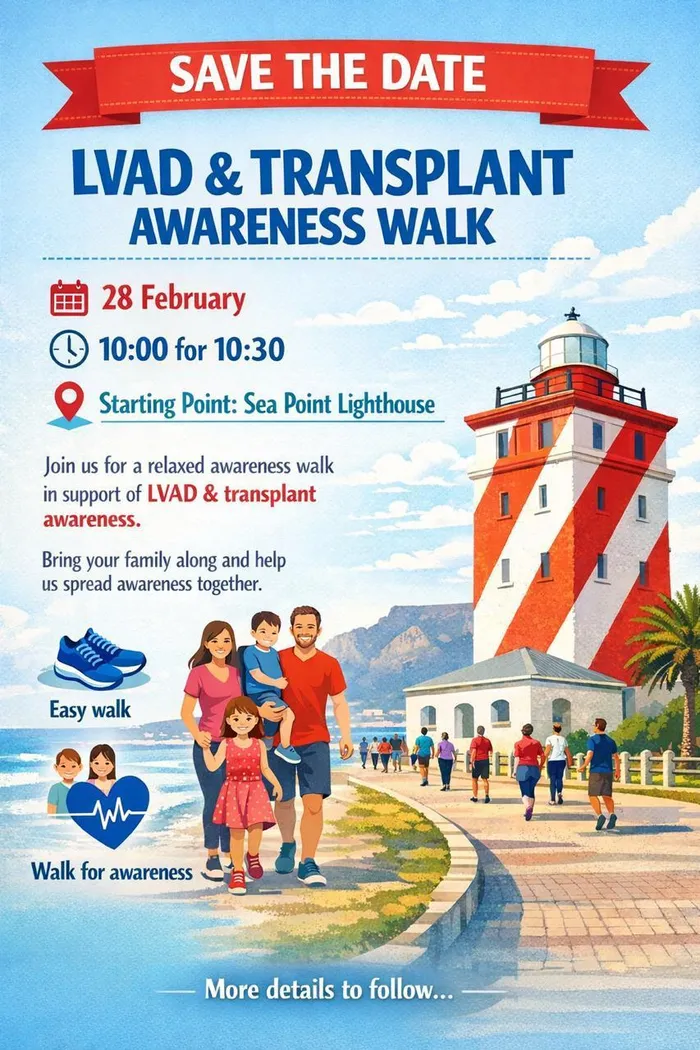
The LVAD and Transplant Awareness Walk will take place on 28 February at 10am from the Sea Point Lighthouse, calling on families to support organ donation and help save lives.
Image: Supplied
For some critically ill patients, a Left Ventricular Assist Device (LVAD) — a mechanical pump that helps a weakened heart circulate blood — can provide temporary support while they await transplantation, and in certain cases longer-term assistance.
Koen said the technology allows many patients to leave hospital and return home, regaining a near-normal quality of life while waiting for a donor heart. But he stressed that mechanical support does not replace the need for organ donation.
He believes one of the greatest obstacles is not medical capability, but misunderstanding.
“To be an organ donor you don’t have to register. This is a misconception. You only have to discuss it with your family, to share what your last wish is,” he said.
“In the tragic event that you might become brain dead, then the family will know your wish and will be able to give consent without having to make that decision.”
Medical experts note that a single deceased organ donor has the potential to save up to eight lives through organ and tissue donation.
Organisers hope the walk will serve as a visible reminder that the decision to donate does not begin in a hospital ward, but at home in conversations that clarify wishes long before a crisis occurs.
For transplant recipients who will take part, each step represents a second chance made possible by another family’s decision.
For those still waiting, it is a quiet appeal to the public: speak to your loved ones, make your wishes known, and consider supporting a cause that could one day save a life.
Get your news on the go, click here to join the Cape Argus News WhatsApp channel.
Cape Argus