City intensifies battle against sewage spills following Melkbosstrand swimming ban


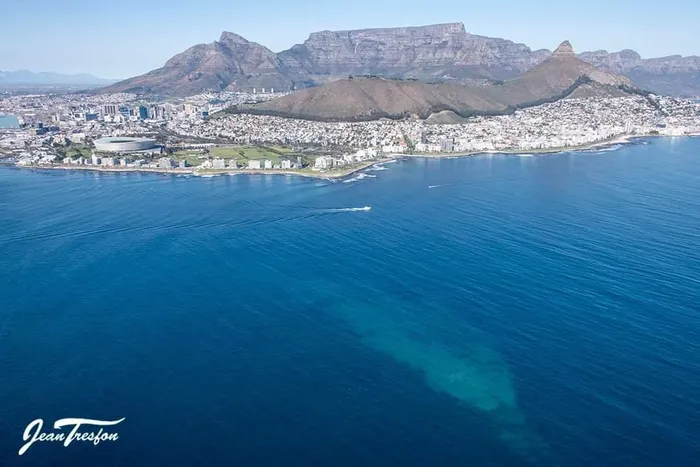
An aerial view of Cape Town’s Atlantic Seaboard and the focus of concern over coastal water quality.
Image: File/Jean Tresfon/ Rethink the Stink/ Facebook
After a beach closure, recurring township overflows and continued scrutiny of marine outfalls, the City of Cape Town says it is stepping up efforts to curb sewage spills through a combination of infrastructure upgrades, operational interventions and intensified public awareness campaigns.
The renewed focus follows a recent sewage spill that led to a temporary swimming ban at Melkbosstrand Beach. Mayoral Committee Member for Water and Sanitation Zahid Badroodien said the incident occurred during routine maintenance at the Ou Skip Main Pump Station.
“A wet well clean-out was carried out at the Ou Skip Main Pump Station in the early hours of Saturday and Sunday morning. However, not all of the contractor’s trucks deployed for the operation were fully functional, resulting in significant delays and leading to an overflow at the 11th Avenue pump station on the Melkos beachfront,” he said.
Badroodien said elevated levels at the pump station submerged control instrumentation, which required cleaning, and that pumps had to be reset to restore operations and return the station to automatic mode.
“The pump station team has completed the clean-up operation. The beach has since been reopened.”
In Wesbank, where residents have reported repeated sewer overflows, the City acknowledged the impact on affected communities while attributing recurring incidents primarily to vandalism and misuse of the network.
“We recognise the frustration and distress experienced by residents who have had to endure repeated blockages, primarily due to ongoing vandalism and misuse of the sewer network, and the associated health and quality of life impacts. No community should have to live with recurring sewer spills or feel compelled to implement makeshift measures to manage overflows,” Badroodien said.
He maintained that the local sewer system has the design capacity to accommodate normal household flows, but that ongoing tampering with manholes and the discharge of foreign objects into the network have led to blockages.
“Teams have recorded a significant increase in foreign materials, including items deliberately introduced into the system. This type of interference obstructs the network, damages infrastructure and results in sewage backing up into streets and, in some cases, private properties.”
Pipe replacement work in Wesbank had previously been advertised under an existing framework tender, but contractors declined due to safety concerns and insufficient safety provisions. The framework ends in June 2026, with a new replacement tender at award stage that includes enhanced safety allowances. The City plans to re-advertise the Wesbank pipe replacement work in the new financial year once the new contract becomes active.
Public concern has also intensified over visible discharge from marine outfalls at Green Point, Camps Bay and Hout Bay. Badroodien said findings presented at a recent Permit Advisory Forum showed that “the outfalls continue to operate reliably and largely within the Coastal Water Discharge Permit conditions, with the surrounding coastal waters remaining suitable for recreational use.” The City said coastal monitoring continues in line with licence conditions issued by the Department of Forestry, Fisheries and the Environment.
Alongside operational responses, the City has expanded awareness initiatives under its “Bin It, Don’t Block It” and “Bin It, Don’t Flush It” campaigns, aimed at reducing preventable blockages caused by non-flushable items entering the sewer network.
Badroodien said: “The City is doing its part by investing in sewer pipe replacements, upgrading pump stations, improving infrastructure at multiple wastewater treatment works, while doing targeted awareness drives which includes community engagements around the Bin It, Don’t Block It/Bin It Don’t Flush It campaigns, and more.”
Environmental advocacy group RethinkTheStink said prevention is critical while long-term national infrastructure reform remains financially daunting.
“For years, RethinkTheStink has advocated for public accountability, transparency, and improved water quality in our wetlands and oceans. As concern over sewage pollution intensifies, we recognise that protecting these ecosystems requires both strong oversight and practical solutions,” said Caroline Marx.
She noted that the Minister of Water and Sanitation has estimated that an unaffordable R400 billion is needed to upgrade South Africa’s water and sanitation infrastructure — a process she said would take decades.
“In the short term, the most practical step is to protect and optimise the infrastructure we already have.”
Marx said sewer pipes are not designed to function as waste disposal systems.
“Sewer pipes are not waterborne trash disposal systems. They are designed to handle only the 3 P’s: Pee, Poo and Paper. Operational data from municipalities across South Africa consistently show that wet wipes (even those labelled ‘flushable’), torn nappies, sanitary products and other non-flushable items are major contributors to sewer blockages, costly repairs and sewage overflows which pollute wetlands and oceans.”
“#BinItDontFlushIt addresses this directly through public education and behaviour change.”
She added: “Partnering with the City of Cape Town on a preventative campaign does not dilute our watchdog role — it strengthens it. Civil society can and must both hold government accountable and actively contribute to reducing pollution risks.”
With infrastructure upgrades expected to take years and behaviour change required immediately, the City says preventing avoidable blockages remains one of the fastest ways to reduce sewage spills while longer-term reforms are pursued.
Get your news on the go, click here to join the Cape Argus News WhatsApp channel.
Cape Argus