What to expect from Enoch Godongwana's 2026 Budget: Key tax adjustments


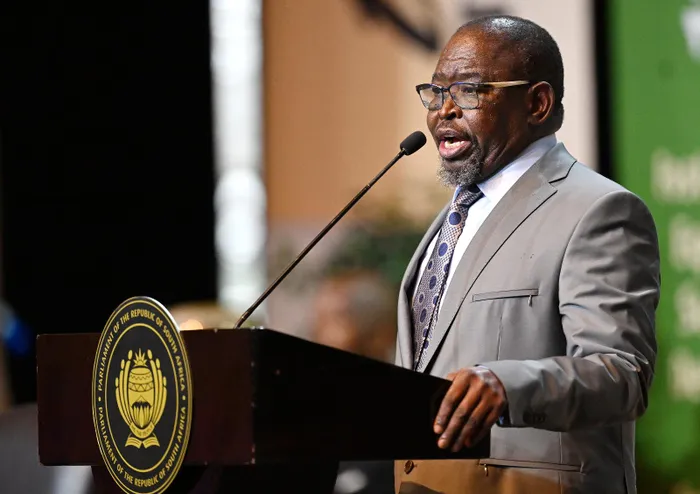
Finance Minister Enoch Godongwana will present the National Budget on Wednesday.
Image: Phando Jikelo/ Parliament of SA
As Finance Minister Enoch Godongwana prepares to unveil the much-anticipated Budget on Wednesday, South Africans are on edge, eager for crucial insights into potential tax adjustments and the government's spending priorities.
This second Budget under the Government of National Unity comes on the heels of an impressive revenue collection boost by the South African Revenue Service (SARS), raising expectations and concerns alike.
Godongwana's last update, the Medium-Term Budget Policy Statement, highlighted a surplus of R68.5 billion, with revenue exceeding the budgeted estimate by R19.3 billion and reductions in debt service costs. Godongwana had indicated that he will make a final decision on additional tax increases after VAT increase was rejected.
The perspective on the upcoming Budget varies widely among stakeholders.
MK Party MP Des van Rooyen expressed skepticism, saying it will be naive for anyone to expect the good to come out of the Budget.
“We still have poverty dominating in our society, unemployment dominating growth, and growth is very stubborn. So truly speaking, it will be naive for anyone to expect that there will be major changes coming out of the Budget Speech,” said Van Rooyen.
In contrast, IFP Chief Whip Nhlanhla Hadebe called for decisive actions that align with long-term developmental goals.
Hadebe said they expected the 2026 Budget to deepen, not dilute, the progress made in frontline services such as education, healthcare, and social grants.
“We expect continued momentum on the multi-year R1 trillion public infrastructure programme.
He added that South Africans cannot withstand policy decisions that increase transport costs, raise food prices, or worsen inequality.
The DA's Finance shadow minister, Mark Burke, echoed similar sentiments, stressing the need for tax bracket and rebate adjustments to counteract inflation without resorting to increases.
“We can’t afford another year of stealth taxes and we definitely can’t afford explicit increases,” said Burke, urging a shift toward tax reductions rather than hikes.
Build One South Africa spokesperson, Roger Solomons, demanded a strategic plan that addresses economic challenges while prioritising job creation and social justice.
The Board of Healthcare Funders (BHF) urged Ramaphosa to provide clear policy certainty that medical scheme tax credits will be retained following indications by the Department of Health that medical scheme tax credits may be phased out and ultimately scrapped, to help fund the National Health Insurance.
“Medical tax credits are not a subsidy for the wealthy, they are a lifeline for ordinary South Africans to keep quality healthcare within reach,” said BHF Managing Director Dr Katlego Mothudi.
Equal Education Law Centre said if Godongwana is serious about reflecting President Cyril Ramaphosa’s emphasis on education, he should commit to sustained real-term increases in education funding; the ring-fencing of child budgeting, even in austerity; and the funding of Grade R.
The Economic Institute for Economic Justice said the Minister of Finance must choose a different, transformative growth path.
“The 2026 Budget is an opportunity for the government to reverse its decade-long neglect of infrastructure and people, reversing the austerity reflected in the 2025 MTBPS,” said the institute.
The institute added that the Budget must urgently advance the constitutional right to social protection and close the gaping holes in the social safety net.
Get your news on the go, click here to join the Cape Argus News WhatsApp channel.
Cape Argus