Alcohol industry welcomes inflation-linked sin tax increases


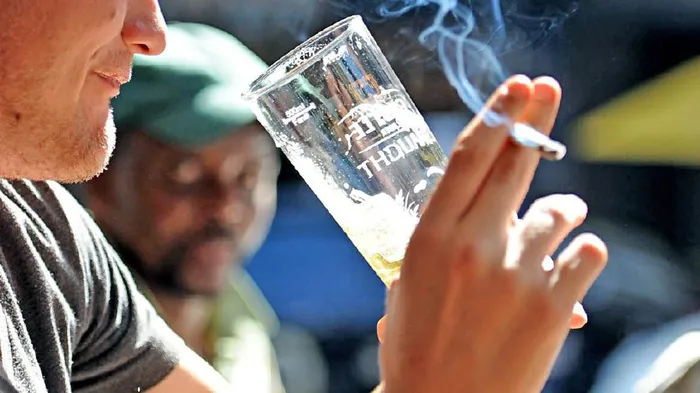
Inflation-linked sin tax increases promote fairness, stability, and long-term sustainability across alcohol categories.
Image: File
Alcohol producers have expressed strong support for the government's decision to restrict sin tax increases to inflation rates, emphasising that such predictable adjustments are essential for maintaining industry stability and combating illicit trade.
Finance Minister Enoch Godongwana announced that these increases in "sin taxes" are necessary, despite a more optimistic revenue forecast for the country.
As a result, the tax on tobacco products will rise in line with inflation in 2026/27, including taxes on electronic nicotine and non-nicotine delivery systems, Godongwana announced.
- The tax on a pack of 20 cigarettes increases from R22.81 to R23.58.
- Pipe tobacco rises by 28 cents per 25 grams.
- Cigarette tobacco increases by 87 cents per 50 grams.
- Cigars increase by R4.56 per 23 grams.
Excise duties on alcoholic beverages will also increase at inflationary levels.
- A 340ml can of beer or cider increases by 8 cents.
- A 750ml bottle of wine rises by 15 cents.
- A 750ml bottle of spirits increases by R3.20.
Inflation is currently running at 3.5%.
Heineken Beverages said the minister’s approach reflected consideration of economic pressures and the rapid growth of illegal alcohol sales.
Millicent Maroga, corporate affairs director at Heineken Beverages, said inflation-linked increases promote fairness, stability, and long-term sustainability across alcohol categories.
Maroga said keeping excise adjustments predictable helps narrow the price gap between legal and illicit products, strengthening enforcement and compliance efforts.
Heineken also welcomed the announcement of the National Illicit Economy Disruption Programme, saying the company looks forward to partnering with the government.
Industry concerns about illicit trade have intensified in recent years.
Heineken cited data showing illicit alcohol volumes have risen by 55% since 2017, with growth correlating with periods of above-inflation excise increases.
“Our industry drives economic activity across agriculture, tourism, hospitality, and manufacturing. Ensuring a stable, inflation‑aligned excise framework helps protect this integrated value chain and supports the livelihoods of thousands of South Africans,” said Maroga.
Diageo South Africa similarly supported the decision, noting that the projected inflation-linked increase of 3.4% keeps excise on spirits below the R100-per-bottle threshold.
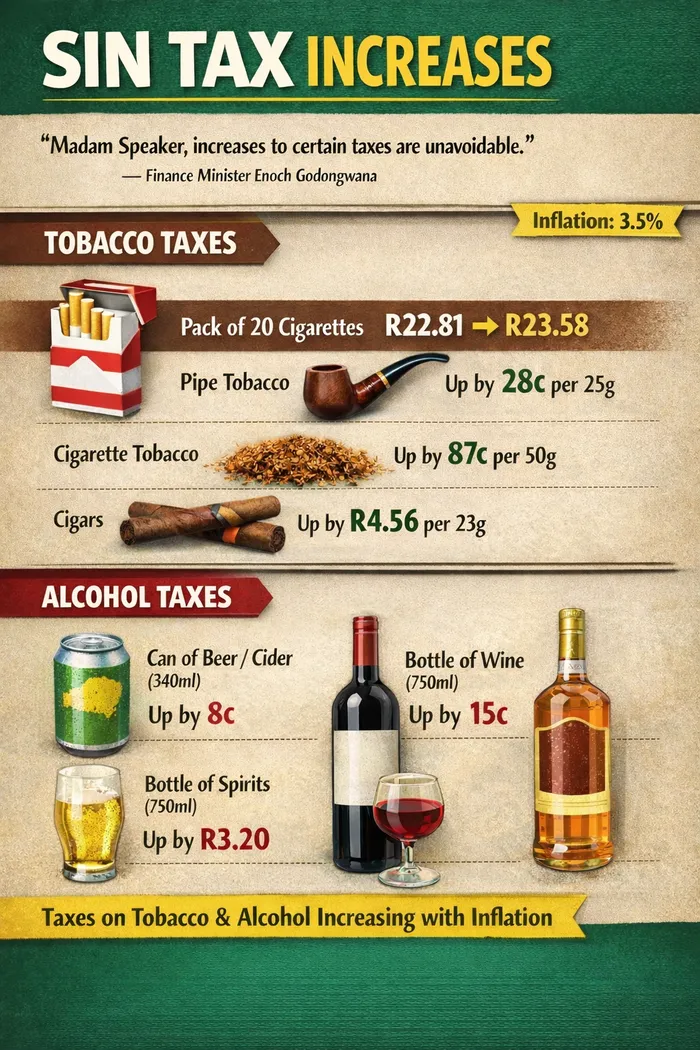
Sin taxes increased in line with inflation.
Image: ChatGPT
The company said it welcomed the minister’s commitment to stakeholder consultations on alcohol excise policy, describing the review as an opportunity to improve equity and sustainability across beverage categories.
Diageo said it remains committed to responsible consumption initiatives and partnerships aimed at reducing alcohol-related harm.
Meanwhile, SA Canegrowers welcomed Treasury’s decision to leave the Health Promotion Levy unchanged in the 2026 Budget, though it renewed calls for the tax to be scrapped.
Higgins Mdluli, chairman of SA Canegrowers, said the levy continues to place strain on sugarcane growers at a time when the sector faces a severe structural crisis.
“We call on all government, from Treasury to the Department of Trade, Industry and Competition, to align in a moment when the industry is at a real risk of collapsing,” said Mdluli.
The industry is grappling with uncertainty surrounding Tongaat Hulett, the country’s only standalone white sugar refinery, after business rescue practitioners filed for provisional liquidation.
Get your news on the go, click here to join the Cape Argus News WhatsApp channel.
Cape Argus