WATCH: UCT launches innovative research centre for ocean systems


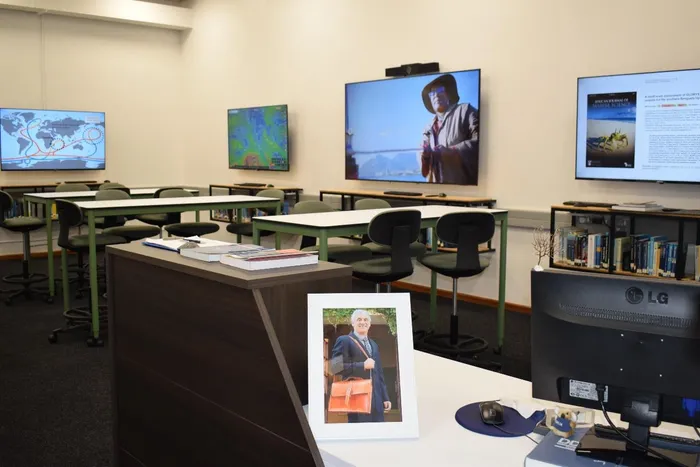
The University of Cape Town has launched the Mathieu Rouault Research Centre to advance ocean and climate research in southern Africa.
Image: Supplied
A new research centre at the University of Cape Town aims to strengthen understanding of the ocean systems that shape the Western Cape’s climate from storms and drought cycles to marine ecosystems and fisheries.
The Mathieu Rouault Research Centre (MRRC), launched within UCT’s Department of Oceanography, honours the late Professor Mathieu Rouault while expanding the university’s role in predictive ocean and climate research in southern Africa.
Rouault’s work deepened scientific understanding of the Agulhas and Benguela currents — two powerful ocean systems that influence rainfall patterns, sea temperatures and weather variability along South Africa’s coastline.
Their interaction plays a critical role in shaping regional climate. The warm Agulhas Current carries Indian Ocean water southward along the east coast before retroflecting into the Atlantic, while the cold Benguela Current drives nutrient-rich upwelling along the west coast — sustaining fisheries but also influencing atmospheric circulation and rainfall variability over the subcontinent.
Professor Marcello Vichi, head of the Department of Oceanography and director of the Marine and Antarctic Research Centre for Innovation and Sustainability (MARiS), said ocean science has evolved from largely descriptive observation to predictive modelling.
He said researchers now integrate ocean measurements with data science, machine learning and numerical modelling to better understand how the ocean–atmosphere system influences regional climate patterns.
The newly launched centre transforms a former departmental library into a hybrid teaching, learning and research space designed for collaborative modelling, digital analysis and interdisciplinary work.
The launch event included a tour of the upgraded facility and a short documentary produced by Head South Productions featuring physical oceanographer Dr Moagabo Ragoasha.
Nadia Jabaar, the centre’s resource officer, said improved digital infrastructure has already increased engagement, turning the space into an active hub for meetings, presentations and research collaboration.
Beyond honouring Rouault’s academic contributions, the centre embeds his legacy in the next generation of scientists working to improve ocean monitoring and climate forecasting in a region widely regarded as vulnerable to environmental change.
Just as the Agulhas and Benguela currents converge and interact off the Cape coast, the new centre is intended as a meeting point — where disciplines intersect to better understand the forces shaping southern Africa’s climate future.
Get your news on the go, click here to join the Cape Argus News WhatsApp channel.
Cape Argus