Cachalia outlines fresh strategies to combat gender-based violence


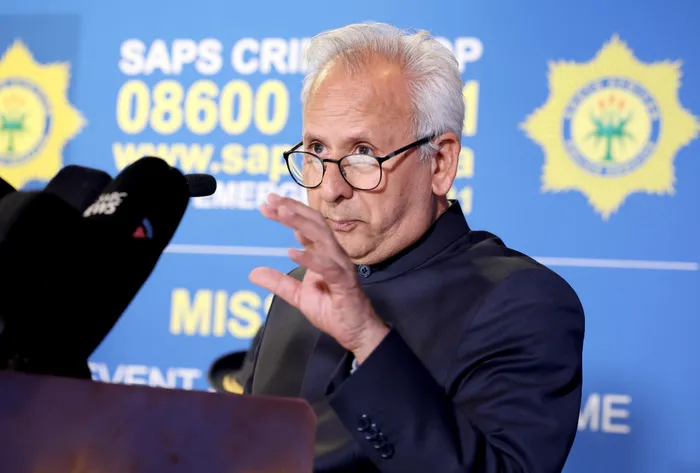
Acting Police Minister Firoz Cachalia announced a comprehensive evaluation of police strategies to combat the rising tide of gender-based violence, following alarming crime statistics that reveal regional increases in sexual offences and femicide.
Image: File
Acting Police Minister Firoz Cachalia announced on Friday that the South African Police Service (SAPS) will kick off a thorough review of its strategies to tackle gender-based violence and femicide (GBVF).
This comes right after the release of the third-quarter crime stats for 2025 and follows President Cyril Ramaphosa's declaration of GBVF as a "national disaster" last year.
Minister Cachalia said that despite recording a marginal national decrease in overall sexual offences and reported rape cases for the period covering October 1 to December 31, 2025, there were alarming regional increases.
Cachalia, echoing President Cyril Ramaphosa's recent State of the Nation Address, confirmed that public safety, with a sharp focus on organised crime and GBVF, is now the government's paramount priority.
"The classification of gender-based violence and femicide as a national disaster demands that we intensify our efforts to deal with this," Cachalia stated.
However, he also acknowledged the complexity of the challenge, noting that much of this violence occurs "in private, intimate contexts", which public law enforcement action alone struggles to address.
The minister has initiated an official review of the South African Police Service's (SAPS) strategies and tasked Deputy Police Minister, Dr Polly Boshielo, with support from the Civilian Secretariat, to lead a comprehensive evaluation. This evaluation is specifically aimed at pinpointing the most significant and deep-seated shortcomings in SAPS's current approach.
"We are taking our cue from the president to prioritise this matter," the minister said, emphasising the need for immediate action. "We are taking steps to strengthen the policing approach to GBV and other forms of violence."
Major General Tulare Sukune, SAPS Registrar, presented the detailed figures, which showed a marginal national decrease in overall sexual offences and reported rape cases for the quarter, though several provinces recorded alarming increases.
"Moving on to sexual offences, we have recorded a reduction of 426 counts less compared to the previous comparable period," Major General Sukune reported.
"Starting with the rapes, we have recorded a decrease of 373 rapes, whereas in the previous comparable period, we had 11,803 rapes. Currently, we have reported 11,430."
However, he pointed out that this national decrease was not uniform. KwaZulu-Natal (KZN), Mpumalanga, and the Western Cape were the three provinces that recorded increases in both sexual offences and rape. KZN alone recorded 16 counts more, Mpumalanga 18 more, and the Western Cape 17 more rapes, while the other six provinces showed decreases.
Sukune highlighted a significant failure in one area, noting: "The only crime that we did not achieve the desired trajectory of change was in sexual offences detected as a result of police action."
When viewed against population size, the Eastern Cape emerged as the province with the highest rate of rape, recording "28 rapes per 100,000", followed by the Free State with 23 per 100,000. Northern Cape had 22 rapes per 100,000, while Gauteng was the lowest, with 12 per 100,000.
Compounding the problem, KZN dominates the list of rape hotspots. "Top five stations in terms of rape, three are in the province of KwaZulu-Natal," Sukune confirmed, listing Inanda, Umlazi, and Plessislaer.
The statistics also offered a stark picture of where these crimes occur, with perpetrators often known to the victim. The data showed that 65% of a sample of 8,517 reported rapes took place "at the residence of the perpetrator". Public places accounted for 21%, while liquor outlets made up only 1%.
Furthermore, alcohol remains a significant factor, with 1,927 rapes and 6,957 cases of assault with intent to cause grievous bodily harm (GBH) involving its use. Disturbingly, educational institutions also featured, with 74 rapes recorded at such facilities, the majority (52) occurring in schools, including some that took place at daycare facilities.
"Then we have seven rapes that have taken place at tertiary institutions and six at special schools," he said, adding that 21% of rapes took place at spaza shops.
Major General Sukune concluded by cautioning that while the department is working to provide a proxy for GBV using domestic relationship data, a breakdown by gender is currently not being released.
"The breakdown to the level of the sex of the person is not 100% accurate, and we think that it will give a misleading picture if we were to give those breakdowns without having conducted the necessary quality assurance," he explained.
Get your news on the go, click here to join the Cape Argus News WhatsApp channel.
Cape Argus