Ramaphosa's pivotal plan to deploy social workers in police stations to combat GBV


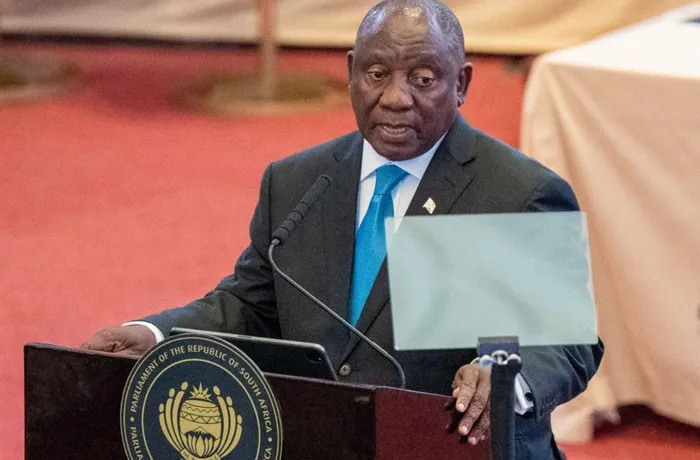
President Cyril Ramaphosa has announced that social workers will be placed in police stations, to assist in the fight against gender-based violence.
Image: Image: Henk Kruger / IOL
President Cyril Ramaphosa has announced that the government will increase the number of social workers deployed to police stations, labelling the initiative a “game changer” in the battle against gender-based violence (GBV).
His decision follows two days of heated debate in a joint session of the National Assembly and the National Council of Provinces, where MPs scrutinised his State of the Nation Address (SONA) last week.
Opposition parties strongly opposed several proposals, accusing Ramaphosa of making promises he repeatedly failed to fulfil.
Ramaphosa said one of the most important developments in recent years was the mobilisation of society to tackle violence committed by men against women.
“Faced with this pandemic of violence, South Africans came together to develop a National Strategic Plan against Gender-Based Violence and Femicide,” he said.
GBV has been a pressing issue in South Africa, with scores of women and children killed almost daily by men, including those who are supposed to protect them.
He said since the adoption of the plan, government departments, agencies, NGOs, business organisations, sporting bodies and others have been working together to implement its six pillars.
“They understand that gender-based violence and femicide cannot be stopped by the government alone; it must be stopped by society,” Ramaphosa said.
He said that South Africa has made progress in critical areas over the past five years.
“We have strengthened laws, expanded survivor-centred services through the Thuthuzela Care Centres, rolled out victim-friendly rooms at police stations, and invested in women’s economic empowerment as a critical pillar of prevention.
“For the first time, we have a national prevalence study that gives us clear evidence of the scale and drivers of gender-based violence.”
“And yes, we are going to move towards having social workers in the police stations, because that is going to be one of the game-changers.”
However, he did not specify when social workers will be deployed to police stations and how many will be assigned to each station.
Ramaphosa added that classifying gender-based violence and femicide as a national disaster two months ago, enables all spheres of government to act more swiftly, reduces fragmented efforts, and establishes a clear command, coordination, and accountability framework.
“It gives both the government and broader society far greater capacity and impetus to implement the measures that I outlined in the State of the Nation Address.”
“These measures include the mobilisation of all sectors of society to challenge harmful attitudes and practices.”
GBV was officially classified as a national disaster last November following intensifying nationwide protests and growing concern over the abuse of women and children ahead of the G20 Leaders’ Summit.
The official classification followed a nationwide shutdown led by advocacy group Women for Change on November 21, the day before the summit, demanding stronger action against GBV and femicide.
Advocacy groups and political parties had been pressing for GBV to be declared a national disaster.
Meanwhile, Ramaphosa added that the government will continue its work to promote women’s economic empowerment, strengthen law enforcement, and scale up survivor-centred support.
Get your news on the go, click here to join the Cape Argus News WhatsApp channel.
Cape Argus