How Western Cape roadblocks are combating the spread of foot-and-mouth disease


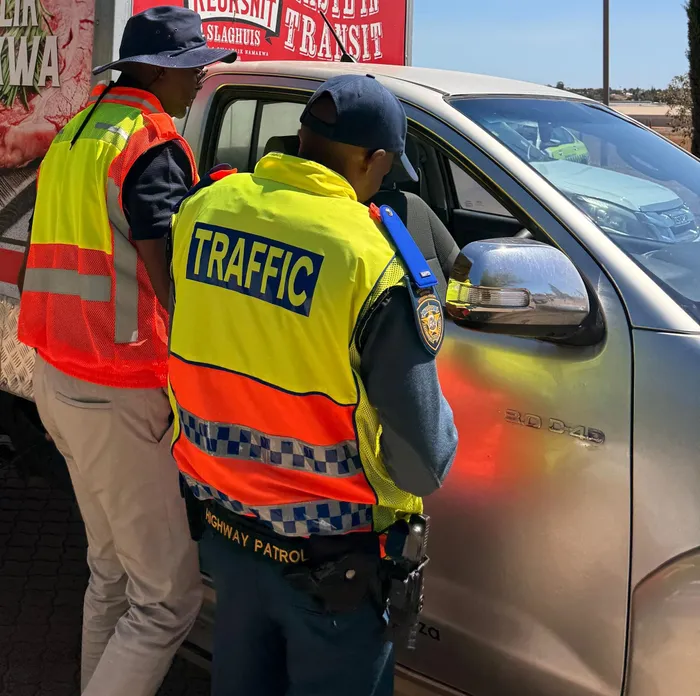
Minister Sileku at a Foot-and-Mouth Disease (FMD) roadblock in Moorreesburg.
Image: Supplied
Provincial Traffic Services has become an increasingly important line of defence in the Western Cape’s efforts to prevent the spread of Foot-and-Mouth Disease (FMD), integrating livestock checks into high-visibility road safety operations across the province.
From 9 to 15 February, officers conducted 247 integrated operations in partnership with the Western Cape Agriculture Department. A total of 31 577 vehicles were checked, including 8 143 vehicles during joint operations focused on FMD compliance. Six of those vehicles were transporting livestock and were inspected as part of movement-control measures aimed at containing the national outbreak.
Western Cape Mobility Minister Isaac Sileku said roadblocks were playing a “critical role” in monitoring livestock movement and preventing the virus from spreading to new areas.
“Earlier this week, I was on the ground along the N7 in Moorreesburg supporting efforts to curb the spread of Foot-and-Mouth Disease. These roadblocks play a critical role in monitoring livestock movement, preventing the virus from spreading to new areas, and protecting our farmers, animals, and national food supply. Thank you to everyone for your patience and cooperation,” he said.
The intensified enforcement comes ahead of a scheduled public update on Friday by Western Cape Premier Alan Winde and provincial Minister of Agriculture, Economic Development and Tourism Ivan Meyer on the province’s coordinated 21-point response plan to contain the outbreak.
The provincial government has already vaccinated 450 head of cattle in Fisantekraal as a precautionary measure. No cases of FMD have been detected in that herd. Authorities expect additional vaccine doses in the coming weeks as part of broader containment measures that include livestock movement restrictions, surveillance, border monitoring and expanded veterinary capacity.
Beyond biosecurity enforcement, traffic operations during the week resulted in 7 646 fines for driver and vehicle fitness offences, 20 vehicles impounded and 66 arrests. Of those arrests, 40 were for driving under the influence, with the highest recorded reading at 1.22mg/l. Officers also recorded 274 speeding offences.
Nine arrests were made for fraudulent documentation. Provincial Traffic Services said technology linked to the NaTIS system was assisting officers in detecting fake licences and vehicle papers.
Despite the intensified enforcement drive, 20 crashes claimed 20 lives during the same period. Pedestrians accounted for 14 of the fatalities, underscoring their continued vulnerability on the province’s roads.
The combined operations reflect the province’s dual focus on strengthening road safety enforcement while supporting national efforts to contain FMD, which national government has classified as a national disaster.
Get your news on the go, click here to join the Cape Argus News WhatsApp channel.
Cape Argus