450 cattle vaccinated in Western Cape amid Foot-and-Mouth outbreak


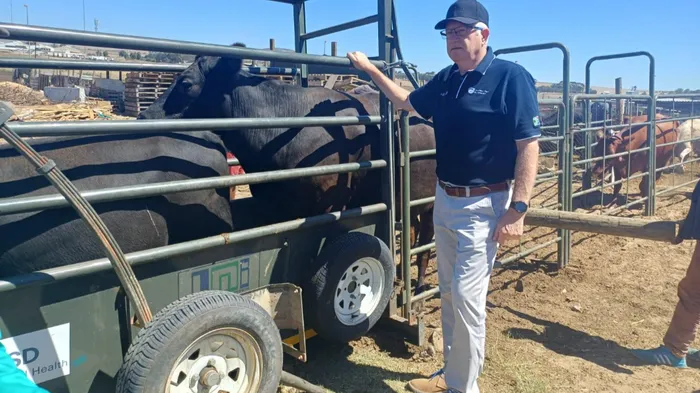
Western Cape Premier Alan Winde during the vaccination of cattle against Foot-and-Mouth Disease in Fisantekraal, as part of the province’s containment drive.
Image: Supplied
The Western Cape Government has vaccinated 450 head of cattle against Foot-and-Mouth Disease (FMD) in Fisantekraal, on Sunday in a bid to intensifies efforts to protect the provincial herd amid the national outbreak.
The vaccination drive was overseen by Western Cape Premier Alan Winde, National Minister of Agriculture John Steenhuisen, Provincial Minister of Agriculture, Economic Development and Tourism Ivan Meyer, and Provincial Minister of Local Government, Environmental Affairs and Development Planning Anton Bredell.
No cases of FMD have been detected in the Fisantekraal herd.
“This vaccination drive is a proactive step to protect cattle in this area. No cases of FMD have been detected in this Fisantekraal herd. But we are taking every precaution because we want to protect jobs and livelihoods,” Winde said.
He said the province expects to receive 200,000 vaccine doses in the coming weeks and will prioritise vaccinating high-risk herds. The Western Cape will also request permission to procure its own vaccines. The vaccinated animals have been tagged to strengthen identification, surveillance and monitoring.
In terms of the Animal Diseases Act, Winde has asked the national Department of Agriculture to move all physical livestock auctions online for 21 days and to issue permit control regulations for livestock movement. Winde, Meyer and Bredell are scheduled to meet Steenhuisen to receive an update on the request.
The measures form part of a 21-point response plan implemented by the provincial government together with agricultural partners to contain the outbreak in the Western Cape. The plan includes 24/7 border monitoring, rapid veterinary response teams for surveillance and traceability, strengthened communication and by-law enforcement, contingency planning, cleaning operations and monitoring of quarantine areas. Major roadblocks and vehicle monitoring are taking place on roads across 13 municipalities, including at provincial borders.
“This is part of a national crisis. We are working tirelessly to protect jobs and the agricultural economy. If you are transporting livestock or any materials used in the farming of livestock, you must take every precaution,” Winde said.
Steenhuisen described the outbreak as a national emergency and urged livestock owners to comply with permit requirements and strict biosecurity protocols.
“We are fighting to save the livelihoods of thousands of farmers and the future of our agricultural exports. We need every single livestock owner to stand with us. Biosecurity is not a suggestion – it is our only line of defense. If you move animals without permits or ignore basic hygiene, you are putting the entire country at risk,” he said.
Authorities have advised farmers not to move livestock without valid health certificates and permits, to limit farm visitors and enforce disinfection measures, to isolate newly purchased animals for at least 28 days, to report animals showing symptoms such as drooling, limping or sores to state veterinarians without delay, and to maintain secure fencing to prevent mixing with roaming herds or wildlife.
The provincial government said the combined vaccination and movement-control measures are aimed at containing the spread of FMD while safeguarding jobs and stability in the agricultural value chain.
Get your news on the go, click here to join the Cape Argus News WhatsApp channel.
Cape Argus