Ramaphosa deploys army to combat organised crime on Cape Flats


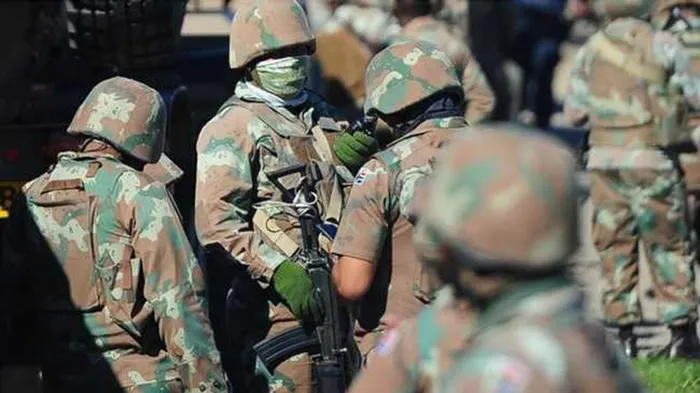
President Cyril Ramaphosa has announced the deployment of the South African National Defence Force to combat organised crime and gang violence in the Western Cape and Gauteng during his 10th State of the Nation Address.
Image: File
In a decisive move to combat the escalating threats of organised crime, gang violence, and illegal mining, President Cyril Ramaphosa has announced the deployment of the South African National Defence Force (SANDF) to support police efforts.
During his 10th State of the Nation Address (SONA) delivered in Cape Town on Thursday, Ramaphosa highlighted the alarming evolution of criminal networks that are undermining the state's authority.
He confirmed that the military will be strategically deployed in the Western Cape and Gauteng, aiming to restore safety and stability in these troubled regions.
“I have directed the Minister of Police [Firoz Cachalia] and the SANDF to develop a technical plan on where our security forces should be deployed within the next few days,” he said.
Residents in gang-controlled areas live under constant threat.
In Cape Town, children dodge stray bullets in classrooms, and families sleep on floors to avoid gunfire.
Gauteng communities near illegal mines face intimidation, violent clashes over mining rights, and economic devastation as criminal syndicates extract resources outside of the law.
Ramaphosa framed the deployment as a constitutional, carefully planned operation.
He said he would inform Parliament of the timing, location, and costs of the mission.
“We have to act to rid our country of gang violence,” he said, adding that the strategy goes beyond enforcement to tackle root causes, including improving street lighting and access to social services.
Gun crime, he said, would be addressed through stricter enforcement of licensing and regulations, while police ranks would expand with the recruitment of 5,500 new officers this year, adding to the 20,000 announced previously.
The President also highlighted the growing threat of illegal and counterfeit goods, which undermine jobs and industry.
He announced a national illicit economy disruption program using data analytics and AI to target high-risk sectors, including tobacco, fuel, and alcohol.
For communities trapped in gang territory or living next to illegal mining operations, the announcement offers a rare glimpse of hope.
Ramaphosa said this was the government’s effort to fight crime and corruption head-on.
Economic Freedom Fighters (EFF) leader Julius Malema voiced his approval, suggesting that the move stems from a lack of confidence in the South African Police Service (SAPS). "The president is just scared to say they have lost confidence in the SAPS; hence the army. We are happy that the army is coming; we are going to restore law and order," Malema remarked, highlighting the urgency of the situation.
Also echoing support was African Christian Democratic Party (ACDP) leader Kenneth Meshoe, who asserted that the deployment was indeed the right course of action. The collective voice of various organisations, including Fight Against Crime South Africa, has praised the president’s decision.
Mayor Geordin Hill-Lewis said it was any short-term relief for families in gang-impacted communities is most welcome.
‘But Mr President, while we welcome the army, it is only short-term. We urge you to also act now on real solutions to up gang crime convictions by devolving more powers to City police.
"Our well-trained officers stand immediately ready to build prosecution-ready case dockets to up convictions for gang crime. We’ve sent you the regulations, you have the power to make the reforms, and we urge you to act now,’ said Mayor Hill-Lewis.
Hill-Lewis said that City police are already confiscating 450 illegal guns per year, but the conviction rate is just 5% in these cases due to the broken criminal justice system and under-resourced SAPS and NPA’.
"The President and Acting Police Minister have the power to change this situation via the necessary statutory reforms. We will now push for an urgent commitment from the President for more metro policing powers, and will also look to the courts if needs be,’ said the Mayor.
JP Smith, Mayco Member for Safety and Security added: "The City demands an end to delays in the devolution of investigation and forensic powers to City police so that more criminals can be convicted. The SANDF can stabilise, but only a functioning criminal justice system will keep communities safe,’ said
Fight Against Crime South Africa (FACSA) encapsulated the pressing needs of the moment: "Gang violence has become an extremely resource-intensive crime to combat. It competes directly with other serious offences...this reality cannot continue." They noted that immediate stabilisation measures must be implemented to stem the cycle of violence that plagues families across the province.
Premier Alan Winde who has been pressured to declare gang violence a national state of disaster said: “The deployment of SANDF is a short term solution and cannot be a replacement for reforming the SAPS. Investigative powers must be shared with local police structures, vacancies must be filled and crime intelligence must be prioritised.”
Crime fighters and civic organisations, including the Cape Flats Safety Forum (CFSF), have articulated their vision for the SANDF's role on the ground. They believe that the military should assume a support and stabilisation position, allowing the Police Anti-Gang Unit to take the lead in confronting organised gangsterism directly.
Get your news on the go, click here to join the Cape Argus News WhatsApp channel.
Cape Argus