How Sea Harvest's hake and pelagic operations drove a 300% earnings surge
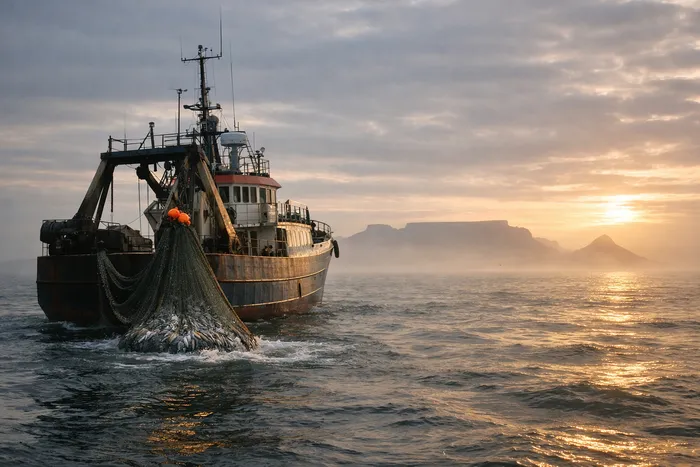
A deep-sea trawler off the Western Cape coast at dawn, where favourable ocean conditions have boosted catches — even as climate change continues to pose long-term risks for local fisheries.
Image: File
Sea Harvest Group Limited has flagged a sharp rebound in profitability, with headline earnings per share expected to rise by about 300% for the year ended December 2025, driven by stronger catch rates, improved pricing and efficiency gains across its core fishing operations.
In a trading statement published on Tuesday, the Cape Town-based group said headline earnings per share from total operations are expected to be between 216 cents and 222 cents, its highest level since listing in 2017. The results are due to be released on or about 3 March 2026.
Sea Harvest said the significant improvement in performance was “primarily attributable to higher catch rates, significantly improved pricing and efficiency gains” in its hake business, while its pelagic operations also delivered strong results, benefiting from improved operational efficiencies.
The group said increased milk flow in its dairy business, together with a strong focus on cost control across the group, also contributed to the improved performance.
However, the result on an earnings per share basis was partially offset by impairments in the group’s Australian business, which Sea Harvest said faced environmental headwinds in Shark Bay. Its aquaculture business also continued to be impacted by weak consumer demand in Hong Kong and China.
Sea Harvest said it was encouraged by the progress of its revised strategic direction, including the previously announced proposed disposal of Ladismith Cheese, with the proceeds earmarked to reduce debt and strengthen the group’s balance sheet.
While the group did not directly link its local performance to environmental factors, marine scientists have previously noted that favourable conditions in the southern Benguela marine system can support stronger fishing seasons. Researchers have also warned that climate change is expected to influence marine ecosystems over time, adding an element of longer-term risk for the sector.
Sea Harvest has major fishing and processing operations in the Western Cape, where the industry remains a key employer, particularly along the West Coast.
Get your news on the go, click here to join the Cape Argus News WhatsApp channel.
Cape Argus