Accommodation crisis at Cape Peninsula University of Technology leaves students stranded


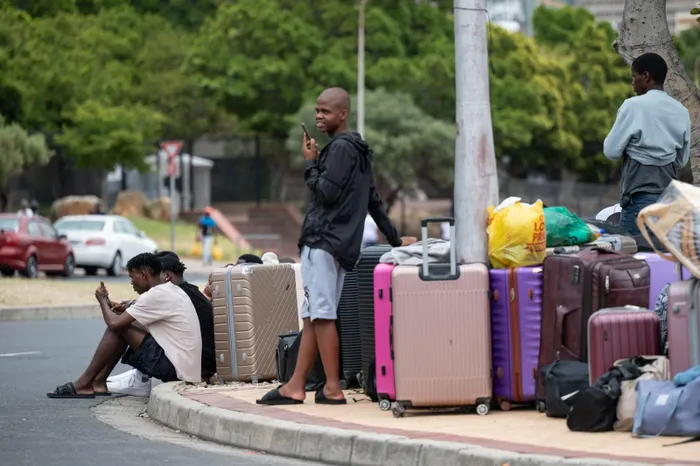
Many students remain without permanent accommodation.
Image: Armand Hough
As the new academic year approaches, dozens of students are without stable accommodation, with many sleeping outside the Cape Peninsula University of Technology’s District Six campus and relying on temporary, unstable arrangements for shelter.
Despite the university's recent efforts to provide relief by relocating some students into temporary accommodation over the weekend, a significant number remain stranded, facing uncertainty as classes draw near.
Students say many residence applications remain marked as “pending” or have been “declined”, leaving others stranded with nowhere to stay — including those who travelled from distant provinces to begin their studies.
With returning students already attending classes and first-year students expected to arrive next week, concerns are growing about student safety, academic performance and equal access to education.
CPUT spokesperson Lauren Kansley said the university intervened over the weekend to remove students who had been squatting outside the campus.
“Over the weekend we moved roughly 150 people who had been squatting outside the D6 campus into temporary accommodation,” Kansley said.
She explained that the affected group included students with a range of unresolved statuses. “They have a mixture of statuses like waiting for appeals, students who never applied for residence and now require it and others who have been declined,” she said.
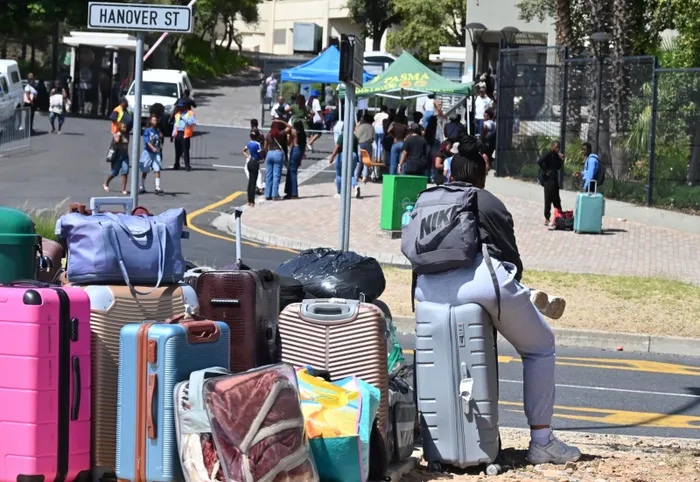
Despite recent efforts by CPUT to provide temporary housing, many students remain without stable accommodation as classes approach.
Image: Ayanda Ndamane
Kansley stressed that the presence of students outside campus came ahead of the official start of the academic programme for first-years. “First-year classes start on February 8 and they should only be arriving from the 6th,” she said.
She also highlighted the scale of the institution’s residence capacity, noting that Cape Peninsula University of Technology houses nearly half of its students. “CPUT houses nearly half of its student cohort of 37 500 in residence and we have the most residence spaces — 16 200 campus-owned and operated with an additional 4 000 private which can be utilised,” Kansley said.
Despite this, student activists say the crisis is far from resolved. The Pan Africanist Student Movement of Azania (PASMA) said while progress had been made, many students remain without permanent accommodation.
In a Facebook statement, PASMA said sustained pressure through its SRC structures resulted in 166 students with confirmed NSFAS funding being permanently placed at Adowa Living Residence. The organisation described this as “a victory for the students, by the students”.
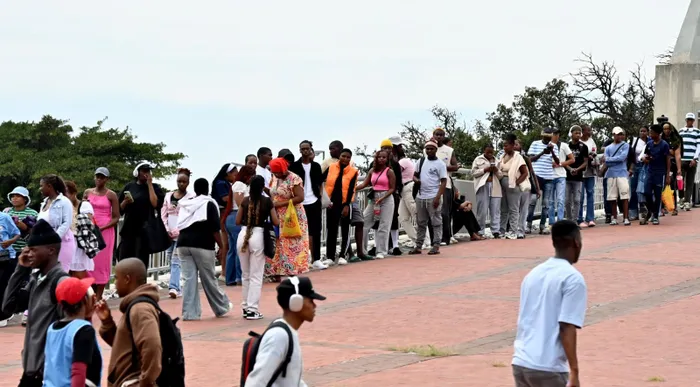
Snake queues form outside CPUT campus in District Six.
Image: Ayanda Ndamane/Independent Newspapers
However, PASMA cautioned that more than 286 students were initially affected and that many were still sleeping outside or relying on temporary arrangements. It also noted that the accreditation process for Adowa Living Residence had not been finalised and that the building did not yet fully belong to CPUT, with engagements ongoing.
As preparations continue for the 2026 academic programme, students have been queuing outside the District Six campus Learning Centre to collect student cards and access cards, even as some remain unsure where they will sleep.
The situation echoes similar accommodation crises at the start of the 2025 academic year, when students also reported sleeping outside campus or on floors while waiting for residence placements. Student organisations warn that unless outstanding applications are resolved quickly, the annual accommodation crunch will continue to leave vulnerable students exposed at the beginning of each academic year.
Get your news on the go, click here to join the Cape Argus News WhatsApp channel.
Cape Argus