Cape Town's dark secret: Why fugitives choose this paradise



Luxury living meets quiet intrigue in Cape Town’s leafy southern suburbs.
Image: AI Generated
Cape Town has long marketed itself as a lifestyle destination: sunshine, scenery, world-class food and a pace of life that encourages deep breathing.
Increasingly, however, it is also quietly emerging as an attractive place for foreign fugitives to lie low while living comfortably.
The latest reminder arrived in the leafy southern suburbs, after a popular personal trainer at a Constantia Virgin Active gym was linked to an Interpol red notice for alleged drug trafficking abroad, The Argus reported on Thursday.
The trainer, Stamenov Stanislav Sevdanilov, a Bulgarian national, was well known among clients as personable, generous and closely involved in family-focused training sessions — a public persona that stood in stark contrast to the allegations now associated with his name.
Several clients described shock and disbelief. One, speaking on condition of anonymity, said she was “seriously heartbroken”, describing the trainer as kind, humorous and widely liked. She said he often trained entire families together, allowed spouses and children to join sessions, and frequently went beyond what was expected professionally, including giving personalised Christmas gifts.
Authorities have confirmed little beyond the existence of an Interpol alert and historical foreign court records relating to a person with the same name. There has been no confirmation from South African authorities that the Constantia-based trainer is the same individual named in those records, nor that he is the subject of any active local criminal case.
What has been confirmed is that a Hawks case number exists in relation to the May 2023 killing of four Bulgarian nationals in Constantia. That investigation is being handled by the Western Cape Organised Crime unit. Hawks spokesperson Zinzi Hani confirmed the existence of the case but did not disclose whether it is linked to the trainer or the Interpol notice.
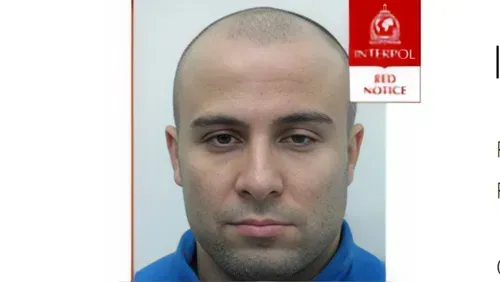
Stamenov Stanislav Sevdanilov.
Image: Supplied
Interpol has said that a red notice is not an international arrest warrant, but a request to law-enforcement agencies worldwide to locate and provisionally arrest a person pending possible extradition, with any action remaining at the discretion of national authorities.
Following media enquiries, the trainer’s online profile was removed from Virgin Active’s website and it is understood he was suspended. Attempts by the Cape Argus to obtain comment from the gym’s head office went unanswered. Calls to the trainer’s cellphone went straight to voicemail.
Life in Constantia, otherwise, continued as usual.
It was not an isolated moment. It rarely is.
A lifestyle pitch, with footnotes
To understand the appeal, one could do worse than consult Dr Simon Howell, a senior University of Cape Town criminology researcher, whose analysis unintentionally reads like a lifestyle prospectus.
“South Africa is a nice place to live,” Howell said. “It has a great environment, good weather, and modern conveniences.”
For those arriving from Europe, he added, it is “relatively easy to live very comfortably here”. More importantly, “it’s also a good place to lie low — it’s cheaper, attractive, and appealing for people wanting to start over”.
In marketing terms, the offering is clear: climate, affordability and discretion.
Location, location, Constantia
If Cape Town is the country, Constantia increasingly appears to be the gated estate.
The affluent suburb known for vineyards, large properties and a level of privacy that is difficult to come by elsewhere in the city — has featured repeatedly in Cape Argus reporting on international fugitives.
National police statistics for the most recent reporting period show that the Western Cape’s highest levels of serious violent crime remain concentrated in a small number of policing precincts, largely outside Cape Town’s wealthiest suburbs.
Constantia does not feature among the city or province’s top crime-contributing stations for serious violent offences, reinforcing its reputation as a quiet, affluent area where reported violent crime levels are significantly lower than in many other parts of Cape Town.
There was UK drug suspect Callum Gower, arrested in Constantia after living in the area while wanted by British authorities, before being extradited. His mother was found in Sea Point.
There was also the May 2023 killing of four Bulgarian nationals in Constantia — a case that drew significant international attention because one of the victims was Krasimir Nikolaev Kamenov, also known as “Kuro”.
Kamenov was a high-profile Bulgarian underworld figure who had been the subject of an Interpol red notice for alleged offences including murder and extortion. Bulgarian authorities had previously accused him of orchestrating killings and attempting to discredit senior police officials. Despite this, he had been living in South Africa at the time of his death.
Kamenov, his wife and two other associates were shot dead in what investigators have described as a targeted attack. In the aftermath, law-enforcement sources indicated that Kamenov was believed to be part of a broader transnational organised crime network, with investigations extending beyond South Africa’s borders.
Subsequent reporting has suggested that individuals linked to Kamenov’s network continued to surface in the Cape Town area after his death, reinforcing concerns that international organised crime figures — or their associates — have been able to operate locally for extended periods before drawing the attention of authorities. Police have not publicly detailed the full scope of the investigation, citing its sensitivity.
And now, again, a familiar sequence: a foreign national, an affluent address, and international scrutiny arriving long after local life had settled into routine.
The soft landing
Howell cautions against overstating the scale of the phenomenon.
“It really depends on how you define ‘fugitive’,” he said, noting that statistically the exact number of international suspects in South Africa is unknown.
But, he added, he has “come across quite a few cases over the years”.
“These aren’t always high-profile criminals,” Howell said. “Often they’re people involved in various crimes who want to start a new life and get away from past issues.”
Lifestyle alone does not explain the appeal. Policing capacity also plays a role.
“Border control and law enforcement are not always as tight as they should be, which makes it easier to enter the country,” Howell said. “Weak or inconsistent policing also plays a role, especially if you have money. With money, it’s easier to get away with more and remain hidden.”
In brochure language: low barriers to entry, limited scrutiny, premium anonymity.
Not lawless — just porous
This is not to suggest a city without consequences.
South Africa cooperates with Interpol and international policing agencies and is generally well regarded in that regard. Arrests are made. Extraditions do occur. As the Gower case demonstrated, life in paradise can end abruptly at Cape Town International Airport.
But Howell says structural gaps remain.
“As with most countries, there are gaps, and people slip through them,” he said. “Corruption and organised crime can become embedded in systems of governance, and if you have money, it’s not difficult to buy your way in — or buy your way into innocence.”
A quiet life — until it isn’t
What makes suburbs like Constantia attractive is not invisibility, but normality. Foreign accents draw little attention. Affluence blends in. A personal trainer, a business owner, a parent at a school gate — all look much the same in a place where privacy is assumed.
That is why an Interpol notice, when it surfaces, lands with such force.
“There have been cases going back several years — including well-known examples where individuals were living here for a long time before being detected and dealt with,” Howell said.
The fine print
So, is Cape Town a haven for foreign fugitives?
Not officially. Not permanently. But as history shows, it has offered something many on the run are seeking: time, comfort and the illusion of a fresh start.
The sales pitch writes itself. The disclaimer does too.
Cape Town welcomes the world — but sometimes, the world arrives with baggage. And sooner or later, someone checks it.
Get your news on the go, click here to join the Cape Argus News WhatsApp channel.
Cape Argus