Residents urged to conserve water as Knysna's water buffer rises to 17 days


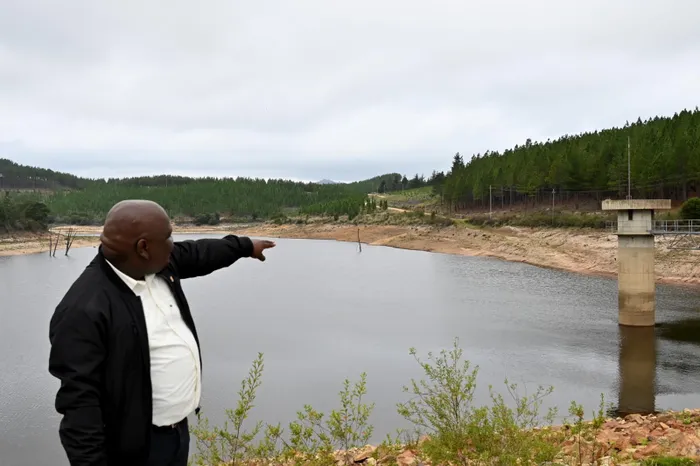
Knysna’s water buffer has improved to 17 days, with dam levels rising and repairs under way — but officials warn the town remains in disaster mode and residents must continue to save water.
Image: Ayanda Ndamane/ Independent Newspapers
The water situation in Knysna has shown encouraging improvement, with the municipality’s water buffer has increased to 17 days, according to an update from the Joint Operations Committee (JOC) overseeing the town’s water crisis.
Western Cape MEC for Local Government, Environmental Affairs and Development Planning Anton Bredell said he was encouraged by the progress being made, but cautioned that the broader Southern Cape region remains under pressure.
The level of the Akkerkloof Dam has risen from 15% to 20.9%, while current water usage in Knysna stands at about 10.1 kilolitres per day. This marks a notable improvement from the 10-day buffer recorded just two weeks ago.
Plumbing teams have repaired 29 minor leaks, with no major pipe bursts reported in recent days. Water pumps across the system remain stable and are operating within specified parameters.
Water is currently being abstracted from multiple sources, with the Charlsford and Eastford pump stations drawing a combined 210 litres per second from the Knysna River. The Akkerkloof pump station is operating at 44 litres per second, while the Glebe Dam pump station is pumping at 33 litres per second.
As part of longer-term interventions, the JOC has committed to installing 1 000 water meters per week to replace approximately 8 000 bypassed meters that are undermining effective water management. A fire hydrant repair plan is also being developed to strengthen system integrity and improve firefighting readiness.
“I am pleased with the progress being reported,” Bredell said. “While the immediate focus is on Knysna, the entire Southern Cape region remains water-stressed, and current weather forecasts for the Western Cape point to a dry winter ahead. Effective water management in all our towns will be critical in the year ahead. We cannot control the rain, but we have full control over how we manage the water resources at our disposal.”
Knysna Executive Mayor Thando Matika welcomed recent rainfall but warned residents not to become complacent.
“We are grateful for the rain we have received, but must warn residents that they must save water,” Matika said. “Heavy rains are only predicted for April, so we are still in disaster mode.”
She confirmed that a disaster has been declared at council and provincial level, with national processes still being finalised.
“Our neighbouring towns have had some challenges in terms of fires. We are concerned that this could affect us,” she said.
Matika said the municipality remained mindful of Knysna’s history of devastating wildfires, including the 2017 disaster.
“Knysna was struck by major wildfires in 2017, but we are prepared. Our joint operations team has met with the district municipality to prepare in case Knysna faces heavy fires,” she said, adding that most fires occur in veld areas and that disaster teams would primarily use seawater for firefighting if needed.
The water and fire concerns in Knysna form part of wider provincial pressures during an exceptionally severe fire season. Premier Alan Winde has previously said the Western Cape has already spent R19 million on bringing in additional resources to help battle fires, alongside R16 million on helicopters, as budgets come under strain amid worsening drought and wildfire conditions.
Get your news on the go, click here to join the Cape Argus News WhatsApp channel.
Cape Argus