City of Cape Town's budget performance surpasses expectations with strong financial result


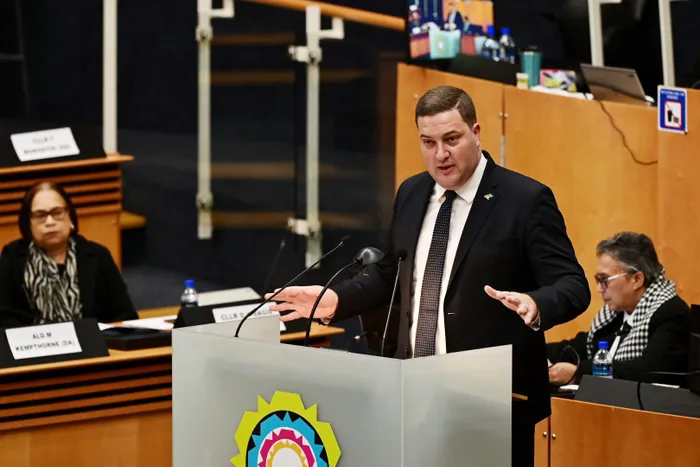
Cape Town Mayor Geordin Hill-Lewis.
Image: Supplied
Cape Town had nearly R12bn in the bank at the end of November last year, putting the metro in a strong financial position midway through the 2025/26 financial year.
According to the City of Cape Town’s Financial Monitoring Report for November 2025, cash and cash equivalents stood at about R11.8bn in the bank at month-end.
The report was tabled to Mayor Geordin Hill-Lewis and the mayoral committee for review on Tuesday.
The Financial Monitoring Report is compiled every month in terms of the Municipal Finance Management Act. It tracks how the city is performing against its budget and flags areas where corrective action may be needed.
One of the key measures in the report, seen by Cape Argus, is the cost coverage ratio, which shows how long the city can keep operating without collecting new revenue. At the end of November, this ratio stood at 2.09 months, which falls within National Treasury’s recommended range of one to three months.
The city's current ratio, which measures whether it can meet short-term debts, stood at 2.36 to one, meaning it had more than enough short-term assets to cover short-term obligations. While the city is forecasting a small operating deficit of about R147.9m for the full 2025/26 financial year, it recorded a year-to-date operating surplus of about R1.8bn by the end of November.
The report notes this was largely due to spending coming in lower than expected in several areas. Total operating revenue for the year is forecast at about R64.9bn, while total operating expenditure is expected to reach about R65bn.
Electricity remained the city's biggest source of income, with revenue broadly in line with projections.
Property rates also performed better than expected, partly due to valuation changes during the reporting period. One of the standout items in the report was interest earned on cash and investments.
The city earned more than R500m above budget in interest income, driven by higher cash balances and more favourable interest rates. Income from fines and penalties also exceeded expectations. This was linked to increased traffic enforcement, vehicle impoundments and stricter by-law enforcement, including action against problem buildings.
On the spending side, total expenditure was about R705m below budget year-to-date. Employee-related costs were lower than planned, mainly because vacancies took longer to fill, some posts were filled internally and certain job-creation projects were rolled out more slowly than expected. Interest payments were also lower than budgeted after the city delayed drawing down loans in line with its borrowing strategy, resulting in savings on debt servicing costs.
Capital spending lagged behind projections. By the end of November, the city had spent about R3.8bn of its R13.5bn capital budget for the year.
The report notes that underspending on capital projects can delay delivery timelines, but it also reduces the need for immediate borrowing.
The metro said any savings identified during the year would be set aside to reduce borrowing and help fund its capital programme.
Get your news on the go, click here to join the Cape Argus News WhatsApp channel.
Cape Argus