Knysna faces severe water crisis as Akkerkloof Dam levels drop


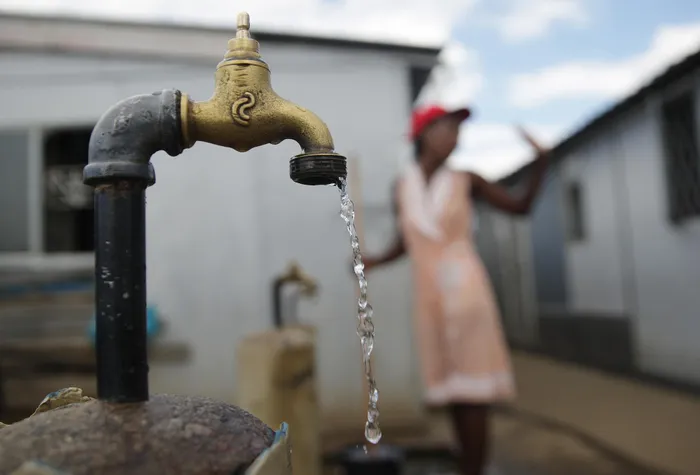
Knysna's water supply is under significant pressure, prompting authorities to urge residents and visitors to conserve water.
Image: Independent Newspapers Archives
Knysna is trying to hold on to every last drop of water as its main dam continues to drop.
The Garden Route’s glitzy seaside jewel relies heavily on the Akkerkloof Dam, its primary water source, which now has only enough water left to last the town for about eight to nine days.
In a detailed breakdown released on Tuesday, the municipality said figures from Monday showed just how tight the situation has become.
The town took in about 12.3m litres of water in a day, while just over 9m litres were actually used.
Municipal spokesperson Nwabisa Pondoyi said the daily water supply updates were always one day behind, meaning Tuesday’s notice reflects what happened on Monday.
Pondoyi said the lag was due to the time needed to collect, verify and compile data from multiple abstraction points across the municipal area.
"Stats for Tuesday will only be available on Wednesday," Pondoyi said.
"At present, we do not have information reflecting data for Tuesday."
Level 4 water restrictions remain firmly in place across the municipality, with residents and visitors urged to use water only for essential needs.
The worsening water crisis has already prompted the Greater Knysna Municipality to declare a local state of disaster.
Public showers and external taps at ablution facilities and public spaces remain closed as part of the water-saving measures.
"Water resources and infrastructure across the municipality remain under severe strain," the municipality said.
"River flows are still low, and the rainfall received is insufficient to significantly improve dam levels or reverse current water security challenges, particularly as water consumption remains unacceptably high."
Pumps were apparently running around the clock to transfer water from the Balancing Dam to Akkerkloof, supplying thousands of kilolitres a day, while direct abstraction from Akkerkloof itself remains closed to protect the shrinking reserve..
The Homtini and Goukamma rivers continue to run low, and river mouths remain closed. Sedgefield’s reservoirs are currently above 90% and are being supported by boreholes, but consumption there remains high.
SA Weather Service forecaster Lelo Kleinbooi said the coastal belt between Mossel Bay and Storms River was expected to receive below-normal rainfall, despite a weak La Niña currently being in effect. La Niña is part of the El Niño–Southern Oscillation, or ENSO, and occurs when Pacific Ocean temperatures are cooler than normal.
Kleinbooi said below-normal rainfall was likely to persist into autumn as ENSO shifts toward a neutral phase.
"This coupled with the below-normal rainfall possibility or anticipated drier conditions will result in an increased risk of runaway fires along the South Coast of SA, which has already been observed, and dire impacts considering that the dam levels are also dwindling," Kleinbooi said.
Bitou municipality, which includes Plettenberg Bay, has also moved to Level 4 water restrictions after the Roodefontein Dam fell below critical levels.
The area has less than 40 days of water supply left. Mossel Bay has introduced strict weekly watering quotas to stretch dwindling water sources.
Get your news on the go, click here to join the Cape Argus News WhatsApp channel.
Cape Argus