Knysna inches closer to Day Zero despite heavy rainfall


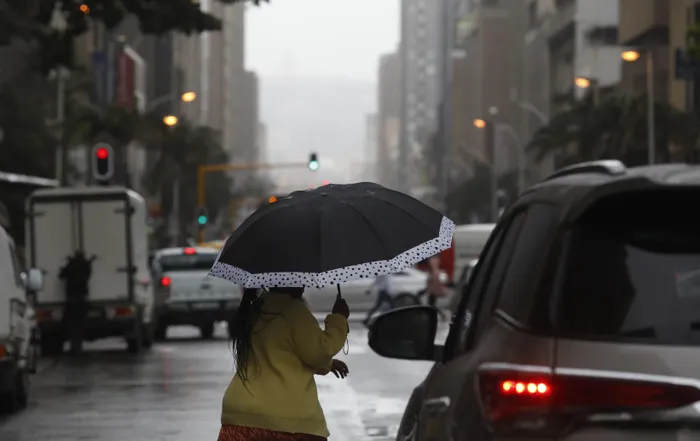
Downpour hits Garden Route, drought threat still high
Image: Doctor Ngcobo/IOL
When it rains, it pours — and that is exactly what happened on the water-starved Garden Route, with Knysna alone recording 43.6mm in 24 hours.
And though Thursday's downpour brought some relief after a long, dry spell that forced extreme water restrictions, it still isn’t enough to break the back of the drought.
SA Weather Service (Saws) forecaster Lelo Kleinbooi said the coastal belt between Mossel Bay and Storms River was expected to receive below-normal rainfall compared to long-term climatic averages, though a weak La Niña is currently in effect.
La Niña is one phase of the El Niño–Southern Oscillation, or ENSO, and occurs when sea surface temperatures in the central and equatorial Pacific Ocean are cooler than normal.
This cooling usually brings above-normal summer rainfall to north-eastern parts of South Africa, but its effects can vary widely in other regions, including the southern coast.
Kleinbooi said the likelihood of below-normal rainfall along the South Coast was expected to continue for the rest of summer and into autumn, even as ENSO moves toward a neutral phase.
ENSO is a climate phenomenon with three phases — El Niño, La Niña and neutral — and each phase affects rainfall and temperatures differently across various parts of the world.
Daytime temperatures are also expected to be above normal for this time of year, she told IOL.
"This coupled with the below-normal rainfall possibility or anticipated drier conditions will result in an increased risk of runaway fires along the South Coast of SA, which has already been observed, and dire impacts considering that the dam levels are also dwindling," Kleinbooi said.
Several towns across the South Coast recorded rainfall in the 24-hour period leading up to 8am on Friday.
According to official Saws data, Knysna received the highest volume of rain with an accumulation of 43.6mm.
This followed 24.2mm recorded in the town the previous day.
In George, the Witfontein station recorded 23.8mm, while the airport station measured 9mm, a decrease for the airport, which had recorded 26mm the day before.
Mossel Bay saw 8.4mm of rain, an increase from the 4.6mm measured the previous day.
In Ladismith, rainfall increased significantly from 1mm on Thursday to 8.2mm on Friday.
Other areas recorded lower figures, with Joubertina receiving 2.8mm and Riversdale measuring 1.6mm.
Still Bay recorded 0.2mm, while Oudtshoorn remained dry with no rainfall recorded over the station for the second consecutive day.
Data was unavailable for Plettenberg bay for both periods, and for the previous 24 hours in Witfontein and Joubertina.
"The lack of data does not imply there was no rain in those areas," Kleinbooi said.
Several towns along the Garden Route are facing severe water shortages as dam levels continue to drop and rainfall remains far below average.
Knysna, one of the hardest-hit towns, has declared itself a water-stressed area and imposed Level 4 water restrictions.
Households here were limited to very low usage, and measures such as water-restricting devices and zone throttling have been introduced to protect the remaining supplies.
Knysna, where the Akkerkloof Dam was only 15% full, has just about eight days of water supply left.
Bitou municipality, which includes Plettenberg Bay, has also moved to Level 4 water restrictions after the Roodefontein Dam fell below critical levels. The area has just under 40 days of water supply left.
Mossel Bay has introduced strict weekly watering quotas to stretch dwindling water sources, limiting garden watering days and banning the filling of swimming pools.
George has tightened restrictions ahead of peak demand, moving to Level 2C with emergency tariffs after its dam levels dropped.
Domestic users now face lower monthly allowances, and businesses are required to cut consumption.
Local government, environmental affairs and development planning MEC Anton Bredell asked the provincial cabinet to request a provincial disaster classification following the water crisis and the wildfires that caused havoc over the past fortnight.
“A disaster declaration from the national disaster management centre will allow us to focus across line functions and also to move funding quickly between programmes if and when needed, Bredell said.
He also said urgency was needed from all role players to avoid a "day zero" situation in Knysna.
IOL News