Rescued animals bring hope after Pearly Beach and Stanford wildfires


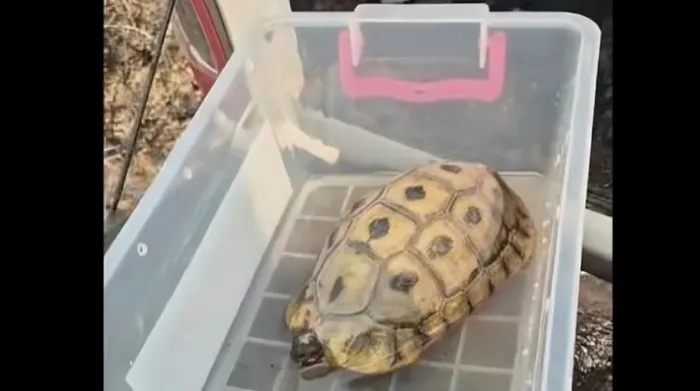
A rescued tortoise receives urgent care after being pulled alive from the ashes of the Pearly Beach fires — a small moment of hope amid widespread devastation.
Image: Screenshot
Charred landscapes, silence where wildlife once moved freely, and the grim reality of loss have marked the aftermath of wildfires in Pearly Beach and Stanford, where animal welfare first responders continue to work through the devastation in search of survivors.
Teams from the Cape of Good Hope SPCA returned to the fire-ravaged areas on Sunday, navigating scorched terrain as flames subsided. The scale of destruction has been severe, with hundreds of animals believed to have perished as fires tore through natural habitats.
Among the hardest-hit were tortoises. Rescuers found more than 100 dead, their shells blackened by the intense heat. Yet amid the heartbreak, there were moments that offered a measure of comfort: 13 tortoises were found alive, rescued and released into safe areas, while three injured survivors were rushed for urgent veterinary treatment.
Responders also saved a snake suffering burn injuries, while pockets of birdlife were recovered and a small number of rodents moved to safety. Each rescue, SPCA teams said, stood as a reminder that even in widespread destruction, life can endure.
On surrounding farms, welfare teams checked hundreds of cattle, sheep and horses, all of which were found safe and unharmed — a rare piece of good news in a week dominated by loss.
SPCA officials said their teams would continue canvassing Stanford and areas above Pearly Beach as conditions allow, with Wolvengat, known for its forestry pockets, also earmarked for further searches once it is safe to proceed.
The rescues form part of a broader wildfire crisis across the Western Cape, where at least 10 major fires have scorched vast areas in recent days. While firefighters have managed to stabilise several blazes, animal welfare teams remain stretched, moving between disaster zones as they search for wildlife fleeing burned terrain and pets separated from their families.
Western Cape Premier Alan Winde has praised the collective response to the fires, noting that no human lives have been lost, while authorities continue to warn that flare-ups remain possible under hot, dry conditions.
Meanwhile, CapeNature has again urged the public not to interfere with wildlife affected by fires, stressing that only authorised responders may intervene, as well-meaning actions can unintentionally cause further harm.
For first responders on the ground, the work continues — often marked by grief, exhaustion and loss, but also by brief, powerful moments of hope when a living animal is found against the odds.
Get your news on the go, click here to join the Cape Argus News WhatsApp channel.
Cape Argus