Western Cape wildfires: Firefighters contain major blazes, saving lives and homes


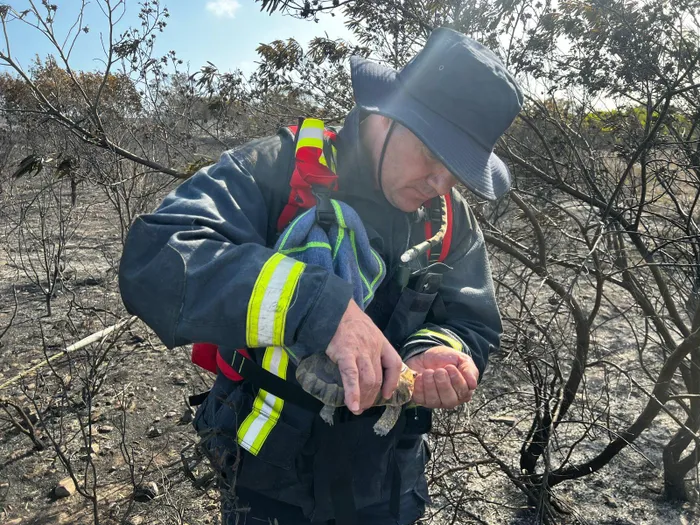
A firefighter gently gives water to a rescued tortoise amid the charred remains of vegetation after a wildfire.
Image: Mossel Bay Municipality/ Facebook
Firefighters across the Western Cape continued to consolidate containment lines this weekend after a punishing week that saw at least 10 major wildfires scorch vast swathes of the province, damaging 45 structures and burning about 90 000 hectares of land, while sparing lives.
In Mossel Bay, the wildfire that swept through Aalwyndal, Island View and Vakansieplaas earlier this week has been fully contained, according to Mossel Bay Municipality. The affected area covers about 23 square kilometres. Officials said flare-ups were successfully contained despite strong winds on Friday, with firefighting teams from the Garden Route District Municipality, Mossel Bay, neighbourhood watch volunteers and firefighters from Gauteng extinguishing remaining hotspots. Fire lines were patrolled overnight and remain secure, with a monitoring crew and law enforcement maintaining access control.
The municipality said the community response had been overwhelming, allowing humanitarian donations to be halted as field operations wind down. Excess supplies are being redirected for sorting and redistribution.
While several fires are now stabilising, animal welfare teams remain stretched as they respond to the aftermath and to active fire zones elsewhere. The Cape of Good Hope SPCA said its rescue teams are working across multiple disaster areas hundreds of kilometres apart. In Dunoon, where a devastating blaze left about 5 500 families homeless, rescuers continue searching through ash and rubble for missing or injured pets. At the same time, SPCA teams remain deployed in the Overstrand, supporting wildfire response efforts in Pearly Beach and Stanford, where containment and mop-up operations are under way, but difficult terrain continues to pose challenges.
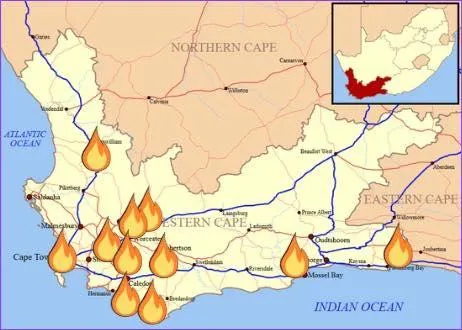
A map showing the spread of multiple wildfire hotspots across the Western Cape as crews battle blazes from the Winelands to the Garden Route.
Image: Premier Alan Winde/ Facebook
“Our First Responders are moving from urban devastation to wild landscapes,” the organisation said, adding that teams are battling exhaustion as they search for companion animals separated from families and wildlife fleeing burnt terrain.
The Animal Welfare Society of South Africa confirmed its teams are stationed at farms where fires are threatening livestock, working alongside Fire and Rescue services and remaining on standby should conditions deteriorate.
Against this backdrop, Western Cape Premier Alan Winde commended the “collective, heroic effort” behind the province’s wildfire response. “No lives have been lost, thanks to the collective efforts of residents and emergency personnel,” Winde said, thanking everyone involved “from residents and volunteers to helicopter pilots, and from drivers to donation coordinators”.
He urged residents in affected areas to remain alert and to act swiftly when instructed. “If you see a fire, report it immediately,” Winde said, while also warning that many municipalities are facing severe water shortages. “If you are in a municipality with water restrictions, please adhere to daily allowances and use water sparingly.”
Meanwhile, CapeNature again appealed to the public not to interfere with wildlife affected by fires, stressing that unnecessary handling can cause further harm and that only authorised individuals may intervene.
As hot and dry conditions persist, authorities have warned that flare-ups remain possible, even in areas where fire lines are currently contained.
CapeNature reminds the public that wildlife displaced or affected by fire must not be touched, captured, fed or removed. Although animals may appear injured or disoriented, many can move away and recover without intervention. Unnecessary handling can cause severe stress, injury or death, and may place people and wildlife at risk. Importantly, only trained and authorised individuals and/or facilities are permitted to handle, transport or rehabilitate wild animals, in line with environmental legislation and that have the required permit/s is in place. Removing wildlife without authorisation is unlawful, even when done with good intentions.
Get your news on the go, click here to join the Cape Argus News WhatsApp channel.
Cape Argus