WCED struggles with school reopening challenges in disadvantaged communities


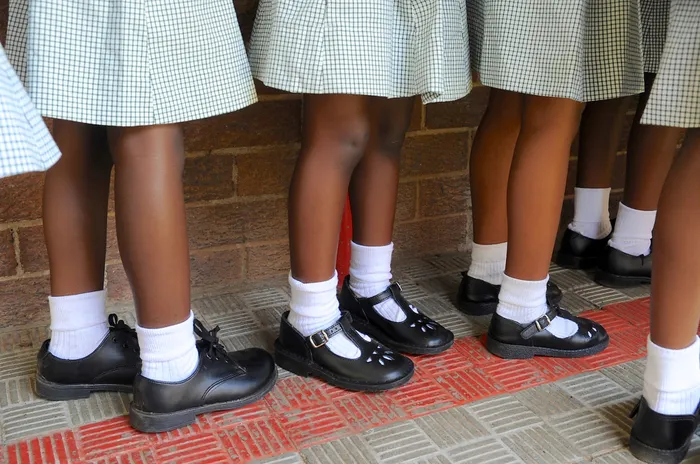
Concerns have been raised about the impact of unplaced learners in schools situated in poorer communities.
Image: Karen Sandison
As learners prepare to return to classrooms next week, there are growing concerns about the Western Cape Education Department's (WCED) readiness for the 2026 school year, especially in poorer communities where placement delays and overcrowding have become a yearly occurrence.
COSATU in the Western Cape said it was already hearing from parents whose children have not been placed in schools, warning that the situation echoes challenges that have been raised by parents and learners year after year.
"Year after year, we don’t see any plans from the department that work to address the issues faced by learners and parents. Kids are not placed in schools and end up staying at home for a full year, and then the department shifts the blame to parents," said the federation's Provincial Secretary, Malvern du Bruyn.
According to COSATU, the persistence of placement failures points to a deeper lack of long-term planning, which impacts disadvantaged children.
"We have seen this problem affecting families for more than five years now. If there was really a plan in place, then we wouldn’t still have this problem," Du Bruyn continued.
The union also raised concerns about inequality across the provincial schooling system, saying that the challenges of overcrowding remain concentrated in Black and Coloured working-class communities.
"When we visit Model C schools in affluent areas, classrooms typically accommodate about 30 learners. But in Black and Coloured areas, you find classrooms with more than 60 learners in one classroom."
The federation added that despite having access to enrolment data, the department has shown little initiative to redistribute learners or proactively address overcrowding in high-demand areas.
While COSATU has not yet formally engaged the WCED this year, it said it was waiting to see how the situation unfolds once schools reopen, noting that the full scale of the problem often only becomes visible after the academic year begins.
According to the WCED, as of December 15, last year, the department had successfully placed 96.3% of learners in Grades R, 1, and 8 for the 2026 school year.
"Placement is still in progress for 7,238 learners, representing 3.7%," the department said in a written response, adding that updated figures would be released once verified.
The department also noted that it was in a better position compared to the previous year, having placed learners faster overall.
It added that it was ready for the 2026 school year and has taken steps to address infrastructure and resource needs in schools across the province.
"The department is prepared and ready for the 2026 school year. Construction of new schools and classrooms has been completed or is being finalised, textbooks and stationery ordered and delivered, and furniture and equipment assigned to the relevant schools."
However, the WCED acknowledged that late applications continue to place a strain on the system. "In the second half of November up to December 15, we received new late applications for over 7,300 Grade R, 1, and 8 learners,” the department said.
The department also cited challenges in contacting parents once placement offers become available.
Get your news on the go, click here to join the Cape Argus News WhatsApp channel.
Cape Argus