JSC rules against Judge Parker, finding him guilty of gross misconduct


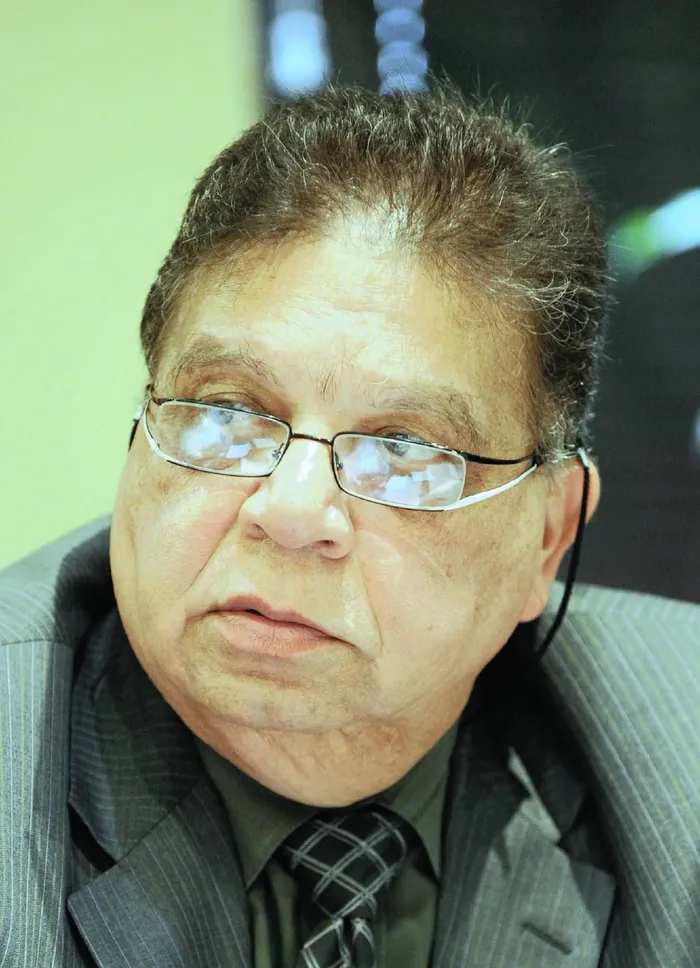
Western Cape High Court Judge Mushtak Parker has been found guilty of gross misconduct by the Judicial Service Commission.
Image: Leon Lestrade/Independent Newspapers
Western Cape High Court Judge Mushtak Parker has been found guilty of two counts of gross misconduct by the Judicial Service Commission (JSC). The ruling comes after a Judicial Conduct Tribunal's investigation last year.
The JSC said it met on October 13 last year without members of Parliament present, to consider the tribunal’s report, the record and transcript of proceedings, and Judge Parker’s written submissions.
The tribunal was constituted under sections 19 and 21 of the Judicial Service Commission Act 9 of 1994.
The findings arise from two separate complaints against Parker, one lodged on March 23, 2020 by 10 judges of the Western Cape Division of the High Court, and another by the Cape Bar Council.
In relation to the complaint by the judges, Parker was found to have acted dishonestly by giving two “contradictory and mutually exclusive” versions of an incident that allegedly took place in his chambers on February 25, 2019 involving then Judge President John Hlophe.
In one version, Parker alleged that Hlophe assaulted him in a fit of rage. In another, he stated that no assault occurred.
“It is not disputed by Judge Parker that he provided two contradictory and mutually exclusive versions of the incident that happened in his chambers between himself and then Judge President Hlophe,” the JSC said.
The commission found that Parker’s conduct in doing so was deliberate and amounted to gross misconduct as envisaged in section 177(1)(a) of the Constitution.
The second complaint related to Parker’s conduct while he was practising as an attorney prior to his appointment to the bench.
The tribunal found that Parker and his partners misappropriated trust funds belonging to creditors and that he breached the rules of the law society by failing, over a prolonged period, to disclose trust account deficits while he was a managing director of the firm.
The JSC said Parker also misled the commission during his judicial appointment process by stating that there were no circumstances, financial or otherwise, that might cause embarrassment in assuming judicial office.
The tribunal found that Parker’s failure to disclose, both in his nomination questionnaire and during his interview before the JSC, that his law firm’s trust account had long been in deficit “constitutes gross misconduct on his part”.
The JSC found him guilty on of gross misconduct on both instances.
“In relation to the complaint by the judges, Judge Parker is guilty of gross misconduct; and in relation to the complaint by the Cape Bar Council, Judge Parker is guilty of gross misconduct.”
In his representations, Parker previously denied that his conduct amounted to gross misconduct.
He said that in relation to the Hlophe incident he had misstated the facts and “sought to correct the mistake once he realised it”.
Regarding the trust account shortfalls, Parker said he only became aware of them after his appointment as a judge and that, once aware, he took steps to repay the missing funds.
Parker also told the tribunal that he is suffering from a brain tumour and a heart condition and is undergoing radiation therapy.
He said he is 71 years old and that his wife, a former nurse, left her job to care for him and is financially dependent on him.
Parker submitted that there was “no basis” for his impeachment and said that, if not removed from office, he would take early retirement on the grounds of ill health.
The JSC, however, found that Parker’s contradictory accounts of what occurred in his chambers were deliberate and “amount to gross misconduct”.
Get your news on the go, click here to join the Cape Argus News WhatsApp channel.
Cape Argus