Milnerton Lagoon air quality remains safe, confirms City monitoring


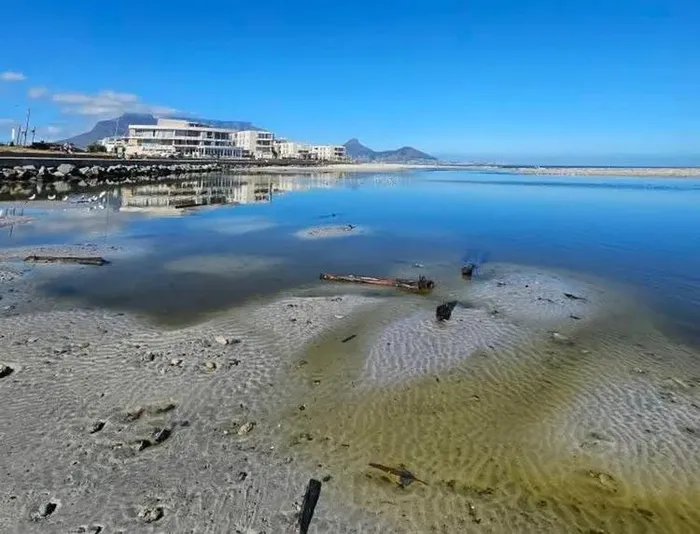
The City of Cape Town says ongoing air-quality monitoring shows hydrogen sulphide levels remain below international health guidelines, while warnings remain in place that the water is not safe for recreational use.
Image: File
The City of Cape Town says ongoing air-quality monitoring at the Milnerton Lagoon shows no immediate health risk to nearby residents, with hydrogen sulphide levels remaining well below international safety guidelines.
The assurance comes from Councillor Francine Higham, the City’s Mayoral Committee Member for Community Services and Health, following questions about whether a recent health or environmental health risk assessment has been conducted at the lagoon.
Higham said City Health re-established continuous ambient air-quality monitoring at the lagoon earlier this year after previous equipment was vandalised.
“City Health has re-established continuous monitoring of ambient air quality at the Milnerton Lagoon, with a station commissioned on Woodbridge Island in February 2025,” she said. “This monitoring programme forms part of our ongoing commitment to safeguard the health of residents living near the lagoon.”
According to Higham, data collected since February shows that hydrogen sulphide (H₂S) concentrations in the air remain well below the World Health Organization’s daily ambient air-quality guideline of 110 parts per billion.
“The continuous monitoring since February 2025 shows that hydrogen sulphide concentrations remain well below the World Health Organization’s daily guideline,” she said. “A detailed review of current scientific literature also indicates that low-level exposure to H₂S has limited impacts on human health.”
Based on these findings, Higham said a formal health risk assessment is not currently required.
“Based on these findings, a formal Health Risk Assessment is not currently warranted, but monitoring continues to ensure the safety of the community,” she said.
Responding to concerns from residents living near the lagoon, Higham said current data does not point to any immediate health risks from air exposure.
“Current data indicates that H₂S levels are safely below health guideline thresholds. Therefore, there are no immediate health concerns for residents from air exposure at this time,” she said.
However, she stressed that the City continues to take precautions regarding contact with the lagoon water itself.
“The City continues to maintain signage around the lagoon warning that the water is not suitable for recreational activities, which remains an important precaution to protect public health,” Higham said.
She added that health advisories linked to water use have been in place for years and remain unchanged.
“For many years, clear signage has been in place to advise residents and visitors that the lagoon water is not suitable for swimming or other recreational activities,” she said. “The City is committed to keeping the community informed and ensuring that public health guidance is visible, accessible, and easy to understand.”
Looking ahead, Higham said the City will continue its monitoring programme and is prepared to act should conditions change.
“City Health, together with our sister departments, will continue regular monitoring of ambient air quality to ensure that H₂S concentrations remain within safe limits,” she said. “If levels were ever to approach or exceed the World Health Organization’s daily guideline, the City is prepared to promptly communicate any necessary public health guidance to residents.”
She said the ongoing monitoring reflects the City’s proactive approach to protecting community health and maintaining public confidence in the local environment.
Get your news on the go, click here to join the Cape Argus News WhatsApp channel.
Cape Argus