Cape Town's traffic crisis: Ranked 6th most congested city in the world


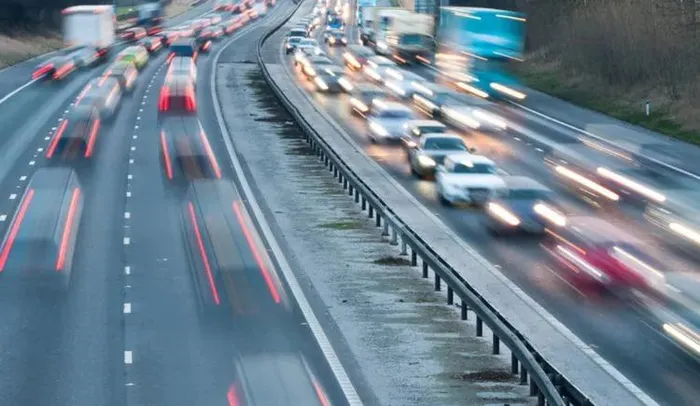
Drivers lost an average of 96 hours a year in traffic, ranking the city 6th most congested globally, according to INRIX. With festive traffic rising, the City is stepping up enforcement to keep intersections clear.
Image: File/ Newspress
Cape Town has been ranked the sixth most congested city in the world, with drivers losing an average of 96 hours a year in traffic, according to the latest INRIX Global Traffic Scorecard.
The report analysed congestion data from 942 cities worldwide and found that while Cape Town’s congestion rose only 2% compared to last year, it has increased by 16% since 2023, placing growing strain on the city’s road network.
Peak-hour speeds in the CBD averaged just 18km/h (11 miles per hour), underscoring the severity of daily gridlock.
Mayoral committee member for safety and security JP Smith said rapid population growth and rising vehicle numbers were placing increasing pressure on Cape Town’s roads.
“More than a million new motor vehicles were sold in South Africa over the past two years. With many families moving to Cape Town, the city’s population has grown by over 100,000 since 2023,” Smith said.
He warned that avoidable driver behaviour, particularly blocking intersections, was worsening congestion.
“When you arrive at an intersection, please don’t edge into it if you can’t immediately pass through the other side. Doing so blocks other motorists and adds to congestion, it’s an offence,” he said.
Smith said traffic officers were recording violations and that CCTV technology would be used to monitor intersections, with offenders receiving summonses to appear in court.
As traffic volumes increase over the festive season, the City will continue its ‘Don’t be a Creep’ campaign to curb congestion caused by drivers blocking intersections. Since the campaign’s launch, more than 140 fines have been issued.
Mayoral committee member for urban mobility Rob Quintas said creeping into intersections caused gridlock and posed serious safety risks, including trapping emergency vehicles.
“Our time off is precious. We want to spend it with loved ones, not stuck in traffic,” Quintas said, urging motorists to wait behind the stop line and keep intersections clear.
He said law enforcement officers would be deployed at key CBD and major intersections during the busy holiday period, while warning that vehicles could be impounded if the proposed Traffic By-law Amendment is approved early in 2026.
Signage warning motorists not to block intersections has also been installed along major arterials where creeping is common.
However, Jacques Weber, head of public safety for the Lower Gardens City Improvement District and chairperson of the Sea Point City Improvement District, said enforcement and awareness campaigns alone would not resolve Cape Town’s congestion crisis.
“Even assuming one vehicle per person, Cape Town’s population growth since 2023 has added about 100,000 cars to the road network,” Weber said.
He said those vehicles would stretch roughly 340 kilometres end to end, illustrating the scale of the challenge.
“Far more practical, immediate and structural interventions are required,” Weber said, calling for a dedicated congestion and traffic planning department empowered to act quickly.
Weber cited unresolved congestion along York Road and Cavalcade Road on the Atlantic Seaboard and poorly synchronised traffic lights near the Cape Town International Convention Centre as examples of problems that could be addressed with focused, data-driven intervention.
Without decisive action, he warned, congestion in Cape Town would continue to worsen.
“Our population growth is not slowing down. Our planning response must finally catch up,” Weber said.
Get your news on the go, click here to join the Cape Argus News WhatsApp channel.
Cape Argus