Breaking the grey zone: South Africa's cannabis reform initiative


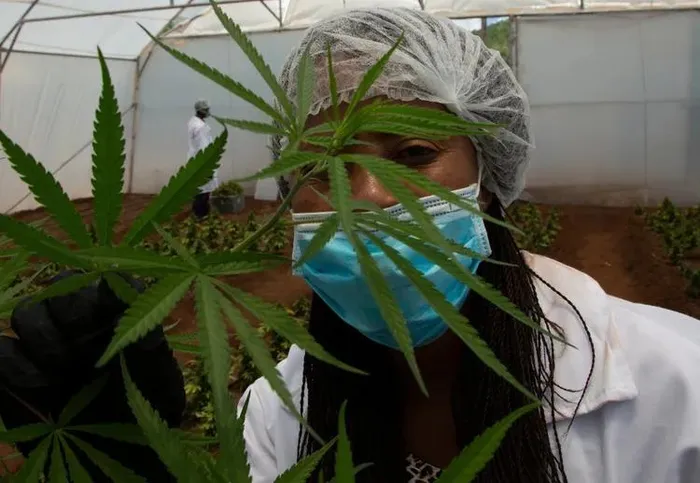
SACCA’s Project Indlela brings Western Cape communities, legacy growers and cannabis clubs into a unified proposal aimed at shaping future cannabis legislation.
Image: File/AP Photo/ Denis Farrell
South Africa’s cannabis industry has launched a united push to break years of policy deadlock. A new proposal — backed by major legacy growers, cannabis clubs and reform groups — aims to end the legal “grey zone” affecting communities nationwide, including those in the Western Cape.
Project Indlela, driven by the South African Cannabis Club Alliance (SACCA), sets out a plan to bring legacy growers, cannabis clubs and government into a regional hub model that allows trade in cannabis while protecting consumer safety. SACCA says the initiative comes as South Africa moves toward adopting a commercialisation framework.
Launched two months ago, Project Indlela seeks to address what SACCA calls the three critical regulatory gaps in the National Cannabis Master Plan: how legacy cannabis communities will be incorporated into a regulatory framework that gives them fair access to market; how consumers will legally and safely access cannabis under new legislation, including provisions for consumer safety, product labelling and protection of minors; and how to define a more Afrocentric licensing approach that accommodates traditional healers and growers.
The plan is supported by a wide coalition including the Marijuana Board of South Africa (MBOSA), the South African Cannabis and Hemp Development Association (SACHIDA) and Fields of Green for All (FGFA). SACCA says Project Indlela has gained rapid momentum in response to the “absence of regulations governing the cannabis retail ‘grey zone’ and the continued criminalization of legacy communities.”
Two stakeholder webinars have already been hosted with Cannabiz Africa to present draft regulations for government’s consideration.
One option under consideration is a “regional hub model”, connecting local government, legacy farmers and private cannabis clubs within what has been termed an Indigenous Knowledge Systems (IKS) “Sandbox”. The IKS Sandbox, recognised by the DTIC, is described as a legal mechanism allowing the temporary suspension of certain regulations to enable innovation, experimentation and market development.
A key challenge remains how South Africa’s legacy cannabis communities — including illegal growers, rural communities and traditional healers — will be accommodated under new laws. SACCA notes that these communities “have remained marginalized by legislation and are still exposed to police harassment and arrests — impacts felt especially acutely among Rastafarian communities countrywide.”
Government policymakers have begun engaging. John Jeffery, now overseeing the DTIPS function in the DTIC and the Department of Science and Innovation, attended the first webinar as an observer. Jeffery told participants that a cannabis commercialisation policy has been drafted by the DTIC and will be signed off by the Minister before being submitted to Cabinet in April next year. He reaffirmed the Department’s commitment to an inclusive and transparent process, with further extensive consultation expected before regulations are finalised.
The second webinar brought together participants from Khoisan communities in the Western Cape to traditional growers in Mpondoland operating under the Township Cannabis Incubator. Their unified message to government was clear: stop police harassment and allow them to trade freely in their cannabis products.
“At the end of the day, it’s all about business,” said MBOSA co-founder Thabo Makwetla, who emphasised that future cannabis laws must allow legacy communities to earn a living and urged an urgent review of the licensing regime.
Project Indlela convener and SACCA spokesperson Albertus van Jaarsveldt said regulatory foundations must shift away from a pharmaceutical, westernized policy-based approach. “We must seriously consider de-scheduling Cannabis in the Medicines and related substances act, which is based on outdated prohibition era laws, without sufficient evidence to support the logic behind strict Schedule 6 restrictions,” he said.
“Keeping cannabis locked into the medicinal regulatory framework creates severe barriers to entry for civil society to participate in the economy. We need to unlock the economy for our legacy communities if we truly aspire to position South Africa as the cannabis capital of the world.”
Van Jaarsveldt confirmed that a pilot IKS Sandbox project has already been launched along the Garden Route, involving Bitou Municipality, The CannaClub, Grow One Africa, Joint Venture Collective, legacy farmers, private club members and the Knysna Rastafarian community. “The model can be expanded nationally and adapted to local conditions,” he said. He added that Project Indlela will also undertake a national cannabis survey next year to gather data needed for a stakeholder-driven compliance framework.
According to Van Jaarsveldt, the DTIC’s willingness to engage with Project Indlela is “one of the most positive signals to come out of 2026” and establishes a strong basis for constructive collaboration. “Our aim is to ensure that future cannabis legislation is inclusive, transparent and fair to all. Only then will South Africa develop a viable cannabis economy that plays to our inherent strengths.”
Get your news on the go, click here to join the Cape Argus News WhatsApp channel.
Cape Argus