Paarden Eiland Desalination Plant set to raise water tariffs significantly


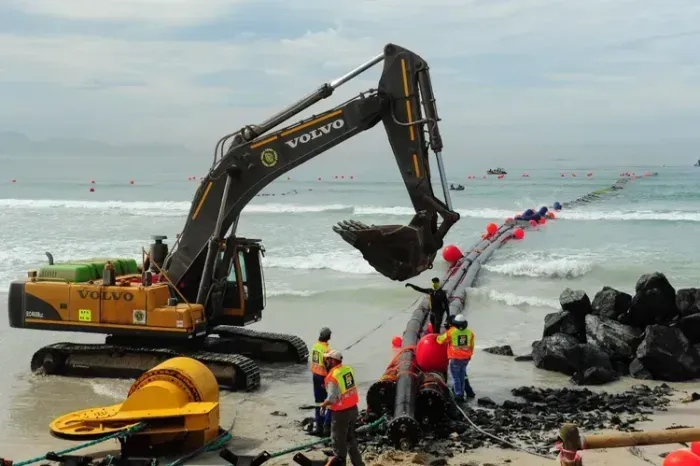
Engineers seen moving large pipes into place with the help of excavators and tugboats at the Strandfontein Pavilion Desalination site in 2018.
Image: Henk Kruger/Independent Newspapers
The City of Cape Town has confirmed the anticipated impact on water tariffs following a feasibility study presented.
Mayco Member for Water and Sanitation, Councillor Zahid Badroodien said that the study, tabled at a mayoral committee meeting, indicated that the proposed R5 billion Paarden Eiland Desalination Plant could lead to a significant increase in water tariffs.
The study indicated that the plant could significantly increase water bills within the first two years of operating, with an approximate “additional project-specific water tariff increase (over and above the base inflationary increase) of 6.57% and 6.63%” in the first two years of operating.
The city plans for the plant to produce between 50 million and 70 million litres of potable water per day, forming part of the New Water Programme, which aims to secure an additional 300 million litres of water from diversified sources.
Badroodien said “all capital projects, including the New Water Programme projects, impact tariffs due to costs” and that capital projects are a smart investment to secure water and avoid significant detrimental economic impact associated with exposure to climate change and droughts.
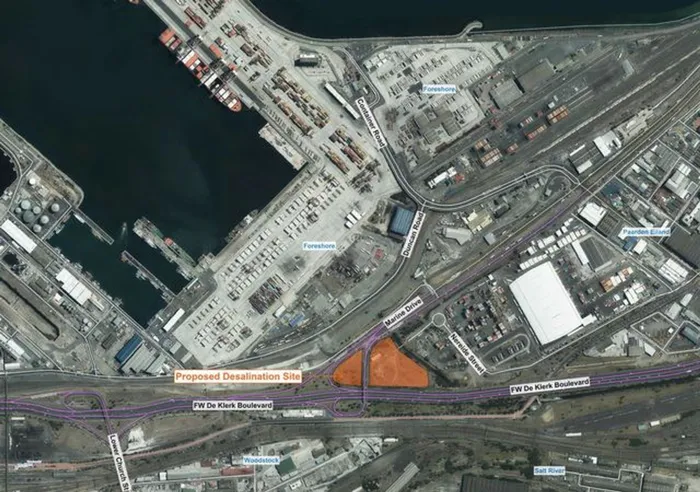
Proposed permanent desalination plant in Paarden Eiland.
Image: Supplied
“The overall approach to ensuring assurance of supply is encapsulated in the council-approved Water Strategy. The strategy follows a multipronged approach where utilisation of desalination to supply the CCT with potable water is less than 15% of the overall 2040 vision.
“Interventions include various responses with different cost, risk, and resilience attributes. Interventions included in the Water Strategy include water demand management, clearing of invasive species to increase the water that flows to the dams, groundwater extraction, and water re-use,” he said.
Badroodien said that the anticipated tariff impact of the Paarden Eiland Desalination Project is reported on in the Municipal Finance Management Act (MFMA) Section 120 Report on the Feasibility Study, which was based on the modelling conducted as part of the Value Assessment.
He explained that the impact of the Paarden Eiland Desalination Project (PEDP) on its own results in an approximate additional project-specific water tariff increase.
“These values (6.57% and 6.63%) are estimated without tariff smoothing implementation, which can be pursued in consideration of other projects in the portfolio to mitigate the impact on end users where possible.
“Protection of low-income households is a fundamental part of the City’s vision to be a ‘City of Hope’, and there are numerous mechanisms through which this vision is realised as per the Integrated Development Plan, ” Badroodien said.
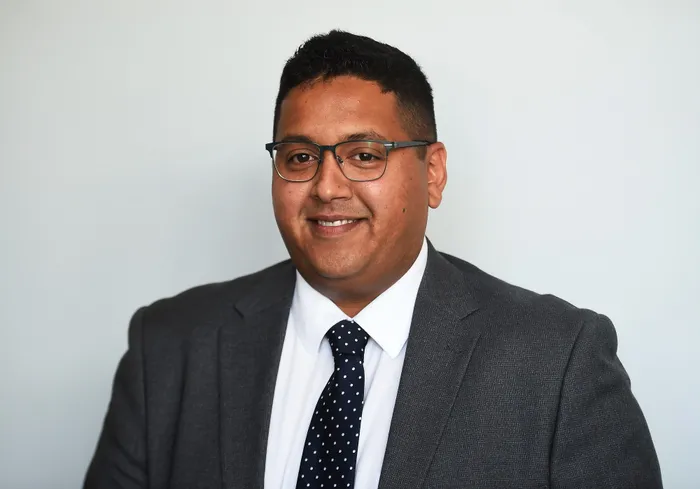
Water and Sanitation Mayco member Zahid Badroodien.
Image: Phando Jikelo / Independent Newspapers Archives
In terms of the volume of objections received, Badroodien said: “As part of the project’s Municipal Systems Act Section 78 and MFMA S120, public participation processes conducted throughout the feasibility study, cost and tariff discussions formed an integral part of the overall discussions with the community, organised labour, National and Provincial Treasury, as well as the National Department of Water and Sanitation.
“Adding a specific number will detract from the multifaceted questions and responses that transpired, as it was not a 1-to-1 relationship in terms of questions and key matters inquired about. The report considered by Mayco contains the full details of the Section 78(3) consultations.”
Residents were also concerned about the impact of brine discharge into Table Bay, in addition to existing anthropogenic pollution sources.
Get your news on the go, click here to join the Cape Argus News WhatsApp channel.
Cape Argus