Grand Parade trading restrictions spark outrage among Cape Town's informal traders

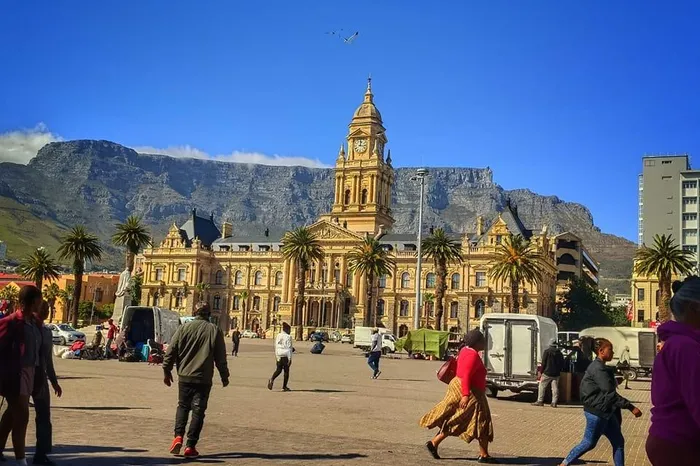
Traders say a last-minute trading ban at the Grand Parade has wiped out their busiest weekend of the year.
Image: Murray Swart
Cape Town's informal traders say the City has wiped out their most lucrative weekend of the year, barring hundreds of hawkers from operating on the Grand Parade in the crucial lead-up to the annual Festive Lights Switch-On FLSO).
The City confirmed that 40 traders were allowed to carry out their business at a designated location in Lower Plein Street.
Hours before the festivities could begin on Sunday, National Informal Traders Alliance of South Africa (NITASA) claimed scores of law enforcement officers were removing close to 100 trolleys belonging to traders.
The City however kicked back stating that traders were not permitted to trade on Friday due to construction of the FLSO and that they were asked to remove their material due to safety risks.
Tensions mounted when roughly 250 traders along with a further 250 to 300 assistants claimed they were blocked from trading on Friday and Saturday, a move they say has plunged nearly 3,000 people into deeper financial distress.
"We were not allowed to trade at all despite the fact that the place was completely open," said Rosheda Muller, President of NITASA and chairperson of the Grand Parade Traders Alliance. "There was no construction on the side of the traders except for a fence that was erected late on Friday afternoon.
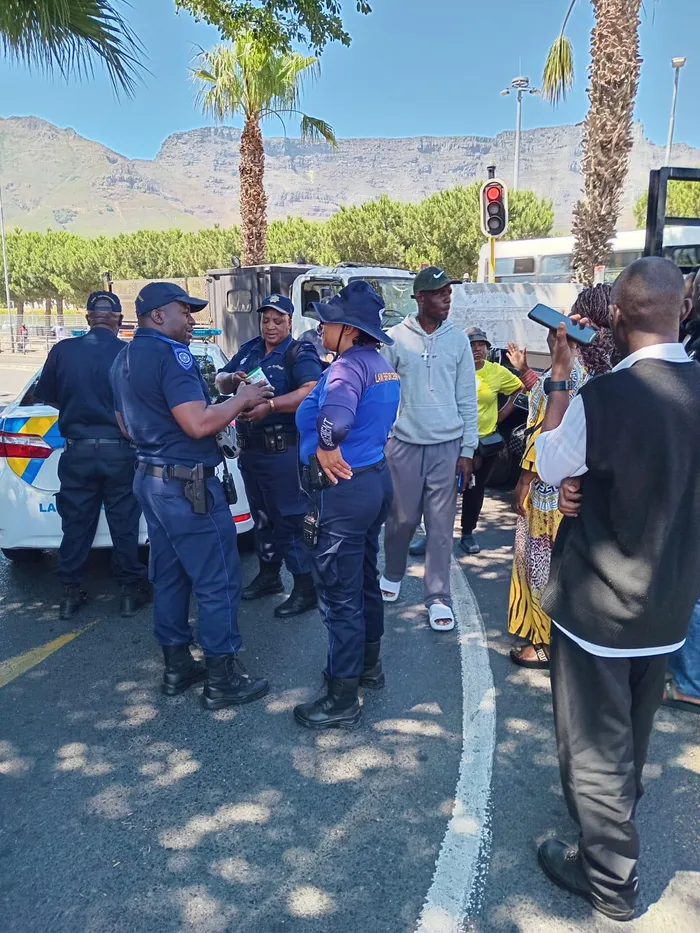
Law enforcement engaging in talks with informal traders .
Image: Supplied
"If the City cared for us, they would have considered putting the fence after the market has closed," she said.
"The market would only run until 3pm (on Friday) and the event is only late afternoon on Sunday."
"The main stage is all the way in front of the City Hall which doesn't impact us."
But Luthando Tyhalibongo, City spokesperson said City had discussions with the traders on the Grand Parade trading schedule throughout the year. He explained it included restrictions to accommodate the FLSO and its build up.
"Initially it was communicated to the traders that for the week of 24 November – 1 December, trading would not be allowed as construction crews build infrastructure in the precinct. However, after consultation, a decision was made to allow trading to take place up until Thursday," he said.
"The City tries to accommodate the traders where possible; however for this year, the City decided to exclude Friday from the trading schedule. In previous years, the City has had challenges with traders' late breakdown of stalls and material being left behind on site which has delayed the construction of crucial Festive Lights Switch-On infrastructure.
"It is important to note that 40 of the Grand Parade traders are provided with an opportunity to benefit from the Festive Lights Switch-On by selling their products in a designated space in Lower Plain Street on event day."
On Sunday as preparations were under way, Muller said law enforcement were removing nearly 100 trolleys belonging to traders: "We are facing another crisis, the City law enforcement impounding a hundred trolleys that belong to the traders of Grand Parade.
"They had no alternative trading space but on the parade, and we had to move it yesterday (Saturday). We parked it under the trees, opposite the castle, with law enforcement witnessing it."
But in response to the removals, the City explained the traders were not permitted to trade on Friday to allow for construction of FLSO infrastructure.
"Some had left their material on the Grand Parade on Thursday evening and others did the same on Friday evening," it said.
"They were asked to remove the material as it was causing obstruction to the construction crew and therefore a safety risk. Law Enforcement was called into resolve the situation due to the impasse." It is important to note that the responsibility of securing storage of goods is the obligation of the traders and not that of the City."
The weekend's shutdown followed weeks of tension. Traders say the City first informed them they would be barred from trading from 24 to 29 November. After appeals to City's Mayco Member for Economic Growth, James Vos, officials adjusted the schedule and allowed trading from Monday to Thursday but refused to extend that to the weekend.
Traders said a delegation met Cape Town Central police on November 24.
Muller emphasised that many traders had already endured a year of poor weather and low foot traffic.
"These are the people who are unemployed and enter into informal trading to prevent poverty but this is just one of the challenges we face," she said.
Get your news on the go, click here to join the Cape Argus News WhatsApp channel.
Cape Argus