South Africa's progress in newborn care faces new challenges as blindness in premature infants rises


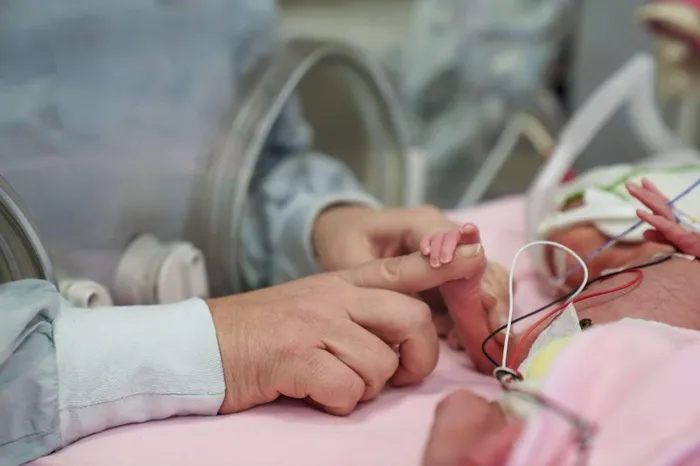
November is Prematurity Awareness Month, which highlights the challenges faced by babies born too soon, a condition that affects 1 in 10 infants worldwide.
Image: Supplied
South Africa's progress in newborn care faces new challenges as blindness in premature infants rises
In a remarkable achievement, South Africa has aligned its newborn survival rates with the Sustainable Development Goal (SDG) 2030 target of 12 neonatal deaths per 1,000 births. However, a troubling new study by esteemed researchers from the University of the Western Cape (UWC), the South African Medical Research Council, the University of Cape Town, and Stellenbosch University highlights a growing concern: as more premature infants survive, the incidence of retinopathy of prematurity (ROP), a preventable cause of childhood blindness, may be on the rise.
This urgent revelation underscores the necessity for robust preventive strategies to combat newborn blindness, particularly in light of the increasing survival rates of premature infants. The population-based study, involving 378 premature babies in Cape Town—the first of its kind to investigate ROP risk factors in Sub-Saharan Africa—has established that extremely low birth weight is the most significant predictor of this debilitating eye disease. The odds for developing ROP increase incrementally with every 100g reduction in birth weight; those born weighing under 1kg are over twice as likely to suffer from ROP compared to their heavier peers.
Additionally, surgical necrotising enterocolitis (NEC), a severe intestinal condition affecting premature infants, has emerged as another risk factor. This life-threatening disease can lead to urgent surgical interventions if it escalates, causing further concern among medical professionals.
As November marks Prematurity Awareness Month, drawing attention to the plight of infants born too early—a condition that impacts 1 in 10 newborns globally—advocates are calling for enhanced investment in care for small and sick newborns.
The World Health Organisation (WHO) defines a premature birth as one occurring before 37 weeks of gestation, with such infants often facing an array of health complications requiring specialised medical attention. This year’s theme, “Give preterm babies a strong start for a hopeful future,” galvanises calls for improved care systems and resources.
The study titled “Surviving Extremely Low Birth Weight Infants Have a Higher Risk of ROP in Sub-Saharan Africa,” published in the peer-reviewed journal Acta Paediatrica, revealed that a staggering 44.6% of infants weighing under 1kg were diagnosed with ROP, compared to just 23% among their heavier counterparts. Out of the 378 premature babies screened between May 2022 and January 2023 at five public sector neonatal units, approximately 34.4% fell into the extremely low birth weight category, with an average weight of merely 883g. Alarmingly, ROP was diagnosed in 30% of these infants, mirroring findings from recent studies across other African nations.
Lead researcher, Dr Tshilidzi van der Lecq, highlighted the significance of the study in South Africa, which has the highest rate of infants weighing under 1kg needing screening. “These infants face the highest risk of developing ROP and ensuing blindness,” she remarked.
Van der Lecq, a consultant at UCT with expertise in Glaucoma and ROP, pointed out that while the prevalence of ROP is around 22% in high-income countries, it skyrockets to over a third—approximately 40%—in Sub-Saharan Africa.
Importantly, Van der Lecq noted that high-income nations have managed to lower their ROP incidence through enhanced neonatal care, signalling a pathway forward for South Africa. “Maintaining a ROP screening register in Cape Town and beyond is crucial for timely monitoring and treatment for those infants who develop ROP,” she emphasised.