New action plan to relocate and manage Cape Peninsula baboon populations


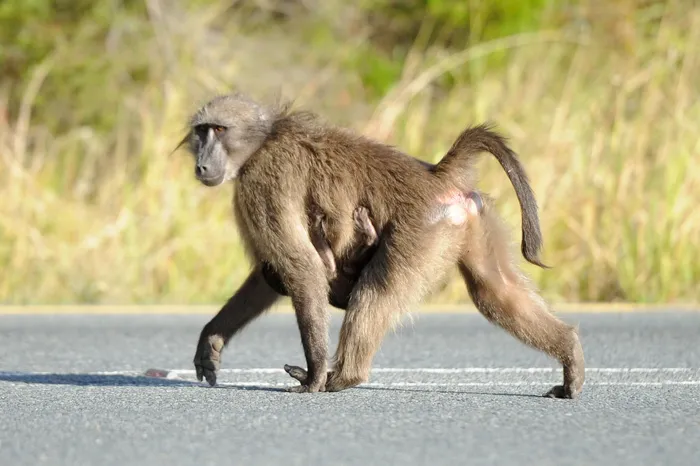
A juvenile baboon has been shot and killed.
Image: Picture: Armand Hough/Independent Newspapers
Earlier this year, the Cape Peninsula Baboon Management Joint Task Team (CPBMJTT) proposed a draft Action Plan aimed at the sustainable management of the Cape Peninsula baboon population.
The CPBMJTT consists of representatives from SANParks, CapeNature, and the City of Cape Town ,which issued a statement on the final plan, which serves as a framework for practical implementation, and was submitted to an independent expert panel in July for review and feedback.
It was also shared with the Cape Peninsula Baboon Advisory Group.
After considering all submissions, the CPBMJTT said it finalised the Action Plan, which has now been approved by SANParks, CapeNature, and the City of Cape Town. The primary goal is to establish a healthy, well-managed, and sustainable free-ranging baboon population while minimising human interference and conflict.
Key interventions outlined in the Action Plan include:
Troop Relocation:
- The Seaforth troop will be relocated to a newly established sanctuary on the peninsula by February 2026. This process involves capturing the baboons, conducting veterinary health assessments, and vasectomising healthy males before their release into a purpose-built sanctuary.
- The Waterfall troop is scheduled for relocation by September 2026, contingent upon the successful transfer of the Seaforth troop.
Population Management:
- Troops CT1 and CT2 are set to be released on the mountainside by May/June 2026, following the installation of a northern fence to prevent urban incursions. This fence will be built from Zwaanswyk in the south to Constantia Nek in the north and will be maintained by baboon rangers.
Waste Management Strategy:
- The City will implement a Baboon Waste Management Strategy, including the rollout of residential baboon-proof bins in high-impact areas by May 2026. This strategy aims to mitigate the impact of human waste on baboon health and behaviour.
Urban Wildlife Management By-law:
- By November 2028, the City will develop an Urban Wildlife Management By-law to strengthen existing wildlife protection legislation. This will enforce a zero-tolerance policy against harming or habituating baboons.
Population Control Measures:
- The maximum sub-population for northern troops is set at 250, while the southern troops' limit is 175. If these limits are exceeded for over six months, authorities will take action, including humane euthanasia of chronically sick or injured individuals.
The CPBMJTT said the Action Plan is grounded in the belief that baboons are an integral part of the Cape Peninsula's natural ecology and biodiversity. While the free-ranging baboon population deserves conservation efforts, it is essential to manage their numbers to ensure ecological balance and minimise human-wildlife conflict.
Regular reviews of the Action Plan will be conducted to align with regulatory requirements and emerging trends, with the next review scheduled for 2030.
In a separate victory, Beauty Without Cruelty (BWC) shared that after months of public concern, petitions, and unwavering advocacy from citizens, welfare groups, and conservationists, Wendy the baboon’s collar has finally been removed.
Get your news on the go, click here to join the Cape Argus News WhatsApp channel.
Cape Argus