High Court strengthens NSPCA's role in preventing animal cruelty in live exports


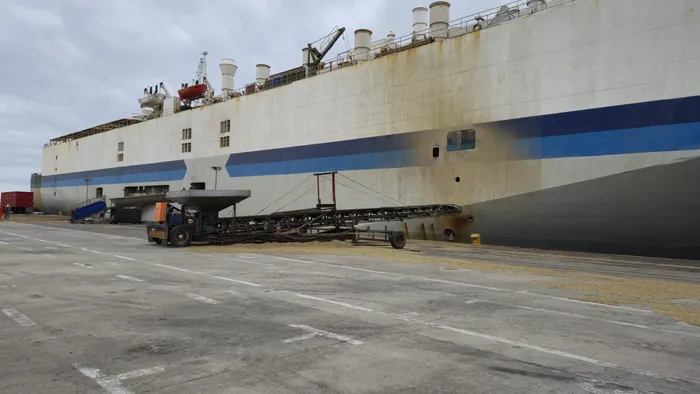
In July 2023, during the loading of over 53,000 animals onto the vessel Al Messilah, the NSPCA was limited to just four officers.
Image: Supplied
As the National Council of SPCAs (NSPCA) celebrates a landmark Eastern Cape High Court judgment in Makhanda, which significantly strengthens its authority to prevent animal cruelty during live animal exports by sea, in a separate action, Stop Live Exports South Africa (SLESA), representing over 70 animal protection organisations, directly challenged the government by presenting to the Parliamentary Portfolio Committee on Agriculture.
The High Court ruling overturns restrictive measures imposed by the East London Magistrates’ Court in July 2023 during the loading of over 53,000 animals onto the vessel Al Messilah, which had limited the NSPCA to only four officers and prohibited all photographic and video evidence gathering.
The High Court set aside the Magistrate's order in full, affirming the NSPCA’s constitutional and statutory mandate to "police actions of cruelty to animals by investigations and, where necessary, prosecute those persons who ill-treat animals." This mandate, the Court found, cannot be fulfilled if inspectors are prevented from gathering visual and documentary evidence—especially in large-scale, high-risk operations such as live export.
Crucially, the judgment dismissed the argument that other "competent authorities" (i.e., the South African government) could substitute or replicate the NSPCA's role. This was based on the fact that these authorities do not possess the statutory obligation to police or prosecute animal cruelty. The NSPCA's substantial involvement was deemed necessary, justified, and fully within its legal powers.
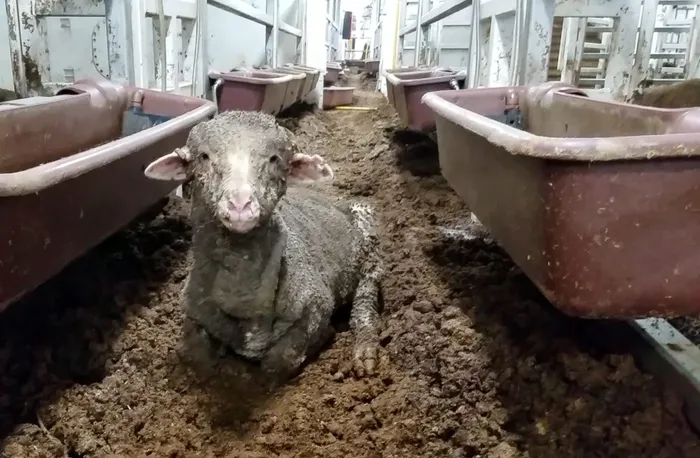
Stop Live Exports South Africa (SLESA), representing over 70 animal protection organisations, directly challenged the government by presenting to the Parliamentary Portfolio Committee on Agriculture.
Image: supplied
“This judgment offers vital certainty for the monitoring of export vessels departing South African ports,” said Grace de Lange, Chief Operating Officer of the NSPCA. “It affirms that the NSPCA’s powers must be interpreted in a manner that gives real effect to the purpose of the Animals Protection Act and the constitutional value placed on animal welfare.”
During the separate parliamentary action this week, SLESA’s Co-founder Michelle Taberer stated that their goal was to stop Minister John Steenhuisen from formalising the "cruel and unnecessary practice" of live export through new regulations and instead push for an outright ban.
Taberer added: “We approached the Parliamentary Portfolio Committee to prevent the government's proposed formalisation of this cruel and unnecessary practice in law. We took the Members through the many reasons why live exports cannot be regulated. The Committee afforded us two full hours to address them on this critical matter, which is significant for a briefing by an animal protection group.
Tony Gerrans, also representing SLESA, said, “The export of live animals from South Africa, primarily sheep to the Middle East and cattle to Mauritius—both countries with poor animal welfare laws—is inherently cruel as it involves confining animals for extended periods of time in harsh and unnatural conditions that give rise to significant animal welfare concerns. On land, South Africa’s law prohibits any animal transportation for longer than 18 hours at a time, while these trips by sea can take three weeks.”
For Beauty Without Cruelty (BWC), this ruling represents a vital restoration of transparency and accountability. BWC Chairperson Toni Brockhoven has consistently emphasised that without the ability to observe and record conditions on vessels, cruelty becomes invisible.
Chad Cupido, Executive Officer, BWC stated: “As South Africans rise against gender-based violence, I am reminded that every form of oppression begins with the belief that some lives can be harmed without consequence. Today, even thousands of pregnant cows remain trapped at sea on the Spiridon II, enduring suffering they cannot escape.
Get your news on the go, click here to join the Cape Argus News WhatsApp channel.
Cape Argus