How microclots may explain prolonged symptoms in Long COVID patients

New findings shed light on the mechanisms behind prolonged symptoms and potential treatment pathways.
Image: File
For many who thought COVID-19 was behind them, the virus can linger in unexpected ways. New research shows that microscopic blood clots, interacting with the body’s own immune system, may explain why some patients suffer prolonged symptoms, commonly called Long COVID—months after infection.
A collaborative study by Stellenbosch University and France’s Montpellier Cancer Institute has uncovered a previously unknown link between “microclots” and neutrophil extracellular traps (NETs). These immune structures, normally deployed to trap pathogens, can become harmful when overproduced, fuelling inflammation and circulatory problems.
Microclots, tiny clumps of blood clotting proteins were first identified in COVID-19 patients by Prof Resia Pretorius in 2021. Since then, scientists have been exploring their role in post-viral complications.
NETs, explained Prof Alain Thierry, are webs of DNA expelled by white blood cells during a defence process called NETosis. While crucial in fighting infections, excessive NETs can worsen thrombotic and inflammatory conditions, from arthritis to severe infections.
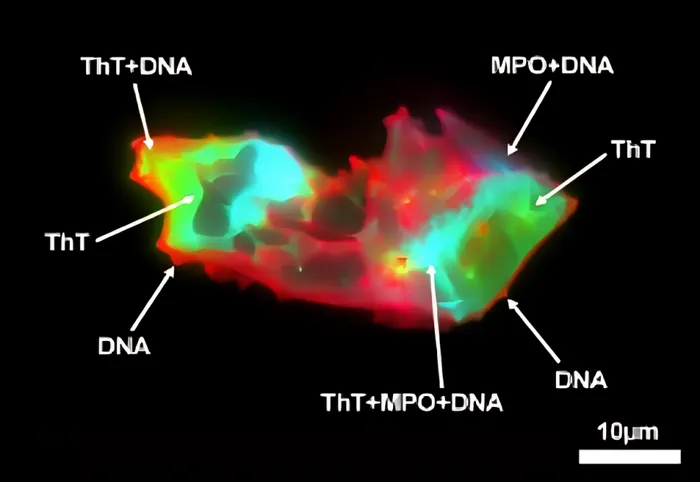
Researchers examine blood samples to uncover how microclots and immune system activity may contribute to Long COVID symptoms.
Image: Supplied
The teams analysed blood plasma from Long COVID patients using high-resolution imaging and artificial intelligence. They found that microclots were not only more abundant and larger than in healthy individuals but were also structurally intertwined with NETs—a connection never documented before.
“This suggests underlying physiological interactions that, when dysregulated, may become pathogenic,” Thierry said.
AI-driven analysis further allowed researchers to distinguish Long COVID patients from healthy individuals with high accuracy. Pretorius noted that excessive NETs may stabilise microclots, making them resistant to natural breakdown and contributing to persistent microvascular issues.
Published in the Journal of Medical Virology, the study offers critical insight into the mechanics of Long COVID and could pave the way for new diagnostic tests and targeted therapies aimed at modulating thrombo-inflammatory responses.
For those still grappling with lingering symptoms, the findings provide hope: understanding how microclots and NETs interact brings scientists one step closer to effective treatment—and a clearer path out of the shadow of COVID-19.
Get your news on the go, click here to join the Cape Argus News WhatsApp channel.
Cape Argus