Cape Town’s Blue Flag beaches face serious water quality challenges


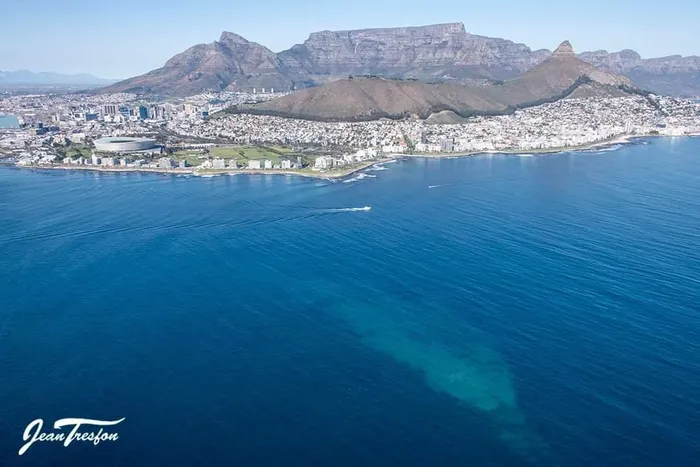
An aerial view of Cape Town’s Atlantic Seaboard, home to several of the city’s Blue Flag beaches — and the focus of growing concern over coastal water quality.
Image: Jean Tresfon/ Rethink the Stink/ Facebook
Cape Town is celebrating another summer of Blue Flag triumphs — but environmental experts warn serious water-quality challenges could tarnish the city’s world-class coastline.
The City has confirmed that popular beaches including Camps Bay, Clifton 4th, Muizenberg, Llandudno and Bikini Beach in Gordon’s Bay have once again earned or retained their Blue Flag status for the 2025/26 season.
The Blue Flag programme, administered locally by WESSA and internationally by the Foundation for Environmental Education (FEE), is a coveted eco-label awarded to beaches that meet strict standards for water quality, safety, environmental management and public education.
Blue Flag status applies only during the official summer season, from December 1 to March 31, when independent water testing by the South African Bureau of Standards (SABS) confirms that bacteria levels meet international thresholds.
“Residents can be confident that our Blue Flag beaches have consistently excellent water quality,” said Councillor Francine Higham, Mayoral Committee Member for Community Service and Health. “If a result does not meet the threshold, the flag is lowered and only reinstated once the national coordinator confirms the water is safe again.”
Higham added that the City samples water weekly, more frequently than required and closes beaches immediately if contamination occurs.
But away from the postcard-perfect stretches of Clifton and Camps Bay, coastal-pollution concerns are mounting. In the Helderberg basin, surfers and residents have long raised alarms about chronic sewage spills fouling Strand Beach, claiming the City has not done enough to protect the public.
Environmental activist and surfer Jamii Hamlin, representing the Helderberg Ratepayers Association, blamed repeated failures of the Trappies Bulk Sewer near the Lourens River crossing.
“For years we’ve seen raw sewage discharging through the stormwater system onto the main swimming beach,” Hamlin said. “Sinkholes, blockages and pipeline collapses have become routine. People have fallen ill, and the City’s warning signage is inadequate.”
Hamlin has called for a Water Quality Flag System, similar to the Shark Spotters programme, to give beachgoers real-time warnings about pollution risks.
The City said it “acknowledges the concerns” raised by residents and maintains that its response to pollution incidents has been swift and by the book. It said Strand Beach was closed immediately following the Trappies sewer collapse in 2023, with warning signs posted and local stakeholders — including the Strand Surf Lifesaving Club — informed.
Officials added that daily water testing continues, alongside major rehabilitation of the Trappies sewer and upgrades to wastewater infrastructure across Gordon’s Bay and Helderberg.
Still, experts warn the city’s problems run deeper.
According to Professor Leslie Petrik, an environmental chemist at the University of the Western Cape, both partially treated effluent and raw sewage are entering Cape Town’s marine environment — including near Blue Flag beaches.
“Our wastewater treatment plants are not able to remove synthetic chemicals and pharmaceuticals,” Petrik explained. “Compounding this, the City discharges untreated sewage through several marine outfalls close to prime beaches such as Camps Bay and Sea Point. Depending on weather and currents, these plumes can drift back to shore, bringing bacteria and harmful compounds.”
Petrik said chemical-pollutant testing occurs only once every two years, while bacterial sampling is conducted every two to four weeks — “too infrequent to reflect the real health risk.”
“People need to be aware of the long-term pollution status of beaches before they swim,” she said. “Our studies show that many beaches are frequently contaminated, especially near river mouths or after rainfall.”
Environmental groups agree. Caroline Marx, from Rethink The Stink, said the Blue Flag label, while valuable, covers only a short summer period and a small section of each beach.
“River water results show severe pollution entering estuaries like the Diep and Soet Rivers, yet the coastal data often shows clean readings,” Marx said. “It’s easy for contamination to go undetected if sampling isn’t consistent or widespread.”
Water quality has also become a public-health issue, warns Dr Jo Barnes, senior lecturer in Community Health at Stellenbosch University.
“Sewage-contaminated seawater carries pathogens that can cause gastrointestinal illness, ear and eye infections, and more severe conditions for vulnerable people,” she said. “Even a few droplets can make someone sick.”
Barnes said better public warnings and more visible signage are essential: “Beachgoers shouldn’t have to guess whether the water is safe.”
The City maintains that its monitoring systems and infrastructure upgrades are improving. Officials say significant rehabilitation work is underway across Cape Town’s wastewater network and that “pollution incidents are actively managed through established protocols.”
Get your news on the go, click here to join the Cape Argus News WhatsApp channel.
Cape Argus