Cape Town pedestrian learns the hard way about jaywalking laws


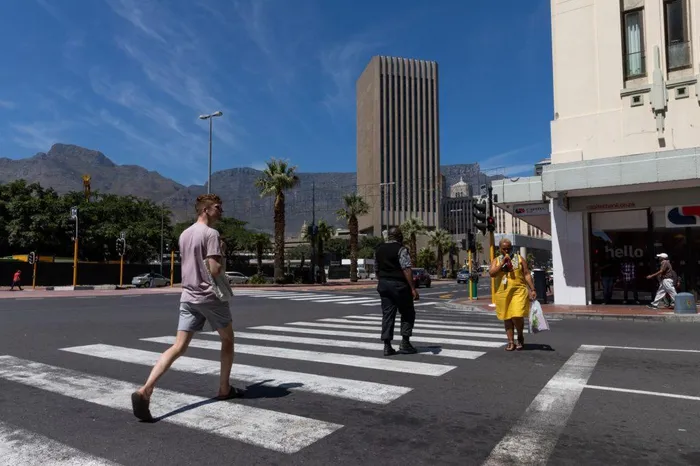
Jaywalking is illegal in terms of the National Road Traffic Act - a man has recently been fined in Cape Town.
Image: Supplied
The term "jaywalking" may seem like a concept reserved for Hollywood films, but it represents a serious issue in South Africa.
This after a Cape Town man was recently fined R500 by traffic officials for crossing the road without using the designated pedestrian crossing.
In a video posted on social media, Kenneth Brookes took a video of the ticket he received and said: "This is crazy, a traffic official just fined me for jaywalking!"
But according to the National Road Traffic Act, pedestrians are required to: Use marked crossings and sidewalks where available; and Avoid crossing within 50 metres of a pedestrian crossing.
Kevin Jacobs, spokesperson for the City of Cape Town's Traffic Service, could not confirm the incident, but did confirm that "jaywalking" was indeed an illegal offence in the country.
He warned that “jaywalking” is illegal in terms of the National Road Traffic Act (NRTA). The City’s enforcement agencies are mandated to enforce the provisions of the NRTA.
"Pedestrians account for as many as 40 percent of deaths on South African roads.
"Jaywalking is illegal and one of the many pieces of legislation that City enforcement services are mandated to enforce."
In a recent statement, attorney Henry Shields said: "South African law states that no pedestrian should walk on a road where no pavement is available. And if there is no pavement, it is important to walk as close as possible to the edge of the road, while facing the direction of oncoming traffic."
Freeways are prohibited to pedestrians and cyclists, and those found to be walking along or across freeways can be arrested, according to Shields.
"Any reckless action by a pedestrian along a roadway is considered a crime, so jaywalking is forbidden, and you can even be fined for walking while intoxicated. Pedestrians are required to observe all traffic lights and traffic control signals, and they should make use of pedestrian bridges where available — even if it means walking further," he said.
Get your news on the go, click here to join the Cape Argus News WhatsApp channel.
Cape Argus