Residents voice urgent concerns over affordable housing in Woodstock


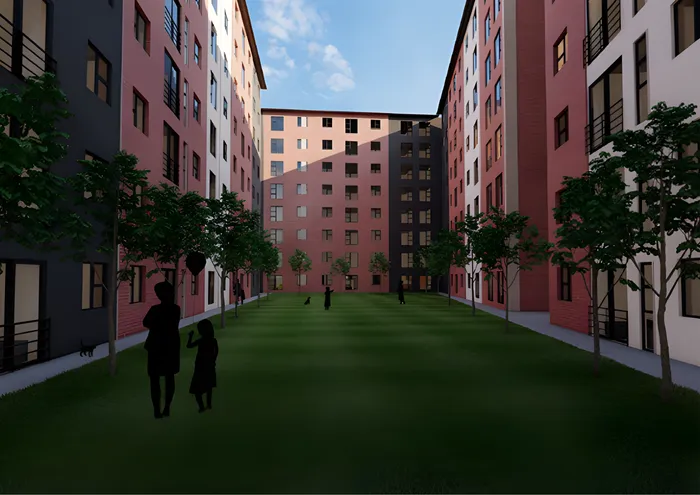
The Woodstock Residents Association (WRA) expressed concerns about the ratio of market-related to social housing units, advocating for a majority of social housing in projects where public land is discounted.
Image: Supplied/City of Cape Town
The Woodstock Residents Association (WRA) expressed concerns about the ratio of market-related to social housing units, advocating for a majority of social housing in projects where public land is discounted.
They urged the City to clarify that "market units" are affordable housing and to reflect this accurately in public communication.
The City invited residents to an Open Day at the weekend, to discuss mixed-use residential developments in Woodstock and Salt River.
These projects aim to provide affordable housing and boost the local economy. Developments like Salt River Market, Fruit and Veg, Newmarket, and Pickwick properties are expected to create over 4 500 residential units.
In August, Mayor Geordin Hill-Lewis announced 375 social housing units for the inner city's 'Fruit & Veg' site.
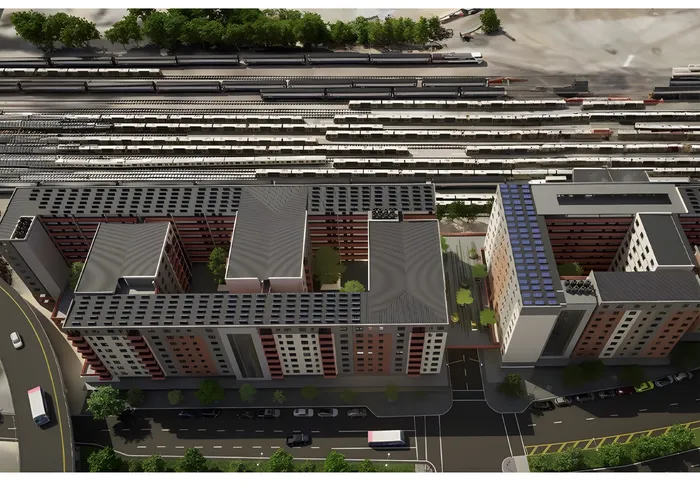
The Woodstock Residents Association (WRA) expressed concerns about the ratio of market-related to social housing units.
Image: City of Cape Town
The mixed-use development, including 435m2 of retail space, is expected to be developed by YG Group on the 3,300m2 property between Kent and Bloemhof Streets, near District Six and the CBD. The number of social housing units increased from 180 to 237, and the land was transferred for R10 million.
The open day followed the statutory public participation processes for the Woodstock Hospital site which ran from 27 September 2024 to 31 January this year.
The engagement provided an opportunity to inform members of the public on the progress made regarding awarded land parcels between July 2022 and August 2025 which include Salt River Market, Fruit and Veg, Newmarket, and Pickwick properties expected to deliver over 4 500 residential opportunities including affordable housing units.
The City said the appointed developers are taking the properties through various planning and funding application processes to ensure the realisation of the planned developments.
City’s Mayco committee member for Human Settlements, Carl Pophaim explained: "We currently have a pipeline of over 12 000 residential units, with more being added as we continue to assess City-owned land for release in terms of Mayor Geordin Hill-Lewis’ priority programme to unlock well-located land for affordable housing, ensuring inclusive growth and spatial transformation.”
Pophaim added that options are also being looked at pertaining to the Woodstock Hospital occupiers.
But Woodstock Ratepayers Association who was part of the open day and public participation raised concerns over land use and social housing.
Ute Kuhlmann, chairperson for WRA said: “The area urgently requires more family-friendly, affordable housing."
WRA listed their concerns about ratios and release of public land:
- Public land sold at a discount should mainly be used for social housing.
- Current ratios are “upside down” — social housing should be the majority (e.g., 700 social housing / 300 market-related units at Salt River Market, according to Human Settlement official).
- Officials clarified that “market units” at Salt River and New Market will actually be affordable housing (as legally defined), not full market-rate housing.
- This should be communicated to the public and the public must hold the City, SHIs, and private investors accountable to ensure this happens.
On the Pickwick development, it said: "Plans include 840 social housing apartments and 940 “open market” units but its unclear how many “open market” units will actually be affordable.
"To justify releasing public land at a discount at least 50% of “open market” units should be affordable housing.
"Despite promises in the City’s press release, no posters or detailed information were provided about the Woodstock Hospital site."
The Salt River Residents Association (SRRA) said it supports humane social housing in the inner city that offers proximity to amenities and work, and rectifies Apartheid-era spatial planning. While these developments align with many criteria, the SRRA highlights several concerns:
- Funding and Exclusion: The housing is not City-funded, relying on national government, developers, and private investors. The "financialisation" of units limits access to higher-income brackets. Excluding informal workers and most grant income further marginalizes those most in need.
- Unit Sizes: Units of 18-27 square meters are too small and risk overcrowding, unhealthy living conditions, and "ghettoization."
- Relocation: The City's plan to relocate current residents of development sites by court order is seen as anti-poor and inconsistent with national goals for decent housing.
Earlier, Yusrah Bardien of Ndifuna Ukwazi welcomed the Fruit and Veg’s site's release but voiced concern that the expanded income bracket, now exceeding R30,000, would exclude over 75% of Cape Town's households earning under R22,000.
Get your news on the go, click here to join the Cape Argus News WhatsApp channel.