South Africa doesn’t need more political parties, it needs more entrepreneurs


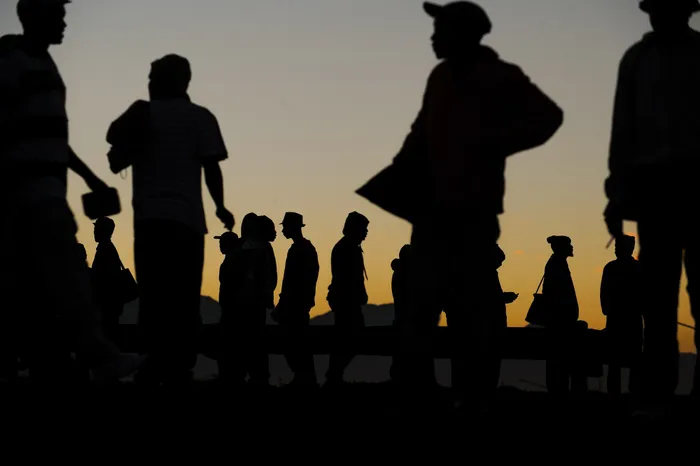
In post-apartheid South Africa, where inequality festers and youth unemployment remains endemic.
Image: Henk Kruger/Independent Newspapers
South Africa is home to over 400 registered political parties — a staggering number for a country of just over 60 million people. At first glance, this might appear to be a hallmark of a vibrant, participatory democracy.
In reality, it is a symptom of a deeper malaise — a society where too many people, often unemployed and lacking in economic opportunity, turn to politics not out of ideological conviction or a desire to serve, but as a means of personal survival and upward mobility. The proliferation of political parties is not a sign of a healthy democracy. It is a reflection of economic desperation and the failure of our society to channel ambition into productive, wealth-generating avenues. The alarming number of political entrepreneurs — many with no track record of leadership, business, or service — should concern us all. Instead of building companies, creating jobs, or innovating solutions to real-world problems, many individuals see politics as the only viable path to relevance, income, and influence.
Politics as a Career of Last Resort
In South Africa, politics has become an increasingly popular career option for the unemployed. The barriers to forming a political party are low, and the potential rewards, if one gains even modest traction, are substantial. Access to public funding, media attention, and a seat at the table becomes possible even with a few thousand votes. This creates perverse incentives: instead of starting businesses, entering the trades, or innovating in tech or agriculture, many are motivated to form political parties to capitalise on the dissatisfaction and disillusionment of ordinary South Africans. This does not mean that unemployed people should not participate in democracy. Every citizen, regardless of their economic status, has the right to participate in politics. But the issue arises when politics becomes the go-to hustle — when parties are formed not to represent genuine constituencies or advocate for transformative policies, but to access state resources or parliamentary positions. This leads to fragmentation, populism, and performative leadership that is more about visibility than viability.
The Real Crisis: Lack of Economic Opportunity
The real crisis in South Africa is not a lack of political options — it’s a lack of economic opportunity. Youth unemployment is over 60%. The economy remains highly unequal and structurally exclusionary. The average South African has little to no access to capital, land, or quality education. Against this backdrop, it's easy to understand why the allure of politics is strong. But it is also precisely why we need to redirect our national conversation. South Africa does not need more slogans, rallies, or manifestos. It needs entrepreneurs. It needs builders. It needs people who are creating value, employing others, and solving problems that the government has consistently failed to address. Whether it’s small-scale farming, digital technology, manufacturing, or green energy, there is an urgent need for a generation of South Africans to focus their energy on wealth creation — not just for themselves, but for their communities.
Wealth Creation Over Political Power
The truth is that political power without economic power is hollow. Too often, political leaders rise from the same communities they fail to uplift once in office. They become symbols of success, but not vehicles of shared prosperity. In contrast, entrepreneurs, when supported and successful, can uplift entire communities through job creation, skills transfer, and mentorship. We need to stop glorifying political office as the pinnacle of success. It is time we started celebrating entrepreneurs, innovators, and creators — the people who start from nothing and build something sustainable. South Africa needs more discussions about capital, ownership, and generational wealth. We need to focus on how to ensure black South Africans are not just participants in the economy but owners within it.
Generational Wealth is the Real Liberation
True liberation is not found in fiery speeches or symbolic representation. It lies in the ability of a family to send its children to good schools, to own property, to pass down businesses, to invest in future generations. Political power can open doors, but only economic power can keep them open. We should be teaching financial literacy in schools. We should be encouraging young people to think about ownership, investment, and innovation. Communities should rally behind co-operatives, local ventures, and skills development hubs — not just rallies and political manifestos. Instead of forming a political party, why not form a business? Instead of recruiting members, why not employ them?
A Call for a New National Mindset
South Africa needs a mindset shift. Political freedom was only the first step. Economic freedom — especially the accumulation of generational wealth — is the ultimate goal. We must stop mistaking political visibility for real power. Let us not confuse popularity with productivity. As we look to the future, let us envision a South Africa where the brightest minds are building solutions, not slogans; where the ambitious are creating jobs, not just for themselves, but for others as well. Let us reward enterprise, not empty rhetoric. We have enough parties. What we lack are platforms for economic growth. We don’t need more manifestos — we need more markets. South Africa’s future depends not on who wins the next election, but on whether we can build an economy where fewer people feel the need to enter politics just to survive. The time for endless political fragmentation is over. The time for generational wealth creation has arrived.
*Mayalo is an independent analyst and the views expressed here are not necessarily those of IOL or Independent Media