Gauteng and Cape Town face imminent water crisis, report reveals


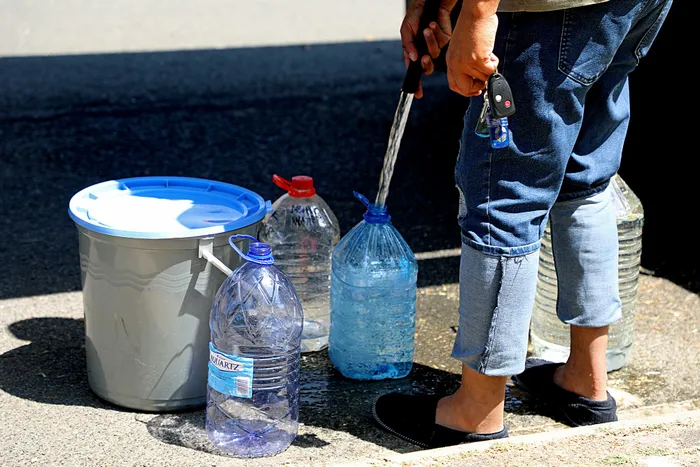
The National State of Water report warns that Gauteng and Western Cape are likely to face more water scarcity due to their population growth.
Image: File/ Timothy Bernard/ Independent Newspapers
A new report from the Department of Water and Sanitation (DWS) warns that Gauteng and Western Cape are set to face increasing water scarcity due to rising populations driven by significant in-migration.
The 2024 National State of Water report identifies Gauteng as the country’s economic hub and the leading destination for both international and domestic migrants, while the Western Cape ranks as the second major immigration attraction.
Gauteng has a population of about 16 million while the Western Cape is home to 7.6 million residents.
The report stated that Gauteng is projected to reach 20 million residents by 2050, while the Western Cape is expected to reach 8.5 million, a growth not matched by an adequate increase in dam storage capacity.
The National State of Water report is a critical document published to provide a comprehensive overview of the country's water resources and sanitation services. Its purpose is to guide decision-making, ensure the public is informed, and manage the nation's water supply and demand.
For years, some parts of the country have been experiencing widespread water outages due to a combination of climate change-induced droughts, aging and under-maintained infrastructure, population growth and poor management, leading to frequent and prolonged disruptions, particularly in the Johannesburg area, forcing municipalities to implement water shedding, water throttling and water rationing.
In the Western Cape, a community at Gate 7 informal settlement near Wingfield Navy base in Cape Town, also embarked on a protest over service delivery, including water and electricity this week.
The protesters blocked roads with a shipping container and burned tyres, which caused major traffic disruptions.
Community action network WaterCAN said the biggest strain in the Western Cape is on wastewater treatment works (WWTWs) as many plants are failing to cope, leading to pollution in rivers and coastal waters.
The organisation's Executive Director Dr Ferrial Adam said both Johannesburg and Cape Town must urgently prioritise fixing and upgrading infrastructure before the situation deteriorates.
The report stated that the country’s water sector has established extensive infrastructure to transfer water between catchments to address supply deficits, particularly around the economic hubs.
However, over 98% of available water resources are already allocated.
“There are also limited opportunities to increase future water requirements with conventional surface water resources; hence, more intervention is required on the demand side to address the projected supply deficit of 17% by 2030,’’ the report stated.
The department added that although 97,38% of Gauteng households have access to water infrastructure, which exceeded the Reconstruction and Development Programme (RDP) standards, 78,2% of households have a consistent water supply, reflecting both high access levels and a relatively dependable water provision system.
In the Western Cape, 96.96% of households have access to water infrastructure. However, only 54.62% have reliable water supply, indicating that while infrastructure access is strong, many residents still face challenges in securing consistent water service.
The report added that on a broader scale, across all provinces, there are a total of 18,5 million households, and 93,55% of them have access to water infrastructure, while 88,58% households meet RDP standards. Nevertheless, regarding reliable water supply, only 68,09% of households can depend on a consistent water service.
“This reveals a significant trend: while a large majority of households across various provinces have access to essential water infrastructure, there are pronounced gaps in the reliability of this resource. Provinces like Gauteng and the Western Cape exhibit both high access and reliability rates, read the report.
DWS spokesperson Wisane Mavasa did not respond at the time of publication.
Meanwhile, the report stated that the DWS has developed strategic initiatives to address the water sector’s multifaceted challenges, notably the National Water and Sanitation Master Plan.
Get your news on the go, click here to join the Cape Argus News WhatsApp channel.
Cape Argus