Job losses loom as Gayton McKenzie withdraws funding from South Africa's arts sector

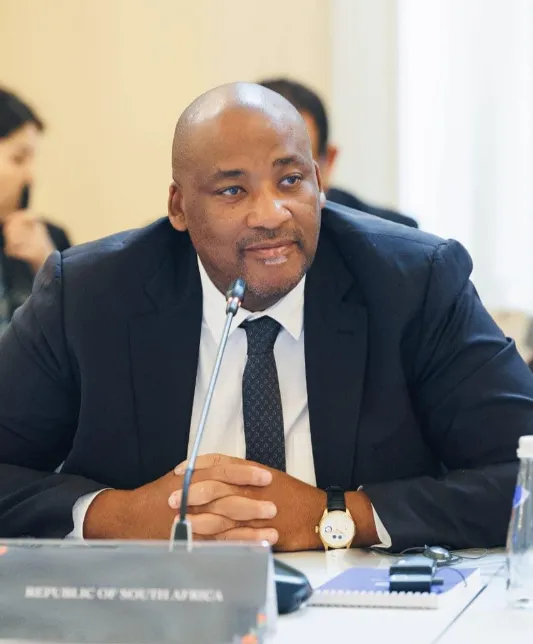
Minister of Sports, Arts and Culture, Gayton McKenzie, is under fire for defunding iconic cultural festivals and limiting funding for the arts industry.
Image: Gayton McKenzie / Facebook
From Cape Town to Makhanda, and Potchefstroom to Bloemfontein, the curtain is falling on SA’s biggest arts festivals as government funding is withdrawn.
The blow hits flagship events including Oudtshoorn’s Klein Karoo Nasionale Kunstefees, Makhanda’s National Arts Festival, and the Cape Town International Jazz Festival. Aardklop in Potchefstroom, the Cape Town Carnival, Innibos in Mpumalanga, and Vryfees in the Free State were also affected.
The festivals are the lifeblood of SA’s cultural stage, generating millions of rand in revenue, putting food on the tables of hundreds of artists and technicians, and drawing tens of thousands of visitors each year.
And now, with funding cut, livelihoods are at risk, and events that have long shaped the national cultural calendar face the closing act. The funding crisis began when festival organisers were told, one after another, that their existing funding had been declined and that they should apply for support through the Mzansi Golden Economy (MGE) Fund.
MGE makes investments to optimise the economic benefit of the arts in SA. Most MGE applications were rejected. This left festivals in the lurch without the financial support they had relied on for years. Some festivals received annual funding, while others had three-year agreements.
The national department allocates budgets to provinces, which then distribute funding according to their own cycles, adding further uncertainty for organisers. Previously, under the Provincial Flagship Programme run by the national sport, arts and culture department, provincial governments put forward candidate projects to the department.
Organisations then submitted project plans and budgets for approval, and once approved, they were contracted annually. On March 28, some organisations were notified that the Provincial Flagship Programme had been disbanded and were given two weeks to apply for MGE funding.
Some organisations were quick to claim they were rushed into applying.
DA MP Leah Knott said the department was failing to meet its constitutional mandate and was being used as a political tool.
“Festivals across the country that were promised support, once existing funding streams were withdrawn, were told to apply to the MGE Fund, only to have their applications rejected,” she said during a mini plenary session in Parliament on Tuesday.
She called for reinstatement of funding for established festivals, full disclosure of all MGE allocations, a depoliticised adjudication process, and a full account of every budget reallocation.
According to figures presented to parliament, the Cape Town International Jazz Festival generates around R900m for the Western Cape economy, supporting over 5,000 jobs. The Klein Karoo Nasionale Kunstefees attracts more than 100,000 attendees annually, generating R72m in direct impact for Oudtshoorn and R178m across the province. Stellenbosch Woordfees reaches over 250,000 schools and 270,000 learners annually. Suidoosterfees sustains more than 4,000 jobs and hosts a junior festival for 8,000 schoolchildren.
Other festivals are equally significant.
Aardklop generates between R50m and R65m annually for the North West, Innibos injects between R80m and R90m into Mpumalanga’s economy, Vryfees generates an estimated R208m for the Free State, and the National Arts Festival in Makhanda features 2,000 performers, attracts over 200,000 attendees, and contributes R350m annually to the local economy.
Cape Town Carnival CEO Jay Douwes said the withdrawal was devastating.
“The Carnival has served as a flagship event for 15 years. Departmental funding has never been our sole source, but it has been crucial for sustainability and public endorsement of our work,” Douwes said.
Douwes added that the Carnival creates approximately 1,000 paid opportunities each year for artists, artisans, technicians, facilitators, and seasonal staff. It supports over 280 SMMEs, spending around 40% of its budget directly on local businesses and 39% on employment.
CTIJF owner Dr Iqbal Survé said he will write to Minister of Sports, Arts and Culture Gayton McKenzie, asking him to review his decision.
“It really doesn’t make any sense what the minister has done,” he said. “We were told last year already that the minister was not going to fund any of the previous festivals that were supported by DAC. Instead the minister said he was going to change the funding to what he called smaller entities throughout the country on the basis of ... empowering new entrants into the industry.”
But Survé said that did not happen.
He said had it not been for the “philanthropic arm off his family” 3000 people would be without jobs.
Get your news on the go, click here to join the Cape Argus News WhatsApp channel.
Cape Argus