City tackles illegal squatting in Brooklyn with new cleanup efforts


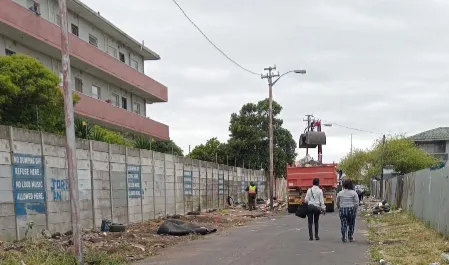
Squatters were removed from Kuala Street in Brooklyn on Friday, September 12.
Image: SUPPLIED
After more than four years of illegal squatting in Vasco Park, Brooklyn, the City has stepped in with a clean-up operation targeting nearby Kuala Street, where many of the displaced people have relocated in recent months.
Ward 55 councillor Fabian Ah-Sing led the operation last week, supported by Law Enforcement, Social Development, the Displaced Peoples Unit, cleansing teams, and the City’s legal department.
Ah-Sing said the aim was not only to clear illegal structures but to offer support.
“We are here to offer the people assistance, helping them get into a safe space and to join various displaced persons programmes.
Vasco Park became a home for the homeless during lockdown, when residents and officials tolerated the occupation. At its peak, more than 10 families, including children and the elderly, lived in makeshift shelters among rubble and dumped waste.
But once restrictions were lifted, the park grew into what residents described as a “slum-like” settlement.
Illegal dumping worsened, rats infested the area, and the park was deemed unsafe for children.
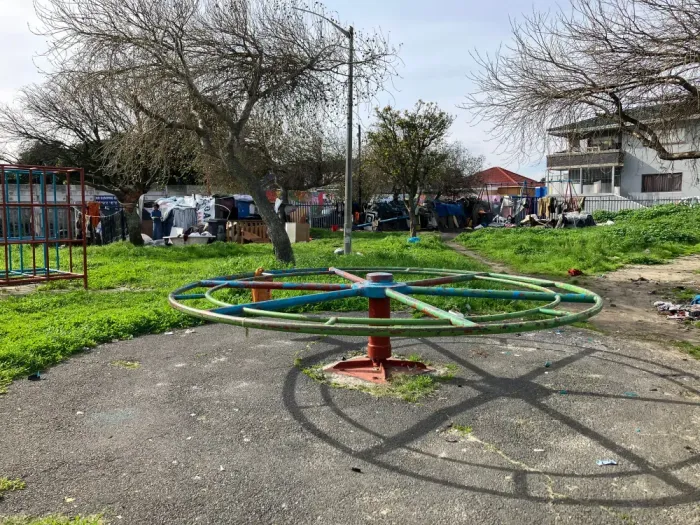
What Vasco Park looked like in August 2021
Image: TARA ISAACS
Amid mounting complaints, squatters were evicted, but many simply crossed into Kuala Street, adjacent to the fenced-off park, creating a new problem for the community.
Residents have long called for action.
In 2022, the now-defunct Protect Brooklyn group gathered nearly 400 signatures for a petition, claiming Vasco Park and council houses in Justin Street were contributing to the “rotting” of Brooklyn.
A member of the group and resident, Fay Vogel, who is also a former member of the Brooklyn, Ysterplaat, and Rugby Residents’ Association (BYRRA), welcomed the recent cleanup.
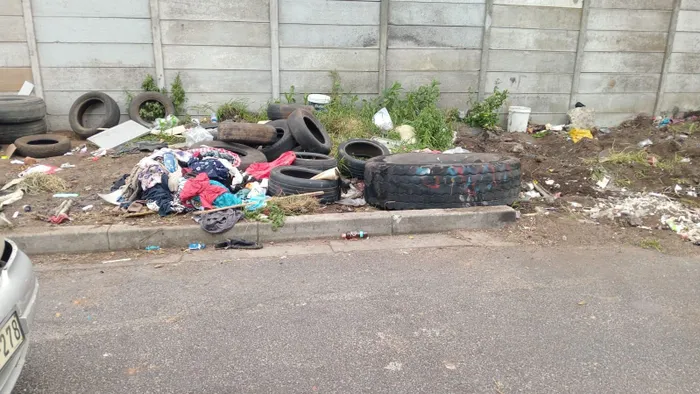
While squatters and their structures were moved from Kuala Street, rubble remains, but councillor Fabian Ah-Sing says cleaning the area is a "work in progress."
Image: SUPPLIED
She blamed neglect by both residents and officials for the decline, saying property values have dropped. Vogel called for Koeberg Road to be revamped, recreational spaces to be restored, and illegal street trading curbed.
“We should take back our communities, and request that Home Affairs step in to get all the illegal foreigners out of this community,” she said.
BYRRA chairwoman Mirinda Finck welcomed the current clean-up operations but expressed concern over their long-term impact.
“While these initiatives are welcomed, the issue persists. Constant policing is urgently needed to prevent squatting and public disorder,” she said.
Another resident, Elize Saaymaan, said squatters in Kuala Street frequently lit fires that damaged their own shelters and spread debris along the pavements.
“There have been about 20 fires here before, and I drive around with bottles of water so that I can kill the fires as soon as I see them starting,” she said.
Saaymaan said that she met with the squatters on Monday, three days after the clean-up, and they claimed that their belongings were confiscated, including their ID documents.
Ah-Sing dismissed this as false.
“That is a blatant lie,” he said, adding that all possessions were returned and that if anyone was missing an ID document, they should lay charges with the police, and it could be investigated.
Ah-Sing urged residents not to hand out clothes, furniture, and food to squatters, arguing that it encouraged them to stay in the area.
Get your news on the go, click here to join the Cape Argus News WhatsApp channel.
Cape Argus