Cape Winelands Airport's future hinges on environmental assessment


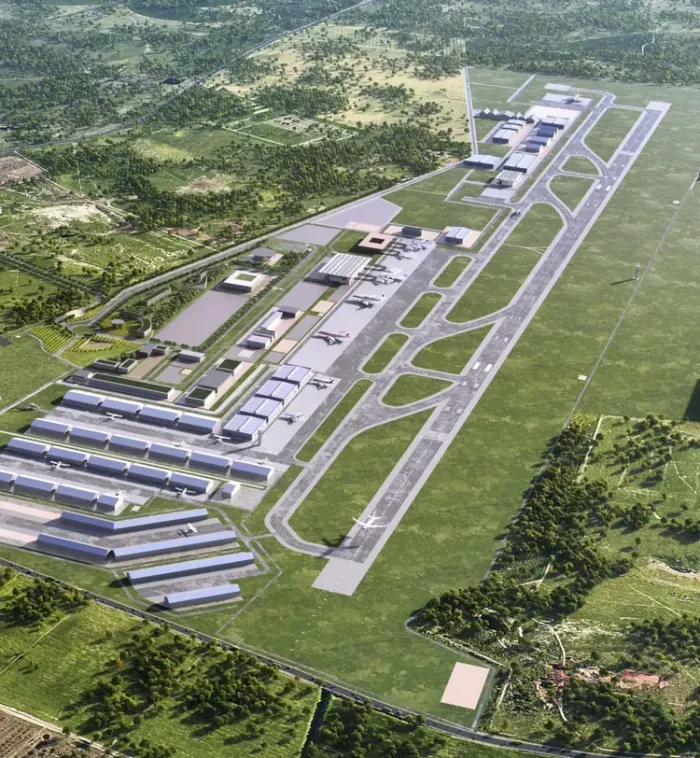
Cape Winelands Airport is strategically positioned to serve as an alternate airport for reserve fuel planning for airlines flying into Cape Town.
Image: Supplied
Cape Winelands Airport is currently awaiting the outcome of its final Environmental Application Report, commonly referred to as the Environmental Impact Report (EIR), submitted in May. The report will determine whether the airport receives the green light to proceed with plans to establish Cape Town’s very own 'Lanseria International Airport'.
Deon Cloete, the Managing Director of Cape Winelands Airport and former General Manager of Cape Town International Airport (CTIA), said that the team has been diligently working on these ambitious plans for the past five years.
Cape Winelands Airport, previously known as Fisantekraal Airport, has been in existence for over 80 years and is currently used for training, private aircraft charters, with four runways.
The airport will have a 3,5km runway, and they have also completed an application for an international licence, as “we hope to have some international services”.
“We hope that decision will be coming through, approximately at the end of next month (October). That decision is a very important one, where we hope to get the green light for this project.”
Cloete said that there have been engagements with several funders for this project, and that they expect the first build to cost between R8 billion - R10 billion.
He added that they need about a two-year programme to build, if all goes well (i.e funding and approvals), “we’re probably looking at opening in 2028”.

The Cape Winelands Airport project is on the horizon, with plans to create a state-of-the-art facility that prioritises sustainability and community benefits.
Image: Supplied
Cloete said that while they could have delivered their EIR sooner, they did not want to rush the project, and focused on the quality of their report as they “didn’t want to come back, and also wanted to make sure that when we deliver this end product, that it speaks to not just what our clients, the airlines, want, but how the communities would want to see it, because they have to own this airport with us”.
He highlighted that people should not expect an airport as big as CTIA, but rather something much smaller, “as you would be moving quite fast through it”.
Like Lanseria, people should envision something with more convenience for its visitors. Cloete also anticipates that the airport would have a positive impact on the surrounding areas.
Cloete explained that Cape Winelands Airport is strategically positioned to serve as an alternate airport for reserve fuel planning for airlines flying into Cape Town.
According to independently conducted research done by Netherlands Airport Consultants (NACO), they expect the airport to have over a million passengers over the first three years, but eventually grow to over 5 million passengers per annum by 2050.
“Cape Town International Airport, currently, is sitting at almost 11 million passengers per annum, and that airport will grow to 20 million passengers by the time we get to 5 million.”
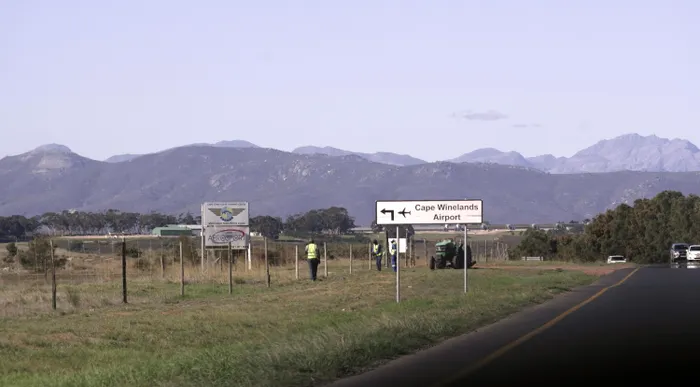
The new Cape Winelands Airport is set to create a number of job opportunities.
Image: Ian Landsberg/Independent Newspapers (File)
Cloete, who has experience in managing airports, said that they do get questioned on whether Cape Town needs another airport.
“CTIA is doing an awesome job, and they continue to do an awesome job, but when it comes to a city, and making sure it is future-proof.”
Get your news on the go, click here to join the Cape Argus News WhatsApp channel.
Cape Argus