The Smolny's docking in Cape Town sparks controversy over diplomatic relations


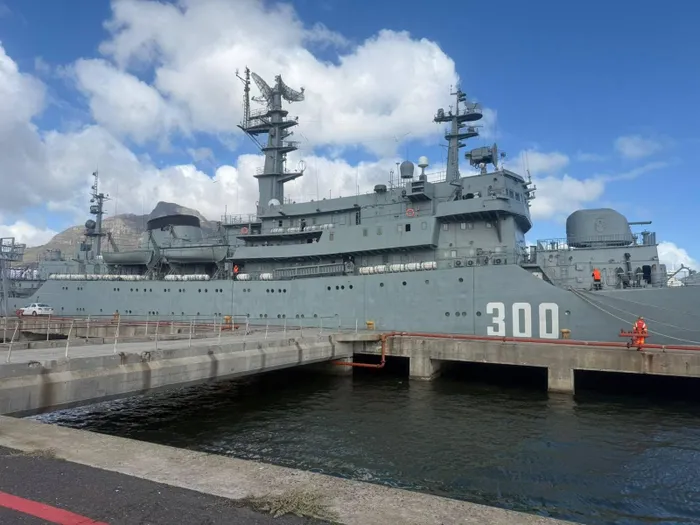
Russian Navy vessel The Smolny has docked in Cape Town, denying over 300 sailors port access and raising diplomatic concerns.
Image: Facebook
Over 300 Russian sailors have been denied access to disembark in Cape Town, leading the uMkhonto weSizwe Party (MK Party) to call out the Government of National Unity (GNU) for the snub.
The sailors are confined to the Russian Navy Baltic Fleet training vessel, The Smolny, after docking on Tuesday to restock, replenish, and resupply.
While the Department of International Relations and Cooperation (DIRCO) has remained tight-lipped regarding allegations, a senior government source, speaking on condition of anonymity, attributed the denial to "late negotiations with Donald Trump over the tariffs saga".
According to the MK Party, the ship is carrying cadets on a training mission to sharpen their skills in maritime, communications, and navigation skills, and has made a short visit to South Africa; an act that indicates the Russian government views South Africa as a mutual ally and a partner in friendly trade relations.
MK Party spokesperson Nhlamulo Ndhlela said denying access to the port of entry in Cape Town can only strain diplomatic relations between South Africa and Russia.
“The MK Party distances itself from the so-called GNU’s decision to refuse the Russian sailors port of entry into the City of Cape Town and reaffirms that we cannot support a government that seeks to undermine long-term bilateral ties and trading relations with the Russian state,” Ndhlela said.
The party said South Africa remains neutral on issues pertaining to international affairs.
Russia is a key strategic partner to South Africa and a member of the BRICS.
DIRCO spokesperson Chrispin Phiri did not respond to text messages containing questions regarding why the vessel was denied entry.
However, the source asserted that this new development added a complex layer to what was already a contentious issue, suggesting that South Africa’s decision may be a calculated move aimed at navigating its intricate relationship with major global powers, rather than a direct snub to Russia.
“These visits typically signify friendly relations and mutual recognition between nations.
“However, this 'tariffs saga' with US President Donald Trump introduces a new dynamic. While the details of these late negotiations remain undisclosed, it is plausible that South Africa faced pressure or made a strategic concession to avoid punitive tariffs or to secure favourable trade terms with the United States,” the source said.
The MKP said the two countries share longstanding historical ties dating back to the 1960s, during the apartheid era, when Russia stood as a firm ally and supporter of Umkhonto weSizwe, the armed wing of the former liberation movement.
The MK Party called on the GNU to grant the Russian sailors access.
Political analyst, Dr John Molepo, said the timing of The Smolny's arrival, coinciding with critical negotiations, may have placed the South African government in a precarious position, forcing a decision that, while perhaps uninviting, was deemed necessary for broader economic or strategic considerations.
“The government's apparent silence on the matter, with DIRCO only acknowledging 'allegations', further suggests the sensitivity surrounding the decision. Publicly acknowledging a direct link to US tariff negotiations could be perceived as a submission or a lack of sovereign decision-making, potentially straining relations with other allies.”
Get your news on the go, click here to join the Cape Argus News WhatsApp channel.
Cape Argus